


Page 122 - The Netter Collection of Medical Illustrations - Integumentary System_ Volume 4 ( PDFDrive )
P. 122
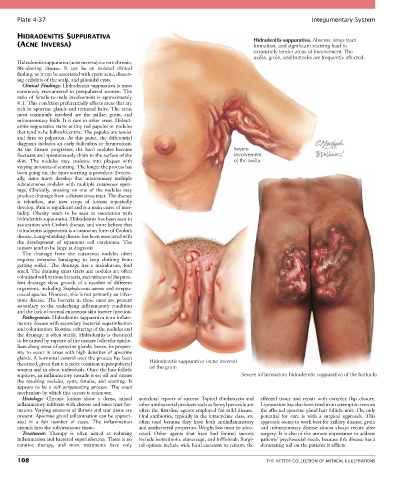
Plate 4-37                                                                                            Integumentary System

       HIDRADENITIS SUPPURATIVA
       (ACNE INVERSA)                                                                    Hidradenitis suppurativa. Abscess, sinus tract
                                                                                         formation, and significant scarring lead to
                                                                                         exquisitely tender areas of involvement. The
                                                                                         axilla, groin, and buttocks are frequently affected.
       Hidradenitis suppurativa (acne inversa) is a rare chronic,
       life-altering  disease.  It  can  be  an  isolated  clinical
       finding, or it can be associated with cystic acne, dissect-
       ing cellulitis of the scalp, and pilonidal cysts.
         Clinical Findings: Hidradenitis suppurativa is most
       commonly  encountered  in  postpubertal  women.  The
       ratio  of  female-to-male  involvement  is  approximately
       4 : 1. This condition preferentially affects areas that are
       rich in apocrine glands and terminal hairs. The areas
       most  commonly  involved  are  the  axillae,  groin,  and
       inframammary folds. It is rare in other areas. Hidrad-
       enitis suppurativa starts as tiny red papules or nodules
       that tend to be folliculocentric. The papules are tender
       and  firm  to  palpation.  At  this  point,  the  differential
       diagnosis includes an early folliculitis or furunculosis.
       As  the  disease  progresses,  the  hard  nodules  become                  Severe
       fluctuant and spontaneously drain to the surface of the                    involvement
       skin.  The  nodules  may  coalesce  into  plaques  with                    of the axilla
       varying amounts of scarring. The longer the process has
       been going on, the more scarring is prevalent. Eventu-
       ally,  sinus  tracts  develop  that  interconnect  multiple
       subcutaneous  nodules  with  multiple  cutaneous  open-
       ings.  Clinically,  pressing  on  one  of  the  nodules  may
       produce drainage from a distant sinus tract. The disease
       is  relentless,  and  new  crops  of  lesions  repeatedly
       develop. Pain is significant and is a main cause of mor-
       bidity.  Obesity  tends  to  be  seen  in  association  with
       hidradenitis suppurativa. Hidradenitis has been seen in
       association with Crohn’s disease, and some believe that
       hidradenitis suppurativa is a cutaneous form of Crohn’s
       disease. Long-standing disease has been associated with
       the  development  of  squamous  cell  carcinoma.  The
       tumors tend to be large at diagnosis
         The  drainage  from  the  cutaneous  nodules  often
       requires  extensive  bandaging  to  keep  clothing  from
       getting  soiled.  The  drainage  has  a  malodorous,  foul
       smell. The draining sinus tracts and nodules are often
       colonized with various bacteria, and cultures of the puru-
       lent  drainage  show  growth  of  a  number  of  different
       organisms, including Staphylococcus aureus and strepto-
       coccal species. However, this is not primarily an infec-
       tious  disease.  The  bacteria  in  these  cases  are  present
       secondary  to  the  underlying  inflammatory  condition
       and the lack of normal cutaneous skin barrier function.
         Pathogenesis: Hidradenitis suppurativa is an inflam-
       matory disease with secondary bacterial superinfection
       and colonization. Routine culturing of the nodules and
       the drainage is often sterile. Hidradenitis is theorized
       to be caused by rupture of the mature follicular epithe-
       lium along areas of apocrine glands; hence, its propen-
       sity  to  occur  in  areas  with  high  densities  of  apocrine
       glands. A hormonal control over the process has been
       theorized, given that it is more common in postpubertal   Hidradenitis suppurativa (acne inversa)
       women and in obese individuals. Once the hair follicle   on the groin
       ruptures, an inflammatory cascade is set off and causes                      Severe inflammatory hidradenitis suppurativa of the buttocks
       the  resulting  nodules,  cysts,  fistulas,  and  scarring.  It
       appears  to  be  a  self-perpetuating  process.  The  exact
       mechanism by which this occurs is unknown.
         Histology:  Chronic  lesions  show  a  dense,  mixed   anecdotal reports of success. Topical clindamycin and   affected  tissue  and  repair  with  complex  flap  closure.
       inflammatory infiltrate with abscess and sinus tract for-  other antibacterial products such as benzyl peroxide are   Liposuction has also been tried in an attempt to remove
       mation. Varying amounts of fibrosis and scar tissue are   often  the  first-line  agents  employed  for  mild  disease.   the affected apocrine gland hair follicle unit. The only
       present. Apocrine gland inflammation can be appreci-  Oral antibiotics, typically in the tetracycline class, are   potential  for  cure  is  with  a  surgical  approach.  This
       ated  in  a  fair  number  of  cases.  The  inflammation   often  used  because  they  have  both  antiinflammatory   approach seems to work best for axillary disease; groin
       extends into the subcutaneous tissue.     and antibacterial properties. Weight loss must be advo-  and  inframammary  disease  almost  always  recurs  after
         Treatment:  Therapy  is  often  aimed  at  reducing   cated.  Other  agents  that  have  had  limited  success   surgery. It is also of the utmost importance to address
       inflammation and bacterial superinfection. There is no   include isotretinoin, etanercept, and infliximab. Surgi-  patients’ psychosocial needs, because this disease has a
       curative  therapy,  and  most  treatments  have  only   cal options include wide local excisions to remove the   devastating toll on the patients it afflicts.

       108                                                                                   THE NETTER COLLECTION OF MEDICAL ILLUSTRATIONS

