


Page 137 - The Netter Collection of Medical Illustrations - Integumentary System_ Volume 4 ( PDFDrive )
P. 137
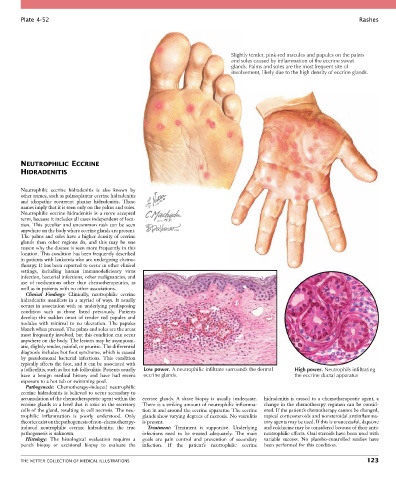
Plate 4-52                                                                                                           Rashes


                                                                                 Slightly tender, pink-red macules and papules on the palms
                                                                                 and soles caused by inflammation of the eccrine sweat
                                                                                 glands. Palms and soles are the most frequent site of
                                                                                 involvement, likely due to the high density of eccrine glands.


        NEUTROPHILIC ECCRINE
        HIDRADENITIS


        Neutrophilic  eccrine  hidradenitis  is  also  known  by
        other names, such as palmoplantar eccrine hidradenitis
        and  idiopathic  recurrent  plantar  hidradenitis.  These
        names imply that it is seen only on the palms and soles.
        Neutrophilic  eccrine  hidradenitis  is  a  more  accepted
        term, because it includes all cases independent of loca-
        tion.  This  peculiar  and  uncommon  rash  can  be  seen
        anywhere on the body where eccrine glands are present.
        The palms and soles have a higher density of eccrine
        glands  than  other  regions  do,  and  this  may  be  one
        reason why the disease is seen more frequently in this
        location. This condition has been frequently described
        in patients with leukemia who are undergoing chemo-
        therapy. It has been reported to occur in other clinical
        settings,  including  human  immunodeficiency  virus
        infection, bacterial infections, other malignancies, and
        use  of  medications  other  than  chemotherapeutics,  as
        well as in patients with no other associations.
          Clinical  Findings:  Clinically,  neutrophilic  eccrine
        hidradenitis  manifests  in  a  myriad  of  ways.  It  usually
        occurs in association with an underlying predisposing
        condition  such  as  those  listed  previously.  Patients
        develop  the  sudden  onset  of  tender  red  papules  and
        nodules  with  minimal  to  no  ulceration.  The  papules
        blanch when pressed. The palms and soles are the areas
        most frequently involved, but this condition can occur
        anywhere on the body. The lesions may be asymptom-
        atic, slightly tender, painful, or pruritic. The differential
        diagnosis includes hot foot syndrome, which is caused
        by  pseudomonal  bacterial  infections.  This  condition
        typically affects the foot, and it can be associated with
        a folliculitis, such as hot tub folliculitis. Patients usually   Low power. A neutrophilic infiltrate surrounds the dermal  High power. Neutrophils infiltrating
        have  a  benign  medical  history  and  have  had  recent   eccrine glands.                    the eccrine ductal apparatus
        exposure to a hot tub or swimming pool.
          Pathogenesis:  Chemotherapy-induced  neutrophilic
        eccrine hidradenitis is believed to occur secondary to
        accumulation of the chemotherapeutic agent within the   eccrine  glands.  A  shave  biopsy  is  usually  inadequate.   hidradenitis  is  caused  to  a  chemotherapeutic  agent,  a
        eccrine glands to a level that is toxic to the secretory   There is a striking amount of neutrophilic inflamma-  change  in  the  chemotherapy  regimen  can  be  consid-
        cells of the gland, resulting in cell necrosis. The neu-  tion in and around the eccrine apparatus. The eccrine   ered. If the patient’s chemotherapy cannot be changed,
        trophilic  inflammation  is  poorly  understood.  Only   glands show varying degrees of necrosis. No vasculitis   topical corticosteroids and nonsteroidal antiinflamma-
        theories exist on the pathogenesis of non–chemotherapy-  is present.                tory agents may be used. If this is unsuccessful, dapsone
        induced  neutrophilic  eccrine  hidradenitis;  the  true   Treatment:  Treatment  is  supportive.  Underlying   and colchicine may be considered because of their anti-
        pathogenesis is unknown.                  infections  need  to  be  treated  adequately.  The  main   neutrophilic effects. Oral steroids have been used with
          Histology:  The  histological  evaluation  requires  a   goals  are  pain  control  and  prevention  of  secondary   variable  success.  No  placebo-controlled  studies  have
        punch  biopsy  or  excisional  biopsy  to  evaluate  the   infection.  If  the  patient’s  neutrophilic  eccrine   been performed for this condition.


        THE NETTER COLLECTION OF MEDICAL ILLUSTRATIONS                                                                          123

