


Page 140 - The Netter Collection of Medical Illustrations - Integumentary System_ Volume 4 ( PDFDrive )
P. 140
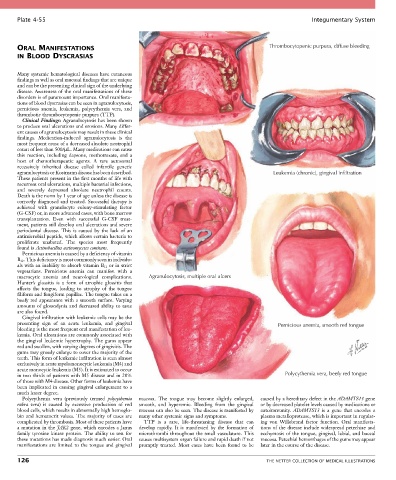
Plate 4-55                                                                                            Integumentary System


       ORAL MANIFESTATIONS                                                                    Thrombocytopenic purpura, diffuse bleeding
       IN BLOOD DYSCRASIAS


       Many systemic hematological diseases have cutaneous
       findings as well as oral mucosal findings that are unique
       and can be the presenting clinical sign of the underlying
       disease. Awareness of the oral manifestations of these
       disorders is of paramount importance. Oral manifesta-
       tions of blood dyscrasias can be seen in agranulocytosis,
       pernicious  anemia,  leukemia,  polycythemia  vera,  and
       thrombotic thrombocytopenic purpura (TTP).
         Clinical Findings: Agranulocytosis has been shown
       to produce oral ulcerations and erosions. Many differ-
       ent causes of agranulocytosis may result in these clinical
       findings.  Medication-induced  agranulocytosis  is  the
       most frequent cause of a decreased absolute neutrophil
       count of less than 500/µL. Many medications can cause
       this  reaction,  including  dapsone,  methotrexate,  and  a
       host  of  chemotherapeutic  agents.  A  rare  autosomal
       recessively  inherited  disease  called  infantile  genetic
       agranulocytosis or Kostmann disease has been described.                                 Leukemia (chronic), gingival infiltration
       These patients present in the first months of life with
       recurrent oral ulcerations, multiple bacterial infections,
       and  severely  depressed  absolute  neutrophil  counts.
       Death is the norm by 1 year of age unless the disease is
       correctly diagnosed and treated. Successful therapy is
       achieved  with  granulocyte  colony-stimulating  factor
       (G-CSF) or, in more advanced cases, with bone marrow
       transplantation.  Even  with  successful  G-CSF  treat-
       ment, patients still develop oral ulcerations and severe
       periodontal  disease.  This  is  caused  by  the  lack  of  an
       antimicrobial peptide, which allows certain bacteria to
       proliferate  unabated.  The  species  most  frequently
       found is Actinobacillus actinomycetes comitans.
         Pernicious anemia is caused by a deficiency of vitamin
       B 12 . This deficiency is most commonly seen in individu-
       als with an inability to absorb vitamin B 12  or in strict
       vegetarians.  Pernicious  anemia  can  manifest  with  a
       macrocytic  anemia  and  neurological  complications.   Agranulocytosis, multiple oral ulcers
       Hunter’s  glossitis  is  a  form  of  atrophic  glossitis  that
       affects  the  tongue,  leading  to  atrophy  of  the  tongue
       filiform and fungiform papillae. The tongue takes on a
       beefy  red  appearance  with  a  smooth  surface.  Varying
       amounts of glossodynia and decreased ability to taste
       are also found.
         Gingival infiltration with leukemic cells may be the
       presenting  sign  of  an  acute  leukemia,  and  gingival                                 Pernicious anemia, smooth red tongue
       bleeding is the most frequent oral manifestation of leu-
       kemia. Oral ulcerations are commonly associated with
       the  gingival  leukemic  hypertrophy.  The  gums  appear
       red and swollen, with varying degrees of gingivitis. The
       gums may grossly enlarge to cover the majority of the
       teeth. This form of leukemic infiltration is seen almost
       exclusively in acute myelomonocytic leukemia (M4) and
       acute monocytic leukemia (M5). It is estimated to occur
       in two thirds of patients with M5 disease and in 20%                                        Polycythemia vera, beefy red tongue
       of those with M4 disease. Other forms of leukemia have
       been  implicated  in  causing  gingival  enlargement  to  a
       much lesser degree.
         Polycythemia  vera  (previously  termed  polycythemia   mucosa.  The  tongue  may  become  slightly  enlarged,   caused by a hereditary defect in the ADAMTS13 gene
       rubra  vera)  is  caused  by  excessive  production  of  red   smooth,  and  hyperemic.  Bleeding  from  the  gingival   or by decreased platelet levels caused by medications or
       blood cells, which results in abnormally high hemoglo-  mucosa can also be seen. The disease is manifested by   autoimmunity.  ADAMTS13  is  a  gene  that  encodes  a
       bin  and  hematocrit  values.  The  majority  of  cases  are   many other systemic signs and symptoms.  plasma metalloprotease, which is important in regulat-
       complicated by thrombosis. Most of these patients have   TTP  is  a  rare,  life-threatening  disease  that  can   ing  von  Willebrand  factor  function.  Oral  manifesta-
       a mutation in the JAK2 gene, which encodes a Janus   develop  rapidly.  It  is  manifested  by  the  formation  of   tions of the disease include widespread petechiae and
       family tyrosine kinase protein. The ability to test for   microthrombi throughout the small vasculature. This   ecchymosis of the tongue, gingival, labial, and buccal
       these mutations has made diagnosis much easier. Oral   causes multisystem organ failure and rapid death if not   mucosa. Petechial hemorrhages of the gums may appear
       manifestations are limited to the tongue and gingival   promptly  treated.  Most  cases  have  been  found  to  be   later in the course of the disease.

       126                                                                                   THE NETTER COLLECTION OF MEDICAL ILLUSTRATIONS

