


Page 158 - The Netter Collection of Medical Illustrations - Integumentary System_ Volume 4 ( PDFDrive )
P. 158
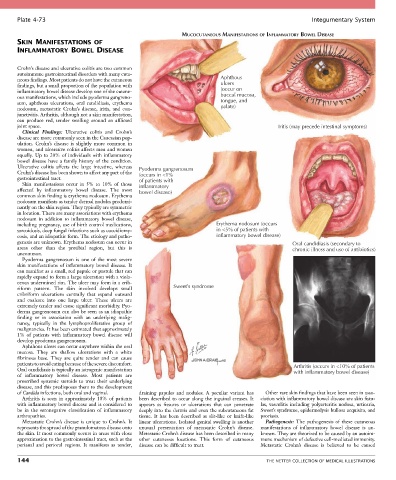
Plate 4-73                                                                                            Integumentary System

                                                                MUCOCUTANEOUS MANIFESTATIONS OF INFLAMMATORY BOWEL DISEASE
       SKIN MANIFESTATIONS OF
       INFLAMMATORY BOWEL DISEASE


       Crohn’s disease and ulcerative colitis are two common
       autoimmune gastrointestinal disorders with many cuta-
       neous findings. Most patients do not have the cutaneous               Aphthous
       findings, but a small proportion of the population with               ulcers
       inflammatory bowel disease develop one of the cutane-                 (occur on
       ous manifestations, which include pyoderma gangreno-                  buccal mucosa,
       sum,  aphthous  ulcerations,  oral  candidiasis,  erythema            tongue, and
       nodosum,  metastatic  Crohn’s  disease,  iritis,  and  con-           palate)
       junctivitis. Arthritis, although not a skin manifestation,
       can  produce  red,  tender  swelling  around  an  afflicted
       joint space.                                                                              Iritis (may precede intestinal symptoms)
         Clinical  Findings:  Ulcerative  colitis  and  Crohn’s
       disease are more commonly seen in the Caucasian pop-
       ulation.  Crohn’s  disease  is  slightly  more  common  in
       women, and ulcerative colitis affects men and women
       equally.  Up  to  20%  of  individuals  with  inflammatory
       bowel  disease  have  a  family  history  of  the  condition.
       Ulcerative  colitis  affects  the  large  intestine,  whereas   Pyoderma gangrenosum
       Crohn’s disease has been shown to affect any part of the   (occurs in <1%
       gastrointestinal tract.                   of patients with
         Skin  manifestations  occur  in  5%  to  10%  of  those   inflammatory
       affected  by  inflammatory  bowel  disease.  The  most   bowel disease)
       common skin finding is erythema nodosum. Erythema
       nodosum manifests as tender dermal nodules predomi-
       nantly on the shin region. They typically are symmetric
       in location. There are many associations with erythema
       nodosum  in  addition  to  inflammatory  bowel  disease,
       including pregnancy, use of birth control medications,               Erythema nodosum (occurs
       sarcoidosis, deep fungal infections such as coccidiomy-              in <5% of patients with
       cosis, and an idiopathic form. The etiology and patho-               inflammatory bowel disease)
       genesis are unknown. Erythema nodosum can occur in                                             Oral candidiasis (secondary to
       areas  other  than  the  pretibial  region,  but  this  is                                     chronic illness and use of antibiotics)
       uncommon.
         Pyoderma  gangrenosum  is  one  of  the  most  severe
       skin  manifestations  of  inflammatory  bowel  disease.  It
       can manifest as a small, red papule or pustule that can
       rapidly expand to form a large ulceration with a viola-
       ceous undermined rim. The ulcer may form in a crib-
       riform  pattern.  The  skin  involved  develops  small   Sweet’s syndrome
       cribriform  ulcerations  centrally  that  expand  outward
       and  coalesce  into  one  large  ulcer.  These  ulcers  are
       extremely tender and cause significant morbidity. Pyo-
       derma gangrenosum can also be seen as an idiopathic
       finding  or  in  association  with  an  underlying  malig-
       nancy,  typically  in  the  lymphoproliferative  group  of
       malignancies. It has been estimated that approximately
       1%  of  patients  with  inflammatory  bowel  disease  will
       develop pyoderma gangrenosum.
         Aphthous ulcers can occur anywhere within the oral
       mucosa.  They  are  shallow  ulcerations  with  a  white
       fibrinous  base.  They  are  quite  tender  and  can  cause
       patients to avoid eating because of the severe discomfort.                                     Arthritis (occurs in <10% of patients
       Oral candidiasis is typically an iatrogenic manifestation                                      with inflammatory bowel disease)
       of  inflammatory  bowel  disease.  Most  patients  are
       prescribed  systemic  steroids  to  treat  their  underlying
       disease, and this predisposes them to the development
       of Candida infections, both oral and vaginal.  draining  papules  and  nodules.  A  peculiar  variant  has   Other rare skin findings that have been seen in asso-
         Arthritis  is  seen  in  approximately  10%  of  patients   been described to occur along the inguinal creases. It   ciation with inflammatory bowel disease are skin fistu-
       with inflammatory bowel disease and is considered to   appears  as  fissures  or  ulcerations  that  can  penetrate   las, vasculitis including polyarteritis nodosa, urticaria,
       be  in  the  seronegative  classification  of  inflammatory   deeply into the dermis and even the subcutaneous fat   Sweet’s syndrome, epidermolysis bullosa acquisita, and
       arthropathies.                            tissue.  It  has  been  described  as  slit-like  or  knife-like   psoriasis.
         Metastatic  Crohn’s  disease  is  unique  to  Crohn’s.  It   linear ulcerations. Isolated genital swelling is another   Pathogenesis:  The  pathogenesis  of  these  cutaneous
       represents the spread of the granulomatous disease onto   unusual  presentation  of  metastatic  Crohn’s  disease.   manifestations  of  inflammatory  bowel  disease  is  un-
       the skin. It most commonly occurs in areas with close   Metastatic Crohn’s disease has been described in many   known. They are theorized to be caused by an autoim-
       approximation to the gastrointestinal tract, such as the   other  cutaneous  locations.  This  form  of  cutaneous   mune mechanism of defective cell-mediated immunity.
       perianal  and  perioral  regions.  It  manifests  as  tender,   disease can be difficult to treat.  Metastatic  Crohn’s  disease  is  believed  to  be  caused

       144                                                                                   THE NETTER COLLECTION OF MEDICAL ILLUSTRATIONS

