


Page 153 - The Netter Collection of Medical Illustrations - Integumentary System_ Volume 4 ( PDFDrive )
P. 153
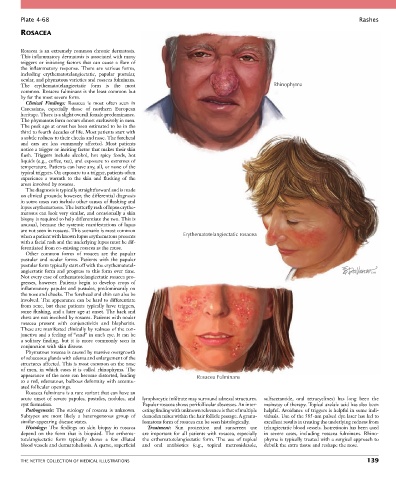
Plate 4-68                                                                                                           Rashes
        ROSACEA


        Rosacea is an extremely common chronic dermatosis.
        This inflammatory dermatosis is associated with many
        triggers  or  initiating  factors  that  can  cause  a  flare  of
        the  inflammatory  response.  There  are  various  forms,
        including  erythematotelangiectatic,  papular  pustular,
        ocular, and phymatous varieties and rosacea fulminans.
        The  erythematotelangiectatic  form  is  the  most                                      Rhinophyma
        common. Rosacea fulminans is the least common but
        by far the most severe form.
          Clinical  Findings:  Rosacea  is  most  often  seen  in
        Caucasians,  especially  those  of  northern  European
        heritage. There is a slight overall female predominance.
        The phymatous form occurs almost exclusively in men.
        The peak age at onset has been estimated to be in the
        third to fourth decades of life. Most patients start with
        a subtle redness to their cheeks and nose. The forehead
        and  ears  are  less  commonly  affected.  Most  patients
        notice a trigger or inciting factor that makes their skin
        flush.  Triggers  include  alcohol,  hot  spicy  foods,  hot
        liquids (e.g., coffee, tea), and exposure to extremes of
        temperature. Patients can have any, all, or none of the
        typical triggers. On exposure to a trigger, patients often
        experience  a  warmth  to  the  skin  and  flushing  of  the
        areas involved by rosacea.
          The diagnosis is typically straightforward and is made
        on clinical grounds; however, the differential diagnosis
        in some cases can include other causes of flushing and
        lupus erythematosus. The butterfly rash of lupus erythe-
        matosus can look very similar, and occasionally a skin
        biopsy is required to help differentiate the two. This is
        unusual, because the systemic manifestations of lupus
        are not seen in rosacea. This scenario is most common
        when a patient with known lupus erythematous presents   Erythematotelangiectatic rosacea
        with a facial rash and the underlying lupus must be dif-
        ferentiated from co-existing rosacea as the cause.
          Other  common  forms  of  rosacea  are  the  papular
        pustular  and  ocular  forms.  Patients  with  the  papular
        pustular form typically start off with the erythematotel-
        angiectatic form and progress to this form over time.
        Not every case of erthematotelangiectatic rosacea pro-
        gresses,  however.  Patients  begin  to  develop  crops  of
        inflammatory papules and pustules, predominantly on
        the nose and cheeks. The forehead and chin can also be
        involved. The appearance can be hard to differentiate
        from  acne,  but  these  patients  typically  have  triggers,
        some flushing, and a later age at onset. The back and
        chest are not involved by rosacea. Patients with ocular
        rosacea  present  with  conjunctivitis  and  blepharitis.
        These are manifested clinically by redness of the con-
        junctiva and a feeling of “sand” in one’s eye. It can be
        a  solitary  finding,  but  it  is  more  commonly  seen  in
        conjunction with skin disease.
          Phymatous rosacea is caused by massive overgrowth
        of sebaceous glands with edema and enlargement of the
        structures affected. This is most common on the nose
        of  men,  in  which  cases  it  is  called  rhinophyma.  The
        appearance of the nose can become distorted, leading         Rosacea Fulminans
        to a red, edematous, bulbous deformity with accentu-
        ated follicular openings.
          Rosacea fulminans is a rare variant that can have an
        acute  onset  of  severe  papules,  pustules,  nodules,  and   lymphocytic infiltrate may surround adnexal structures.   sulfacetamide,  oral  tetracyclines)  has  long  been  the
        cyst formation.                           Papular rosacea shows perifollicular abscesses. An inter-  mainstay of therapy. Topical azelaic acid has also been
          Pathogenesis:  The  etiology  of  rosacea  is  unknown.   esting finding with unknown relevance is that of multiple   helpful. Avoidance of triggers is helpful in some indi-
        Subtypes  are  most  likely  a  heterogeneous  group  of   demodex mites within the hair follicle passage. A granu-  viduals. Use of the 585-nm pulsed dye laser has led to
        similar-appearing disease states.         lomatous form of rosacea can be seen histologically.  excellent results in treating the underlying redness from
          Histology:  The  findings  on  skin  biopsy  in  rosacea   Treatment:  Sun  protection  and  sunscreen  use   telangiectatic blood vessels. Isotretinoin has been used
        depend  on  the  form  that  is  biopsied.  The  erthema-  are  important  for  all  patients  with  rosacea,  especially   in  severe  cases,  including  rosacea  fulminans.  Rhino-
        totelangiectatic  form  typically  shows  a  few  dilated     the  erthematotelangiectatic  form.  The  use  of  topical   phyma is typically treated with a surgical approach to
        blood vessels and dermatoheliosis. A sparse, superficial   and  oral  antibiotics  (e.g.,  topical  metronidazole,   debulk the extra tissue and reshape the nose.


        THE NETTER COLLECTION OF MEDICAL ILLUSTRATIONS                                                                          139

