


Page 156 - The Netter Collection of Medical Illustrations - Integumentary System_ Volume 4 ( PDFDrive )
P. 156
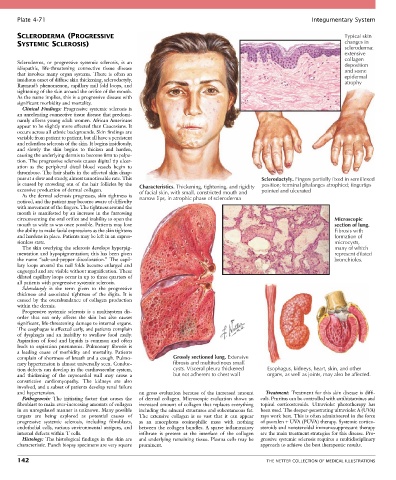
Plate 4-71                                                                                            Integumentary System

       SCLERODERMA (PROGRESSIVE                                                                                         Typical skin
       SYSTEMIC SCLEROSIS)                                                                                              changes in
                                                                                                                        scleroderma:
                                                                                                                        extensive
                                                                                                                        collagen
       Scleroderma,  or  progressive  systemic  sclerosis,  is  an                                                      deposition
       idiopathic,  life-threatening  connective  tissue  disease                                                       and some
       that  involves  many  organ  systems.  There  is  often  an                                                      epidermal
       insidious onset of diffuse skin thickening, sclerodactyly,                                                       atrophy
       Raynaud’s phenomenon, capillary nail fold loops, and
       tightening of the skin around the orifice of the mouth.
       As the name implies, this is a progressive disease with
       significant morbidity and mortality.
         Clinical  Findings:  Progressive  systemic  sclerosis  is
       an unrelenting connective tissue disease that predomi-
       nantly affects young adult women. African Americans
       appear to be slightly more affected than Caucasians. It
       occurs across all ethnic backgrounds. Skin findings are
       variable from patient to patient, but all have a persistent
       and relentless sclerosis of the skin. It begins insidiously,
       and  slowly  the  skin  begins  to  thicken  and  harden,
       causing the underlying dermis to become firm to palpa-
       tion. The progressive sclerosis causes digital tip ulcer-
       ation  as  the  peripheral  distal  blood  vessels  begin  to
       thrombose. The hair shafts in the affected skin disap-
       pear at a slow and steady, almost unnoticeable rate. This                           Sclerodactyly. Fingers partially fixed in semiflexed
       is caused by crowding out of the hair follicles by the   Characteristics. Thickening, tightening, and rigidity   position; terminal phalanges atrophied; fingertips
       excessive production of dermal collagen.  of facial skin, with small, constricted mouth and   pointed and ulcerated
         As the dermal sclerosis progresses, skin tightness is
       noticed, and the patient may become aware of difficulty   narrow lips, in atrophic phase of scleroderma
       with movement of the fingers. The tightness around the
       mouth  is  manifested  by  an  increase  in  the  furrowing
       circumventing the oral orifice and inability to open the                                                      Microscopic
       mouth as wide as was once possible. Patients may lose                                                         section of lung.
       the ability to make facial expressions as the skin tightens                                                   Fibrosis with
       and hardens in place. Patients may be left in an expres-                                                      formation of
       sionless state.                                                                                               microcysts,
         The skin overlying the sclerosis develops hyperpig-                                                         many of which
       mentation and hypopigmentation; this has been given                                                           represent dilated
       the  name  “salt-and-pepper  discoloration.”  The  capil-                                                     bronchioles.
       lary loops around the nail folds become enlarged and
       engorged and are visible without magnification. These
       dilated capillary loops occur in up to three quarters of
       all patients with progressive systemic sclerosis.
         Sclerodactyly  is  the  term  given  to  the  progressive
       thickness  and  associated  tightness  of  the  digits.  It  is
       caused  by  the  overabundance  of  collagen  production
       within the dermis.
         Progressive  systemic  sclerosis  is  a  multisystem  dis-
       order  that  not  only  affects  the  skin  but  also  causes
       significant, life-threatening damage to internal organs.
       The esophagus is affected early, and patients complain
       of  dysphagia  and  an  inability  to  swallow  food  easily.
       Aspiration  of  food  and  liquids  is  common  and  often
       leads  to  aspiration  pneumonia.  Pulmonary  fibrosis  is
       a  leading  cause  of  morbidity  and  mortality.  Patients
       complain of shortness of breath and a cough. Pulmo-   Grossly sectioned lung. Extensive
       nary hypertension is almost universally seen. Conduc-  fibrosis and multitudinous small
       tion defects can develop in the cardiovascular system,   cysts. Visceral pleura thickened  Esophagus, kidneys, heart, skin, and other
       and  thickening  of  the  myocardial  wall  may  cause  a   but not adherent to chest wall  organs, as well as joints, may also be affected.
       constrictive  cardiomyopathy.  The  kidneys  are  also
       involved, and a subset of patients develop renal failure
       and  hypertension.                        on  gross  evaluation  because  of  the  increased  amount   Treatment: Treatment for this  skin disease is diffi-
         Pathogenesis:  The  initiating  factor  that  causes  the   of  dermal  collagen.  Microscopic  evaluation  shows  an   cult. Pruritus can be controlled with antihistamines and
       fibroblast to make ever-increasing amounts of collagen   increased amount of collagen that replaces everything   topical  corticosteroids.  Ultraviolet  phototherapy  has
       in an unregulated manner is unknown. Many possible   including the adnexal structures and subcutaneous fat.   been used. The deeper-penetrating ultraviolet A (UVA)
       targets  are  being  explored  as  potential  causes  of     The  extensive  collagen  is  so  vast  that  it  can  appear   rays work best. This is often administered in the form
       progressive  systemic  sclerosis,  including  fibroblasts,   as  an  amorphous  eosinophilic  mass  with  nothing   of psoralen + UVA (PUVA) therapy. Systemic cortico-
       endothelial cells, various environmental antigens, and   between the collagen bundles. A sparse inflammatory   steroids and nonsteroidal immunosuppressant therapy
       internal defects within T cells.          infiltrate  is  present  at  the  interface  of  the  collagen   are the main treatment strategies for this disease. Pro-
         Histology: The histological findings in the skin are   and underlying remaining tissue. Plasma cells may be   gressive systemic sclerosis requires a multidisciplinary
       characteristic. Punch biopsy specimens are very square   prominent.                 approach to achieve the best therapeutic results.

       142                                                                                   THE NETTER COLLECTION OF MEDICAL ILLUSTRATIONS

