


Page 161 - The Netter Collection of Medical Illustrations - Integumentary System_ Volume 4 ( PDFDrive )
P. 161
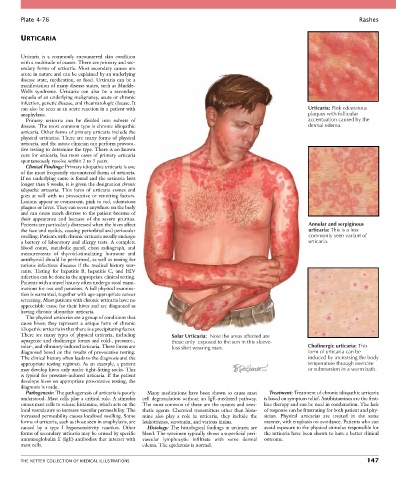
Plate 4-76                                                                                                           Rashes


        URTICARIA


        Urticaria  is  a  commonly  encountered  skin  condition
        with a multitude of causes. There are primary and sec-
        ondary  forms  of  urticaria.  Most  secondary  causes  are
        acute in nature and can be explained by an underlying
        disease  state,  medication,  or  food.  Urticaria  can  be  a
        manifestation of many disease states, such as Muckle-
        Wells  syndrome.  Urticaria  can  also  be  a  secondary
        sequela of an underlying malignancy, acute or chronic
        infection, genetic disease, and rheumatologic disease. It
        can also be seen as an acute reaction in a patient with                                            Urticaria: Pink edematous
        anaphylaxis.                                                                                       plaques with follicular
          Primary  urticaria  can  be  divided  into  subsets  of                                          accentuation caused by the
        disease. The most common type is chronic idiopathic                                                dermal edema.
        urticaria. Other forms of primary urticaria include the
        physical urticarias. There are many forms of physical
        urticaria, and the astute clinician can perform provoca-
        tive testing to determine the type. There is no known
        cure for urticaria, but most cases of primary urticaria
        spontaneously resolve within 2 to 3 years.
          Clinical Findings: Primary idiopathic urticaria is one
        of the most frequently encountered forms of urticaria.
        If no underlying cause is found and the urticaria lasts
        longer than 6 weeks, it is given the designation chronic
        idiopathic  urticaria.  This  form  of  urticaria  comes  and
        goes at will with no provocative or remitting factors.
        Lesions appear as evanescent, pink to red, edematous
        plaques or hives. They can occur anywhere on the body
        and can cause much distress to the patient because of
        their  appearance  and  because  of  the  severe  pruritus.
        Patients are particularly distressed when the hives affect                                          Annular and serpiginous
        the face and eyelids, causing periorbital and periocular                                            urticaria: This is a less
        swelling. Patients with chronic urticaria usually undergo                                           commonly seen variant of
        a  battery  of  laboratory  and  allergy  tests.  A  complete                                       urticaria.
        blood  count,  metabolic  panel,  chest  radiograph,  and
        measurements  of  thyroid-stimulating  hormone  and
        antithyroid should be performed, as well as testing for
        various infectious diseases if the medical history war-
        rants.  Testing  for  hepatitis  B,  hepatitis  C,  and  HIV
        infection can be done in the appropriate clinical setting.
        Patients with a travel history often undergo stool exam-
        inations for ova and parasites. A full physical examina-
        tion is warranted, together with age-appropriate cancer
        screening. Most patients with chronic urticaria have no
        appreciable cause for their hives and are diagnosed as
        having chronic idiopathic urticaria.
          The physical urticarias are a group of conditions that
        cause  hives;  they  represent  a  unique  form  of  chronic
        idiopathic urticaria in that there is a precipitating factor.
        There are many types of physical urticaria, including   Solar Urticaria:  Note the areas affected are
        aquagenic and cholinergic forms and cold-, pressure-,   those only  exposed to the sun in this sleeve-
        solar-, and vibratory-induced urticaria. These forms are   less shirt wearing man.                 Cholinergic urticaria: This
        diagnosed based on the results of provocative testing.                                             form of urticaria can be
        The clinical history often leads to the diagnosis and the                                          induced by increasing the body
        appropriate testing regimen. As an example, a patient                                              temperature through exercise
        may develop hives only under tight-fitting socks. This                                             or submersion in a warm bath.
        is typical for pressure-induced urticaria. If the patient
        develops hives on appropriate provocative testing, the
        diagnosis is made.
          Pathogenesis: The pathogenesis of urticaria is poorly   Many  medications  have  been  shown  to  cause  mast   Treatment: Treatment of chronic idiopathic urticaria
        understood. Mast cells play a critical role. A stimulus   cell  degranulation  without  an  IgE-mediated  pathway.   is based on symptom relief. Antihistamines are the first-
        causes mast cells to release histamine, which acts on the   The most common of these are the opiates and anes-  line therapy and can be used in combination. The lack
        local vasculature to increase vascular permeability. The   thetic agents. Chemical transmitters other than hista-  of response can be frustrating for both patient and phy-
        increased permeability causes localized swelling. Some   mine  also  play  a  role  in  urticaria;  they  include  the   sician.  Physical  urticarias  are  treated  in  the  same
        forms of urticaria, such as those seen in anaphylaxis, are   leukotrienes, serotonin, and various kinins.  manner, with emphasis on avoidance. Patients who can
        caused  by  a  type  I  hypersensitivity  reaction.  Other   Histology: The histological findings in urticaria are   avoid exposure to the physical stimulus responsible for
        forms of secondary urticaria may be caused by specific   bland. The specimen typically shows a superficial peri-  the urticaria have been shown to have a better clinical
        immunoglobulin E (IgE) antibodies that interact with   vascular  lymphocytic  infiltrate  with  some  dermal   outcome.
        mast cells.                               edema. The epidermis is normal.


        THE NETTER COLLECTION OF MEDICAL ILLUSTRATIONS                                                                          147

