


Page 165 - The Netter Collection of Medical Illustrations - Integumentary System_ Volume 4 ( PDFDrive )
P. 165
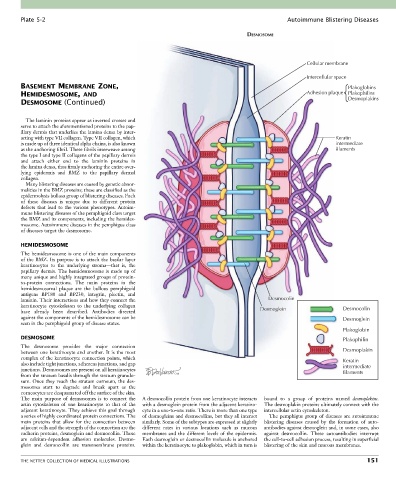
Plate 5-2                                                                                   Autoimmune Blistering Diseases

                                                                                      DESMOSOME


                                                                                                           Cellular membrane

                                                                                                           Intercellular space
        BASEMENT MEMBRANE ZONE,                                                                                          Plakoglobins
        HEMIDESMOSOME, AND                                                                                 Adhesion plaque  Plakophilins
        DESMOSOME (Continued)                                                                                            Desmoplakins


          The laminin proteins appear as inverted crosses and
        serve to attach the aforementioned proteins to the pap-
        illary dermis that underlies the lamina densa by inter-
        acting with type VII collagen. Type VII collagen, which                                                      Keratin
        is made up of three identical alpha chains, is also known                                                    intermediate
        as the anchoring fibril. These fibrils interweave among                                                      filaments
        the type I and type II collagens of the papillary dermis
        and  attach  either  end  to  the  laminin  proteins  in
        the lamina densa, thus firmly anchoring the entire over-
        lying  epidermis  and  BMZ  to  the  papillary  dermal
        collagen.
          Many blistering diseases are caused by genetic abnor-
        malities in the BMZ proteins; these are classified as the
        epidermolysis bullosa group of blistering diseases. Each
        of  these  diseases  is  unique  due  to  different  protein
        defects  that  lead  to  the  various  phenotypes.  Autoim-
        mune blistering diseases of the pemphigoid class target
        the BMZ and its components, including the hemides-
        mosome. Autoimmune diseases in the pemphigus class
        of diseases target the desmosome.

        HEMIDESMOSOME
        The hemidesmosome is one of the main components
        of the BMZ. Its purpose is to attach the basilar layer
        keratinocytes  to  the  underlying  stroma—that  is,  the
        papillary dermis. The hemidesmosome is made up of
        many unique and highly integrated groups of protein-
        to-protein  connections.  The  main  proteins  in  the
        hemidesmosomal  plaque  are  the  bullous  pemphigoid
        antigens  BP180  and  BP230,  integrin,  plectin,  and
        laminin. Their interactions and how they connect the                                  Desmocolin
        keratinocyte  cytoskeleton  to  the  underlying  collagen                                                      Desmocolin
        have  already  been  described.  Antibodies  directed                              Desmoglein
        against the components of the hemidesmosome can be                                                             Desmoglein
        seen in the pemphigoid group of disease states.
                                                                                                                       Plakoglobin
        DESMOSOME                                                                                                      Plakophilin
        The  desmosome  provides  the  major  connection
        between one keratinocyte and another. It is the most                                                           Desmoplakin
        complex of the keratinocyte connection points, which                                                           Keratin
        also include tight junctions, adherens junctions, and gap                                                      intermediate
        junctions. Desmosomes are present on all keratinocytes                                                         filaments
        from the stratum basalis through the stratum granulo-
        sum. Once they reach the stratum corneum, the des-
        mosomes  start  to  degrade  and  break  apart  as  the
        corneocytes are desquamated off the surface of the skin.
        The  main  purpose  of  desmosomes  is  to  connect  the   A desmocollin protein from one keratinocyte interacts   bound  to  a  group  of  proteins  named  desmoplakins.
        actin  cytoskeleton  of  one  keratinocyte  to  that  of  the   with a desmoglein protein from the adjacent keratino-  The desmoplakin proteins ultimately connect with the
        adjacent keratinocyte. They achieve this goal through   cyte in a one-to-one ratio. There is more than one type   intercellular actin cytoskeleton.
        a series of highly coordinated protein connections. The   of desmogleins and desmocollins, but they all interact   The  pemphigus  group  of  diseases  are  autoimmune
        main  proteins  that  allow  for  the  connection  between   similarly. Some of the subtypes are expressed at slightly   blistering  diseases  caused  by  the  formation  of  auto-
        adjacent cells and the strength of the connection are the   different  rates  in  various  locations  such  as  mucous   antibodies against desmoglein and, in some cases, also
        cadherin proteins, desmoglein and desmocollin. These   membranes  and  the  different  levels  of  the  epidermis.   against  desmocollin.  These  autoantibodies  interrupt
        are  calcium-dependent  adhesion  molecules.  Desmo-  Each desmoglein or desmocollin molecule is anchored   the cell-to-cell adhesion process, resulting in superficial
        glein  and  desmocollin  are  transmembrane  proteins.     within the keratinocyte to plakoglobin, which in turn is   blistering of the skin and mucous membranes.


        THE NETTER COLLECTION OF MEDICAL ILLUSTRATIONS                                                                          151

