


Page 185 - The Netter Collection of Medical Illustrations - Integumentary System_ Volume 4 ( PDFDrive )
P. 185
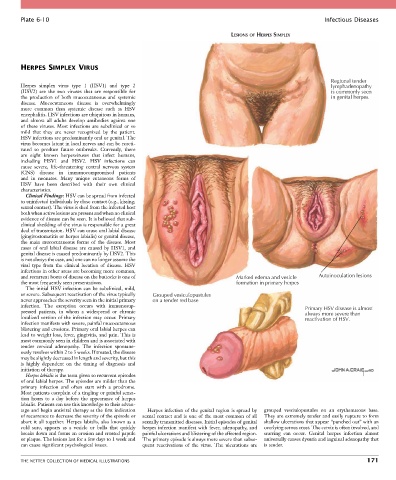
Plate 6-10                                                                                               Infectious Diseases

                                                                                 LESIONS OF HERPES SIMPLEX


        HERPES SIMPLEX VIRUS

                                                                                                                   Regional tender
        Herpes  simplex  virus  type  1  (HSV1)  and  type  2                                                      lymphadenopathy
        (HSV2)  are  the  two  viruses  that  are  responsible  for                                                is commonly seen
        the  pro duction  of  both  mucocutaneous  and  systemic                                                   in genital herpes.
        disease.  Mucocutaneous  disease  is  overwhelmingly
        more  common  than  systemic  disease  such  as  HSV
        encephalitis. HSV infections are ubiquitous in humans,
        and  almost  all  adults  develop  antibodies  against  one
        of these viruses. Most infections are subclinical or so
        mild  that  they  are  never  recognized  by  the  patient.
        HSV infections are predominantly oral or genital. The
        virus becomes latent in local nerves and can be reacti-
        vated  to  produce  future  outbreaks.  Currently,  there
        are  eight  known  herpesviruses  that  infect  humans,
        including  HSV1  and  HSV2.  HSV  infections  can
        cause  severe,  life-threatening  central  nervous  system
        (CNS)  disease  in  immunocompromised  patients
        and  in  neonates.  Many  unique  cutaneous  forms  of
        HSV  have  been  described  with  their  own  clinical
        characteristics.
          Clinical Findings: HSV can be spread from infected
        to uninfected individuals by close contact (e.g., kissing,
        sexual contact). The virus is shed from the infected host
        both when active lesions are present and when no clinical
        evidence of disease can be seen. It is believed that sub-
        clinical shedding of the virus is responsible for a great
        deal of transmission. HSV can cause oral labial disease
        (gingivostomatitis or herpes labialis) or genital disease,
        the  main  mucocutaneous  forms  of  the  disease.  Most
        cases  of  oral  labial  disease  are  caused  by  HSV1,  and
        genital disease is caused predominantly by HSV2. This
        is not always the case, and one can no longer assume the
        viral  type  from  the  clinical  location  of  disease.  HSV
        infections in other areas are becoming more common,
        and recurrent bouts of disease on the buttocks is one of                   Marked edema and vesicle    Autoinoculation lesions
        the most frequently seen presentations.                                    formation in primary herpes
          The initial HSV infection can be subclinical, mild,
        or severe. Subsequent reactivation of the virus typically   Grouped vesiculopustules
        never approaches the severity seen in the initial primary   on a tender red base
        infection.  The  exception  occurs  with  immunosup-                                              Primary HSV disease is almost
        pressed  patients,  in  whom  a  widespread  or  chronic                                          always more severe than
        localized version of the infection may occur. Primary                                             reactivation of HSV.
        infection manifests with severe, painful mucocutaneous
        blistering and erosions. Primary oral labial herpes can
        lead to weight loss, fever, gingivitis, and pain. This is
        most commonly seen in children and is associated with
        tender  cervical  adenopathy.  The  infection  spontane-
        ously resolves within 2 to 3 weeks. If treated, the disease
        may be slightly decreased in length and severity, but this
        is  highly  dependent  on  the  timing  of  diagnosis  and
        initiation of therapy.
          Herpes labialis is the term given to recurrent episodes
        of oral labial herpes. The episodes are milder than the
        primary  infection  and  often  start  with  a  prodrome.
        Most patients complain of a tingling or painful sensa-
        tion  hours  to  a  day  before  the  appearance  of  herpes
        labialis. Patients can use this knowledge to their advan-
        tage and begin antiviral therapy at the first indication   Herpes infection of the genital region is spread by   grouped  vesciulopustules  on  an  erythematous  base.
        of recurrence to decrease the severity of the episode or   sexual contact and is one of the most common of all   They are extremely tender and easily rupture to form
        abort it all together. Herpes labialis, also known as a   sexually transmitted diseases. Initial episodes of genital   shallow ulcerations that appear “punched out” with an
        cold  sore,  appears  as  a  vesicle  or  bulla  that  quickly   herpes infection manifest with fever, adenopathy, and   overlying serous crust. The cervix is often involved, and
        breaks down and forms an erosion and crusted papule   painful ulcerations and blistering of the affected region.   scarring  can  occur.  Genital  herpes  infection  almost
        or plaque. The lesions last for a few days to 1 week and   The primary episode is always more severe than subse-  universally causes dysuria and inguinal adenopathy that
        can cause significant psychological issues.  quent  reactivations  of  the  virus.  The  ulcerations  are   is tender.


        THE NETTER COLLECTION OF MEDICAL ILLUSTRATIONS                                                                          171

