


Page 194 - The Netter Collection of Medical Illustrations - Integumentary System_ Volume 4 ( PDFDrive )
P. 194
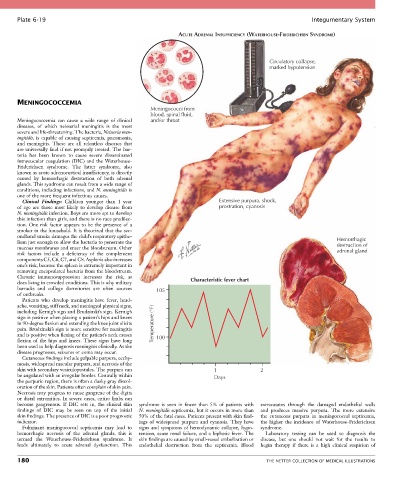
Plate 6-19                                                                                            Integumentary System

                                                               ACUTE ADRENAL INSUFFICIENCY (WATERHOUSE-FRIDERICHSEN SYNDROME)


                                                                                              Circulatory collapse,
                                                                                              marked hypotension


       MENINGOCOCCEMIA
                                                     Meningococci from
                                                     blood, spinal fluid,
       Meningococcemia  can  cause  a  wide  range  of  clinical   and/or throat
       diseases,  of  which  neisserial  meningitis  is  the  most
       severe and life-threatening. The bacteria, Neisseria men-
       ingitidis, is capable of causing septicemia, pneumonia,
       and  meningitis.  These  are  all  relentless  diseases  that
       are universally fatal if not promptly treated. The bac-
       teria  has  been  known  to  cause  severe  disseminated
       intravascular coagulation  (DIC)  and  the  Waterhouse-
       Friderichsen  syndrome.  The  latter  syndrome,  also
       known as acute adrenocortical insufficiency, is directly
       caused  by  hemorrhagic  destruction  of  both  adrenal
       glands. This syndrome can result from a wide range of
       conditions, including infections, and N. meningitidis is
       one of the more frequent infectious causes.
         Clinical  Findings:  Children  younger  than  1  year               Extensive purpura, shock,
       of  age  are  those  most  likely  to  develop  disease  from         prostration, cyanosis
       N. meningitidis infection. Boys are more apt to develop
       this infection than girls, and there is no race predilec-
       tion. One  risk factor  appears  to  be the  presence  of  a
       smoker in the household. It is theorized that the sec-
       ondhand smoke damages the child’s respiratory epithe-                                                         Hemorrhagic
       lium just enough to allow the bacteria to penetrate the                                                       destruction of
       mucous membranes and enter the bloodstream. Other                                                             adrenal gland
       risk  factors  include  a  deficiency  of  the  complement
       components C5, C6, C7, and C8. Asplenia also increases
       one’s risk, because the spleen is extremely important in
       removing encapsulated bacteria from the bloodstream.
       Chronic  immunosuppression  increases  the  risk,  as       Characteristic fever chart
       does living in crowded conditions. This is why military
       barracks  and  college  dormitories  are  often  sources     105
       of outbreaks.
         Patients  who  develop  meningitis  have  fever,  head-
       ache, vomiting, stiff neck, and meningeal physical signs,
       including Kernig’s sign and Brudzinski’s sign. Kernig’s
       sign is positive when placing a patient’s hips and knees
       in 90-degree flexion and extending the knee joint elicits   Temperature (°F)
       pain. Brudzinski’s sign is more sensitive for meningitis
       and is positive when flexing of the patient’s neck causes   100
       flexion  of  the  hips  and  knees.  These  signs  have  long
       been used to help diagnosis meningitis clinically. As the
       disease progresses, seizures or coma may occur.
         Cutaneous findings include palpable purpura, ecchy-
       mosis, widespread macular purpura, and necrosis of the
       skin with secondary vesiculopustules. The purpura can               1               2
       be angulated with an irregular border. Centrally within             Days
       the purpuric region, there is often a dusky gray discol-
       oration of the skin. Patients often complain of skin pain.
       Necrosis may progress to cause gangrene of the digits
       or distal extremities. In severe cases, entire limbs can
       become  gangrenous.  If  DIC  sets  in,  the  clinical  skin   syndrome  is  seen  in  fewer  than  5%  of  patients  with     extravasates  through  the  damaged  endothelial  walls
       findings  of  DIC  may  be  seen  on  top  of  the  initial     N. meningitidis septicemia, but it occurs in more than   and  produces  massive  purpura.  The  more  extensive
       skin findings. The presence of DIC is a poor prognostic   50% of the fatal cases. Patients present with skin find-  the  cutaneous  purpura  in  meningococcal  septicemia,
       indicator.                                ings  of  widespread  purpura  and  cyanosis.  They  have   the  higher  the  incidence  of  Waterhouse-Friderichsen
         Fulminant  meningococcal  septicemia  may  lead  to   signs and symptoms of hemodynamic collapse, hypo-  syndrome.
       hemorrhagic  necrosis  of  the  adrenal  glands;  this  is   tension, acute renal failure, and a biphasic fever. The   Laboratory  testing  can  be  used  to  diagnosis  the
       termed  the  Waterhouse-Friderichsen  syndrome.  It   skin findings are caused by small-vessel embolization or   disease,  but  one  should  not  wait  for  the  results  to
       leads  ultimately  to  acute  adrenal  dysfunction.  This     endothelial  destruction  from  the  septicemia.  Blood   begin  therapy  if  there  is  a  high  clinical  suspicion  of

       180                                                                                   THE NETTER COLLECTION OF MEDICAL ILLUSTRATIONS

