


Page 191 - The Netter Collection of Medical Illustrations - Integumentary System_ Volume 4 ( PDFDrive )
P. 191
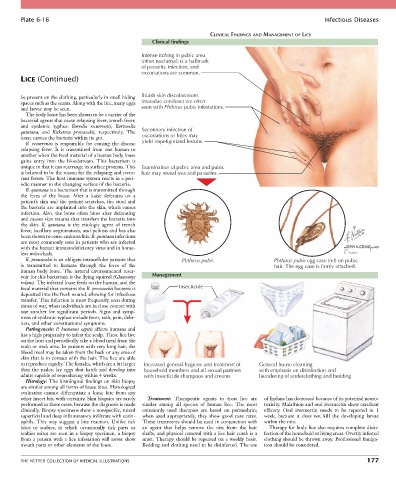
Plate 6-16                                                                                               Infectious Diseases

                                                                          CLINICAL FINDINGS AND MANAGEMENT OF LICE
                                                      Clinical findings

                                                  Intense itching in pubic area
                                                  (often nocturnal) is a hallmark
                                                  of parasitic infection, and
                                                  excoriations are common.
        LICE (Continued)


        be present on the clothing, particularly in small hiding   Bluish skin discolorations
        spaces such as the seams. Along with the lice, many eggs   (maculae ceruleae) are often
        and larvae may be seen.                   seen with Phthirus pubis infestations.
          The body louse has been shown to be a carrier of the
        bacterial agents that cause relapsing fever, trench fever,
        and  epidemic  typhus:  Borrelia  recurrentis,  Bartonella
        quintana,  and  Rickettsia  prowazekii,  respectively.  The   Secondary infection of
        louse carries the bacteria within its gut.  excoriations or bites may
          B.  recurrentis  is  responsible  for  causing  the  disease   yield impetiginized lesions.
        relapsing  fever.  It  is  transmitted  from  one  human  to
        another when the fecal material of a human body louse
        gains  entry  into  the  bloodstream.  This  bacterium  is
        unique in that it can rearrange its surface proteins. This   Examination of pubic area and pubic
        is believed to be the reason for the relapsing and recur-  hair may reveal ova and parasites.
        rent fevers: The host immune system reacts in a peri-
        odic manner to the changing surface of the bacteria.
          B. quintana is a bacterium that is transmitted through
        the  feces  of  the  louse.  After  a  louse  defecates  on  a
        patient’s  skin  and  the  patient  scratches,  the  stool  and
        the bacteria are implanted into the skin, which causes
        infection.  Also,  the  louse  often  bites  after  defecating
        and causes skin trauma that transfers the bacteria into
        the  skin.  B.  quintana  is  the  etiologic  agent  of  trench
        fever, bacillary angiomatosis, and peliosis and has also
        been shown to cause endocarditis. B. quintana infections
        are most commonly seen in patients who are infected
        with the human immunodeficiency virus and in home-                                                              with
        less individuals.                                                                                               E. Hatton
          R. prowazekii is an obligate intracellular parasite that   Phthirus pubis             Phthirus pubis egg case (nit) on pubic
        is  transmitted  to  humans  through  the  feces  of  the                               hair. The egg case is firmly attached.
        human  body  louse.  The  natural  environmental  reser-
        voir for this bacterium is the flying squirrel (Glaucomys   Management
        volans). The infected louse feeds on the human, and the
        fecal material that contains the R. prowazekii bacteria is   Insecticide
        deposited into the fresh wound, allowing for infectious
        transfer. This infection is most frequently seen during
        times of war, when individuals are in close contact with
        one  another  for  significant  periods.  Signs  and  symp-
        toms of epidemic typhus include fever, rash, pain, delir-
        ium, and other constitutional symptoms.
          Pathogenesis: P. humanus capitis affects humans and
        has a high propensity to infest the scalp. These lice live
        on the host and periodically take a blood meal from the
        scalp or neck area. In patients with very long hair, the
        blood meal may be taken from the back or any area of
        skin that is in contact with the hair. The lice are able
        to reproduce rapidly. The females, which are a bit larger   Increased general hygiene and treatment of  General house cleaning
        than  the  males,  lay  eggs  that  hatch  and  develop  into   household members and all sexual partners  with emphasis on disinfection and
        adults capable of reproducing within 4 weeks.  with insecticide shampoos and creams  laundering of underclothing and bedding
          Histology: The histological findings on skin biopsy
        are similar among all forms of louse bites. Histological
        evaluation  cannot  differentiate  a  louse  bite  from  any
        other insect bite with certainty. Skin biopsies are rarely   Treatment:  Therapeutic  agents  to  treat  lice  are   of lindane has decreased because of its potential neuro-
        performed in these cases, because the diagnosis is made   similar  among  all  species  of  human  lice.  The  most   toxicity. Malathion and oral ivermectin show excellent
        clinically. Biopsy specimens show a nonspecific, mixed   commonly  used  therapies  are  based  on  permethrin;   efficacy.  Oral  ivermectin  needs  to  be  repeated  in  1
        superficial and deep inflammatory infiltrate with eosin-  when  used  appropriately,  they  show  good  cure  rates.   week,  because  it  does  not  kill  the  developing  larvae
        ophils.  This  may  suggest  a  bite  reaction.  Unlike  tick   These treatments should be used in conjunction with   within the nits.
        bites  or  scabies,  in  which  occasionally  tick  parts  or   an  agent  that  helps  remove  the  nits  from  the  hair   Therapy for body lice also requires complete disin-
        scabies mites are seen in a biopsy specimen, a biopsy   shafts, and physical removal with a lice hair comb is a   fection of the household or living areas. Overtly infested
        from a patient with a lice infestation will never show   must. Therapy should be repeated on a weekly basis.   clothing should be thrown away. Professional fumiga-
        mouth parts or other elements of the louse.  Bedding and clothing need to be disinfected. The use   tion should be considered.


        THE NETTER COLLECTION OF MEDICAL ILLUSTRATIONS                                                                          177

