


Page 199 - The Netter Collection of Medical Illustrations - Integumentary System_ Volume 4 ( PDFDrive )
P. 199
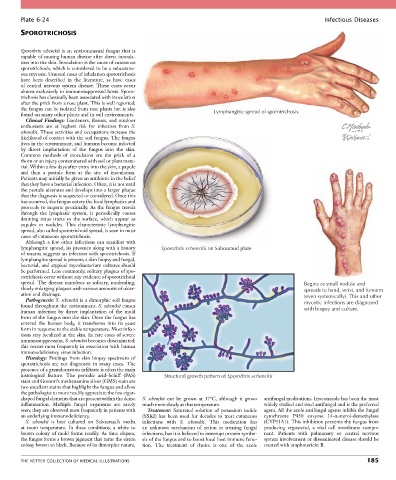
Plate 6-24                                                                                               Infectious Diseases
        SPOROTRICHOSIS


        Sporothrix schenckii is an environmental fungus that is
        capable of causing human disease after direct inocula-
        tion into the skin. Inoculation is the cause of cutaneous
        sporotrichosis, which is considered to be a subcutane-
        ous mycosis. Unusual cases of inhalation sporotrichosis
        have  been  described  in  the  literature,  as  have  cases
        of  central  nervous  system  disease.  These  cases  occur
        almost exclusively in immunosuppressed hosts. Sporo-
        trichosis has classically been associated with inoculation
        after the prick from a rose plant. This is well reported;
        the fungus can be isolated from rose plants but is also            Lymphangitic spread of sporotrichosis
        found on many other plants and in soil environments.
          Clinical  Findings: Gardeners, florists, and outdoor
        enthusiasts  are  at  highest  risk  for  infection  from  S.
        schenckii. These activities and occupations increase the
        likelihood of contact with the soil fungus. The fungus
        lives in the environment, and humans become infected
        by  direct  implantation  of  the  fungus  into  the  skin.
        Common  methods  of  inoculation  are  the  prick  of  a
        thorn or an injury contaminated with soil or plant mate-
        rial. Within a few days after entry into the skin, a papule
        and  then  a  pustule  form  at  the  site  of  inoculation.
        Patients may initially be given an antibiotic in the belief
        that they have a bacterial infection. Often, it is not until
        the pustule ulcerates and develops into a larger plaque
        that the diagnosis is suspected or considered. Once this
        has occurred, the fungus enters the local lymphatics and
        proceeds to migrate proximally. As the fungus travels
        through  the  lymphatic  system,  it  periodically  causes
        draining  sinus  tracts  to  the  surface,  which  appear  as
        papules  or  nodules.  This  characteristic  lymphangitic
        spread, also called sporotrichoid spread, is seen in most
        cases of cutaneous sporotrichosis.
          Although  a  few  other  infections  can  manifest  with
        lymphangitic spread, its presence along with a history   Sporothrix schenckii on Sabouraud plate
        of trauma suggests an infection with sporotrichosis. If
        lymphangitic spread is present, a skin biopsy and fungal,
        bacterial, and atypical mycobacterium cultures should
        be performed. Less commonly, solitary plaques of spo-
        rotrichosis occur without any evidence of sporotrichoid
        spread.  The  disease  manifests  as  solitary,  nonhealing,                                      Begins as small nodule and
        slowly enlarging plaques with various amounts of ulcer-                                           spreads to hand, wrist, and forearm
        ation and drainage.                                                                               (even systemically). This and other
          Pathogenesis: S. schenckii is a dimorphic soil fungus                                           mycotic infections are diagnosed
        found throughout the environment. S. schenckii causes                                             with biopsy and culture.
        human  infection  by  direct  implantation  of  the  mold
        form of the fungus into the skin. Once the fungus has
        entered  the  human  body,  it  transforms  into  its  yeast
        form in response to the stable temperature. Most infec-
        tions stay localized in the skin. In rare cases of severe
        immunosuppression, S. schenckii becomes disseminated;
        this occurs most frequently in association with human
        immunodeficiency virus infection.
          Histology:  Findings  from  skin  biopsy  specimens  of
        sporotrichosis  are  not  diagnostic  in  many  cases.  The
        presence of a granulomatous infiltrate is often the main
        histological  feature.  The  periodic  acid–Schiff  (PAS)   Structural growth pattern of Sporothrix schenckii
        stain and Gomori’s methenamine silver (GMS) stain are
        two excellent stains that highlight the fungus and allow
        the pathologist to more readily appreciate the few cigar-
        shaped fungal elements that are present within the dense   S.  schenckii  can  be  grown  at  37°C,  although  it  grows   antifungal medications. Itraconazole has been the most
        inflammation.  Multiple  fungal  organisms  are  rarely   much more slowly at that temperature.  widely studied and used antifungal and is the preferred
        seen; they are observed most frequently in patients with   Treatment:  Saturated  solution  of  potassium  iodide   agent. All the azole antifungal agents inhibit the fungal
        an underlying immunodeficiency.           (SSKI)  has  been  used  for  decades  to  treat  cutaneous   cytochrome  P450  enzyme  14-α-sterol-demethylase
          S.  schenckii  is  best  cultured  on  Sabouraud’s  media   infections  with  S.  schenckii.  This  medication  has   (CYP51A1). This inhibition prevents the fungus from
        at  room  temperature.  In  these  conditions,  a  white  to   an  unknown  mechanism  of  action  in  treating  fungal   producing  ergosterol,  a  vital  cell  membrane  compo-
        brown  colony  of  mold  forms  readily.  As  time  elapses,     infections, but it is believed to interrupt protein synthe-  nent.  Patients  with  pulmonary  or  central  nervous
        the fungus forms a brown pigment that turns the entire   sis of the fungus and to boost local host immune func-  system involvement or disseminated disease should be
        colony brown to black. Because of its dimorphic nature,     tion.  The  treatment  of  choice  is  one  of  the  azole   treated with amphotericin B.


        THE NETTER COLLECTION OF MEDICAL ILLUSTRATIONS                                                                          185

