


Page 190 - The Netter Collection of Medical Illustrations - Integumentary System_ Volume 4 ( PDFDrive )
P. 190
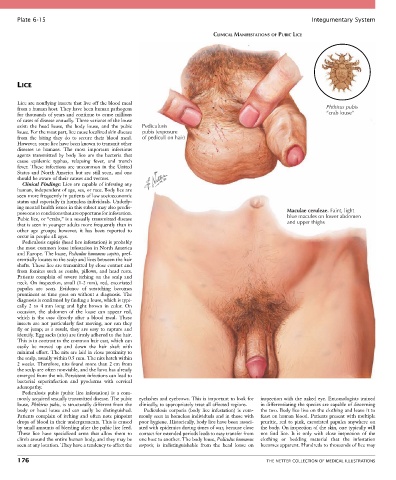
Plate 6-15                                                                                            Integumentary System

                                                                           CLINICAL MANIFESTATIONS OF PUBIC LICE


       LICE


       Lice are nonflying insects that live off the blood meal
       from a human host. They have been human pathogens                                                          Phthirus pubis
       for thousands of years and continue to cause millions                                                      “crab louse”
       of cases of disease annually. Three variants of the louse
       exist:  the  head  louse,  the  body  louse,  and  the  pubic   Pediculosis
       louse. For the most part, lice cause localized skin disease   pubis (exposure
       from  the  biting  they  do  to  secure  their  blood  meal.   of pediculi on hair)
       However, some lice have been known to transmit other
       diseases  to  humans.  The  most  important  infectious
       agents  transmitted  by  body  lice  are  the  bacteria  that
       cause  epidemic  typhus,  relapsing  fever,  and  trench
       fever.  These  infections  are  uncommon  in  the  United
       States and North America but are still seen, and one
       should be aware of their causes and vectors.
         Clinical Findings: Lice are capable of infesting any
       human, independent of age, sex, or race. Body lice are
       seen more frequently in patients of low socioeconomic
       status and especially in homeless individuals. Underly-
       ing mental health issues in this subset may also predis-
       pose one to conditions that are opportune for infestation.                                   Maculae ceruleae. Faint, light
       Pubic lice, or “crabs,” is a sexually transmitted disease                                    blue macules on lower abdomen
       that is seen in younger adults more frequently than in                                       and upper thighs
       other  age  groups;  however,  it  has  been  reported  to
       occur in people all ages.
         Pediculosis capitis (head lice infestation) is probably
       the most common louse infestation in North America
       and Europe. The louse, Pediculus humanus capitis, pref-
       erentially locates to the scalp and lives between the hair
       shafts. These lice are transmitted by close contact and
       from  fomites  such  as  combs,  pillows,  and  head  rests.
       Patients  complain  of  severe  itching  on  the  scalp  and
       neck.  On  inspection,  small  (1-2 mm),  red,  excoriated
       papules  are  seen.  Evidence  of  scratching  becomes
       prominent  as  time  goes  on  without  a  diagnosis.  The
       diagnosis is confirmed by finding a louse, which is typi-
       cally  2  to  4 mm  long  and  light  brown  in  color.  On
       occasion,  the  abdomen  of  the  louse  can  appear  red,
       which  is  the  case  directly  after  a  blood  meal.  These
       insects are not particularly fast moving, nor can they
       fly  or  jump;  as  a  result,  they  are  easy  to  capture  and
       identify. Egg sacks (nits) are firmly adhered to the hair.
       This is in contrast to the common hair cast, which can
       easily  be  moved  up  and  down  the  hair  shaft  with
       minimal effort. The nits are laid in close proximity to
       the scalp, usually within 0.5 mm. The nits hatch within
       2 weeks. Therefore, nits found more than 2 cm from
       the scalp are often nonviable, and the larva has already
       emerged from the nit. Persistent infections can lead to
       bacterial  superinfection  and  pyoderma  with  cervical
       adenopathy.
         Pediculosis  pubis  (pubic  lice  infestation)  is  a  com-
       monly acquired sexually transmitted disease. The pubic   eyelashes and eyebrows. This is important to look for   inspection with the naked eye. Entomologists trained
       louse, Phthirus pubis, is structurally different from the   clinically, to appropriately treat all affected regions.  in differentiating the species are capable of discerning
       body  or  head  louse  and  can  easily  be  distinguished.   Pediculosis  corporis  (body  lice  infestation)  is  com-  the two. Body lice live on the clothing and leave it to
       Patients  complain  of  itching  and  often  note  pinpoint   monly seen in homeless individuals and in those with   feast on human blood. Patients present with multiple
       drops of blood in their undergarments. This is caused   poor hygiene. Historically, body lice have been associ-  pruritic, red to pink, excoriated papules anywhere on
       by small amounts of bleeding after the pubic lice feed.   ated with epidemics during times of war, because close   the body. On inspection of the skin, one typically will
       These  lice  have  specialized  arms  that  allow  them  to   contact for extended periods leads to easy transfer from   not  find  lice.  It  is  only  with  close  inspection  of  the
       climb around the entire human body, and they may be   one host to another. The body louse, Pediculus humanus   clothing  or  bedding  material  that  the  infestation
       seen at any location. They have a tendency to affect the   corporis,  is  indistinguishable  from  the  head  louse  on   becomes apparent. Hundreds to thousands of lice may

       176                                                                                   THE NETTER COLLECTION OF MEDICAL ILLUSTRATIONS

