


Page 192 - The Netter Collection of Medical Illustrations - Integumentary System_ Volume 4 ( PDFDrive )
P. 192
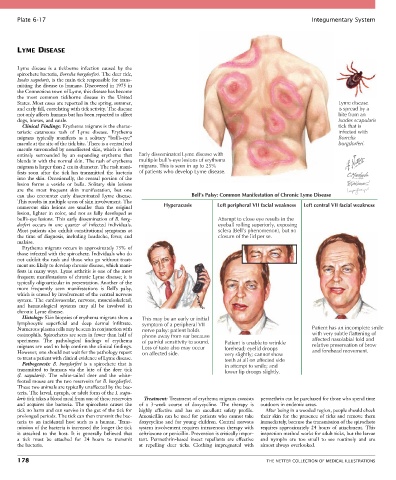
Plate 6-17                                                                                            Integumentary System


       LYME DISEASE


       Lyme  disease  is  a  tickborne  infection  caused  by  the
       spirochete bacteria, Borrelia burgdorferi. The deer tick,
       Ixodes scapularis, is the main tick responsible for trans-
       mitting the disease to humans. Discovered in 1975 in
       the Connecticut town of Lyme, this disease has become
       the  most  common  tickborne  disease  in  the  United
       States. Most cases are reported in the spring, summer,                                                         Lyme disease
       and early fall, correlating with tick activity. The disease                                                    is spread by a
       not only affects humans but has been reported to affect                                                        bite from an
       dogs, horses, and cattle.                                                                                      Ixodes scapularis
         Clinical Findings: Erythema migrans is the charac-                                                           tick that is
       teristic  cutaneous  rash  of  Lyme  disease.  Erythema                                                        infected with
       migrans  typically  manifests  as  a  solitary  “bull’s-eye”                                                   Borrelia
       macule at the site of the tick bite. There is a central red                                                    burgdorferi.
       macule surrounded by nonaffected skin, which is then
       entirely  surrounded  by  an  expanding  erythema  that   Early disseminated Lyme disease with
       blends in with the normal skin. The rash of erythema   multiple bull’s-eye lesions of erythema
       migrans is larger than 2 cm in diameter. The rash mani-  migrans. This is seen in up to 25%
       fests  soon  after  the  tick  has  transmitted  the  bacteria     of patients who develop Lyme disease.
       into the skin. Occasionally, the central portion of the
       lesion  forms  a  vesicle  or  bulla.  Solitary  skin  lesions
       are  the  most  frequent  skin  manifestation,  but  one
       can  also  encounter  early  disseminated  Lyme  disease.   Bell’s Palsy: Common Manifestation of Chronic Lyme Disease
       This results in multiple areas of skin involvement. The
       numerous  skin  lesions  are  smaller  than  the  original   Hyperacusis  Left peripheral VII facial weakness  Left central VII facial weakness
       lesion,  lighter  in  color,  and  not  as  fully  developed  as
       bull’s-eye lesions. This early dissemination of B. burg-             Attempt to close eye results in the
       dorferi  occurs  in  one  quarter  of  infected  individuals.        eyeball rolling superiorly, exposing
       Most patients also exhibit constitutional symptoms at                sclera (Bell’s phenomenon), but no
       the  time  of  diagnosis,  including  headache,  fever,  and         closure of the lid per se.
       malaise.
         Erythema migrans occurs in approximately 75% of
       those infected with the spirochete. Individuals who do
       not exhibit the rash and those who go without treat-
       ment are likely to develop chronic disease, which mani-
       fests in many ways. Lyme arthritis is one of the most
       frequent manifestations of chronic Lyme disease; it is
       typically oligoarticular in presentation. Another of the
       more  frequently  seen  manifestations  is  Bell’s  palsy,
       which is caused by involvement of the central nervous
       system.  The  cardiovascular,  nervous,  musculoskeletal,
       and  hematological  systems  may  all  be  involved  in
       chronic Lyme disease.
         Histology: Skin biopsies of erythema migrans show a   This may be an early or initial
       lymphocytic  superficial  and  deep  dermal  infiltrate.   symptom of a peripheral VII
       Numerous plasma cells may be seen in conjunction with   nerve palsy: patient holds                    Patient has an incomplete smile
       eosinophils. Spirochetes are seen in fewer than half of   phone away from ear because                 with very subtle flattening of
       specimens.  The  pathological  findings  of  erythema   of painful sensitivity to sound.  Patient is unable to wrinkle  affected nasolabial fold and
       migrans are used to help confirm the clinical findings.   Loss of taste also may occur  forehead; eyelid droops  relative preservation of brow
       However, one should not wait for the pathology report   on affected side.  very slightly; cannot show  and forehead movement.
       to treat a patient with clinical evidence of Lyme disease.              teeth at all on affected side
         Pathogenesis:  B.  burgdorferi  is  a  spirochete  that  is           in attempt to smile; and
       transmitted  to  humans  via  the  bite  of  the  deer  tick            lower lip droops slightly.
       (I.  scapularis).  The  white-tailed  deer  and  the  white-
       footed mouse are the two reservoirs for B. burgdorferi.
       These two animals are typically unaffected by the bac-
       teria. The larval, nymph, or adult form of the I. scapu-
       laris tick takes a blood meal from one of these reservoirs   Treatment: Treatment of erythema migrans consists   permethrin can be purchased for those who spend time
       and  acquires  the  bacteria.  The  spirochete  causes  the   of  a  3-week  course  of  doxycycline.  The  therapy  is   outdoors in endemic areas.
       tick no harm and can survive in the gut of the tick for   highly  effective  and  has  an  excellent  safety  profile.   After being in a wooded region, people should check
       prolonged periods. The tick can then transmit the bac-  Amoxicillin can be used for patients who cannot take   their skin for the presence of ticks and remove them
       teria  to  an  incidental  host  such  as  a  human.  Trans-  doxycycline  and  for  young  children.  Central  nervous   immediately, because the transmission of the spirochete
       mission of the bacteria is increased the longer the tick   system involvement requires intravenous therapy with   requires  approximately  24  hours  of  attachment.  This
       is  attached  to  the  host.  It  is  generally  believed  that     ceftriaxone or penicillin. Prevention is critically impor-  inspection method works for adult ticks, but the larvae
       a  tick  must  be  attached  for  24  hours  to  transmit     tant.  Permethrin-based  insect  repellants  are  effective     and  nymphs  are  too  small  to  see  routinely  and  are
       the bacteria.                             at  repelling  deer  ticks.  Clothing  impregnated  with   almost always overlooked.

       178                                                                                   THE NETTER COLLECTION OF MEDICAL ILLUSTRATIONS

