


Page 200 - The Netter Collection of Medical Illustrations - Integumentary System_ Volume 4 ( PDFDrive )
P. 200
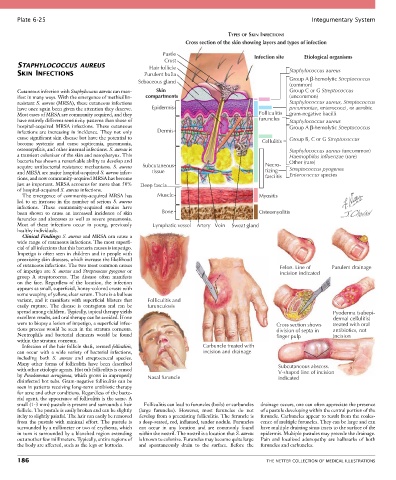
Plate 6-25                                                                                            Integumentary System

                                                                                TYPES OF SKIN INFECTIONS
                                                                 Cross section of the skin showing layers and types of infection

                                                         Pustle                          Infection site              Etiological organisms
                                                          Crust
       STAPHYLOCOCCUS AUREUS                         Hair follicle
       SKIN INFECTIONS                             Purulent bulla                                    Staphylococcus aureus
                                                 Sebaceous gland                                     Group A β-hemolytic Streptococcus
                                                                                                     (common)
       Cutaneous infection with Staphylococcus aureus can man-  Skin                                 Group C or G Streptococcus
       ifest in many ways. With the emergence of methicillin-  compartments                          (uncommon)
       resistant S. aureus (MRSA), these cutaneous infections                                        Staphylococcus aureus, Streptococcus
       have once again been given the attention they deserve.   Epidermis                            pneumoniae, enterococci, or aerobic
       Most cases of MRSA are community acquired, and they                                Folliculitis  gram-negative bacilli
       have entirely different sensitivity patterns than those of                         furuncles  Staphylococcus aureus
       hospital-acquired  MRSA  infections.  These  cutaneous                                        Group A β-hemolytic Streptococcus
       infections  are  increasing  in  incidence.  They  not  only   Dermis
       cause significant skin disease but have the potential to                                      Group B, C or G Streptococcus
       become  systemic  and  cause  septicemia,  pneumonia,                               Cellulitis
       osteomyelitis, and other internal infections. S. aureus is                                    Staphylococcus aureus (uncommon)
       a transient colonizer of the skin and nasopharynx. This                                       Haemophilus influenzae (rare)
       bacteria has shown a remarkable ability to develop and                                        Other (rare)
       acquire  antibacterial  resistance  mechanisms.  S.  aureus   Subcutaneous            Necro-  Streptococcus pyogenes
       and MRSA are major hospital-acquired S. aureus infec-  tissue                         tizing  Enterococcus species
       tions, and now community-acquired MRSA has become                                     fasciitis
       just as important. MRSA accounts for more than 50%   Deep fascia
       of hospital-acquired S. aureus infections.
         The emergence of community-acquired MRSA has   Muscle                            Myositis
       led to an increase in the number of serious  S. aureus
       infections.  These  community-acquired  strains  have
       been  shown  to  cause  an  increased  incidence  of  skin   Bone                  Osteomyolitis
       furuncles  and  abscesses  as  well  as  severe  pneumonia.
       Most  of  these  infections  occur  in  young,  previously   Lymphatic vessel  Artery  Vein  Sweat gland
       healthy individuals.
         Clinical Findings: S. aureus and MRSA can cause a
       wide range of cutaneous infections. The most superfi-
       cial of all infections that this bacteria causes is impetigo.
       Impetigo is often seen in children and in people with
       preexisting skin diseases, which increase the likelihood
       of cutaneous infections. The two most common causes                                        Felon. Line of    Purulent drainage
       of  impetigo  are  S.  aureus  and  Streptococcus  pyogenes  or                            incision indicated
       group  A  streptococcus.  The  disease  often  manifests
       on  the  face.  Regardless  of  the  location,  the  infection
       appears as small, superficial, honey-colored crusts with
       some weeping of yellow, clear serum. There is a bullous
       variant,  and  it  manifests  with  superficial  blisters  that   Folliculitis and
       easily  rupture.  The  disease  is  contagious  and  can  be   furunculosis
       spread among children. Typically, topical therapy yields                                                     Pyoderma (subepi-
       excellent results, and oral therapy can be avoided. If one                                                   dermal cellulitis)
       were to biopsy a lesion of impetigo, a superficial infec-                                 Cross section shows  treated with oral
       tious process would be seen in the stratum corneum.                                       division of septa in  antibiotics, not
       Neutrophils  and  bacterial  elements  would  be  found                                   finger pulp        incision
       within the stratum corneum.
         Infection of the hair follicle shaft, termed folliculitis,    Carbuncle treated with
       can  occur  with  a  wide  variety  of  bacterial  infections,   incision and drainage
       including  both  S.  aureus  and  streptococcal  species.
       Many  other  forms  of  folliculitis  have  been  described                               Subcutaneous abscess.
       with other etiologic agents. Hot tub folliculitis is caused                               V-shaped line of incision
       by Pseudomonas aeruginosa, which grows in improperly   Nasal furuncle                     indicated
       disinfected hot tubs. Gram-negative folliculitis can be
       seen in patients receiving long-term antibiotic therapy
       for acne and other conditions. Regardless of the bacte-
       rial agent, the appearance of folliculitis is the same. A
       small (1-3 mm) pustule is present and surrounds a hair   Folliculitis can lead to furuncles (boils) or carbuncles   drainage occurs, one can often appreciate the presence
       follicle. The pustule is easily broken and can be slightly   (large  furuncles).  However,  most  furuncles  do  not   of a pustule developing within the central portion of the
       itchy to slightly painful. The hair can easily be removed   develop from a preexisting folliculitis. The furuncle is   furuncle. Carbuncles appear to result from the coales-
       from  the  pustule  with  minimal  effort.  The  pustule  is   a deep-seated, red, inflamed, tender nodule. Furuncles   cence of multiple furuncles. They can be large and can
       surrounded by a millimeter or two of erythema, which   can  occur  in  any  location  and  are  commonly  found   have multiple draining sinus tracts to the surface of the
       in turn is surrounded by a blanched region extending   within the nostril. The nostril is a location that S. aureus   epidermis. Multiple pustules may precede the drainage.
       out another few millimeters. Typically, entire regions of   is known to colonize. Furuncles may become quite large   Pain  and  localized  adenopathy  are  hallmarks  of  both
       the body are affected, such as the legs or buttocks.  and  spontaneously  drain  to  the  surface.  Before  the   furuncles and carbuncles.

       186                                                                                   THE NETTER COLLECTION OF MEDICAL ILLUSTRATIONS

