


Page 56 - The Netter Collection of Medical Illustrations - Integumentary System_ Volume 4 ( PDFDrive )
P. 56
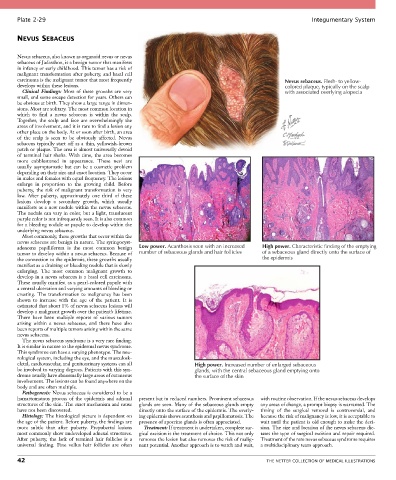
Plate 2-29                                                                                            Integumentary System


       NEVUS SEBACEUS


       Nevus sebaceus, also known as organoid nevus or nevus
       sebaceus of Jadasshon, is a benign tumor that manifests
       in infancy or early childhood. This tumor has a risk of
       malignant transformation after puberty, and basal cell
       carcinoma is the malignant tumor that most frequently                                       Nevus sebaceus. Flesh- to yellow-
       develops within these lesions.                                                              colored plaque, typically on the scalp
         Clinical  Findings:  Most  of  these  growths  are  very                                  with associated overlying alopecia
       small, and some escape detection for years. Others can
       be obvious at birth. They show a large range in dimen-
       sions. Most are solitary. The most common location in
       which  to  find  a  nevus  sebaceus  is  within  the  scalp.
       Together,  the  scalp  and  face  are  overwhelmingly  the
       areas of involvement, and it is rare to find a lesion any
       other place on the body. At or soon after birth, an area
       of  the  scalp  is  seen  to  be  obviously  affected.  Nevus
       sebaceus typically start off as a thin, yellowish-brown
       patch or plaque. The area is almost universally devoid
       of  terminal  hair  shafts.  With  time,  the  area  becomes
       more  cobblestoned  in  appearance.  These  nevi  are
       usually  asymptomatic  but  can  be  a  cosmetic  problem
       depending on their size and exact location. They occur
       in males and females with equal frequency. The lesions
       enlarge  in  proportion  to  the  growing  child.  Before
       puberty,  the  risk  of  malignant  transformation  is  very
       low.  After  puberty,  approximately  one  third  of  these
       lesions  develop  a  secondary  growth,  which  usually
       manifests as a new nodule within the nevus sebaceus.
       The nodule can vary in color, but a light, translucent
       purple color is not infrequently seen. It is also common
       for a bleeding nodule or papule to develop within the
       underlying nevus sebaceus.
         Most commonly, these growths that occur within the
       nevus sebaceus are benign in nature. The syringocyst-
       adenoma  papilliferum  is  the  most  common  benign   Low power. Acanthosis seen with an increased  High power. Characteristic finding of the emptying
       tumor to develop within a nevus sebaceus. Because of   number of sebaceous glands and hair follicles  of a sebaceous gland directly onto the surface of
       the connection to the epidermis, these growths usually                               the epidermis
       manifest as a draining or bleeding nodule that is slowly
       enlarging.  The  most  common  malignant  growth  to
       develop in a nevus sebaceus is a basal cell carcinoma.
       These usually manifest as a pearl-colored papule with
       a central ulceration and varying amounts of bleeding or
       crusting. The transformation to malignancy has been
       shown  to  increase  with  the  age  of  the  patient.  It  is
       estimated that about 1% of nevus sebaceus lesions will
       develop a malignant growth over the patient’s lifetime.
       There  have  been  multiple  reports  of  various  tumors
       arising  within  a  nevus  sebaceus,  and  there  have  also
       been reports of multiple tumors arising within the same
       nevus sebaceus.
         The nevus sebaceus syndrome is a very rare finding.
       It is similar in nature to the epidermal nevus syndrome.
       This syndrome can have a varying phenotype. The neu-
       rological system, including the eye, and the musculosk-
       eletal, cardiovascular, and genitourinary systems can all    High power. Increased number of enlarged sebaceous
       be involved to varying degrees. Patients with this syn-      glands, with the central sebaceous gland emptying onto
       drome usually have abnormally large areas of cutaneous       the surface of the skin
       involvement. The lesions can be found anywhere on the
       body and are often multiple.
         Pathogenesis: Nevus sebaceus is considered to be a
       hamartomatous  process  of  the  epidermis  and  adnexal   present but in reduced numbers. Prominent sebaceous   with routine observation. If the nevus sebaceus develops
       structures of the skin. The exact mechanism and cause   glands are seen. Many of the sebaceous glands empty   any areas of change, a prompt biopsy is warranted. The
       have not been discovered.                 directly onto the surface of the epidermis. The overly-  timing  of  the  surgical  removal  is  controversial,  and
         Histology: The histological picture is dependent on   ing epidermis shows acanthosis and papillomatosis. The   because the risk of malignancy is low, it is acceptable to
       the age of the patient. Before puberty, the findings are   presence of apocrine glands is often appreciated.  wait until the patient is old enough to make the deci-
       more  subtle  than  after  puberty.  Prepubertal  lesions   Treatment: If treatment is undertaken, complete sur-  sion. The size and location of the nevus sebaceus dic-
       most commonly show undeveloped adnexal structures.   gical excision is the treatment of choice. This not only   tates the type of surgical excision and repair required.
       After  puberty,  the  lack  of  terminal  hair  follicles  is  a   removes the lesion but also removes the risk of malig-  Treatment of the rare nevus sebaceus syndrome requires
       universal  finding.  Fine  vellus  hair  follicles  are  often   nant potential. Another approach is to watch and wait,   a multidisciplinary team approach.

       42                                                                                    THE NETTER COLLECTION OF MEDICAL ILLUSTRATIONS

