


Page 86 - The Netter Collection of Medical Illustrations - Integumentary System_ Volume 4 ( PDFDrive )
P. 86
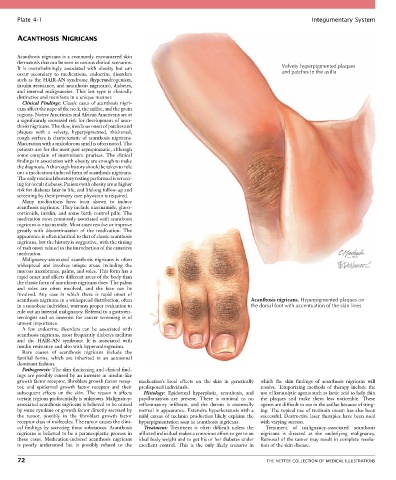
Plate 4-1                                                                                             Integumentary System


       ACANTHOSIS NIGRICANS


       Acanthosis nigricans is a commonly encountered skin
       dermatosis that can be seen in various clinical scenarios.
       It  is  overwhelmingly  associated  with  obesity  but  can                                Velvety hyperpigmented plaques
       occur  secondary  to  medications,  endocrine  disorders                                   and patches in the axilla
       such as the HAIR-AN syndrome (hyperandrogenism,
       insulin resistance, and acanthosis nigricans), diabetes,
       and  internal  malignancies.  This  last  type  is  clinically
       distinctive and manifests in a unique manner.
         Clinical Findings: Classic cases of acanthosis nigri-
       cans affect the nape of the neck, the axillae, and the groin
       regions. Native Americans and African Americans are at
       a significantly increased risk for development of acan-
       thosis nigricans. The slow, insidious onset of patches and
       plaques  with  a  velvety,  hyperpigmented,  thickened,
       rough surface is characteristic of acanthosis nigricans.
       Maceration with a malodorous smell is often noted. The
       patients are for the most part asymptomatic, although
       some  complain  of  intermittent  pruritus.  The  clinical
       findings in association with obesity are enough to make
       the diagnosis. A thorough history should be taken to rule
       out a medication-induced form of acanthosis nigricans.
       The only routine laboratory testing performed is screen-
       ing for occult diabetes. Patients with obesity are at higher
       risk for diabetes later in life, and lifelong follow-up and
       screening by their primary care physician is required.
         Many  medications  have  been  shown  to  induce
       acanthosis nigricans. They include niacinamide, gluco-
       corticoids,  insulin,  and  some  birth  control  pills.  The
       medication most commonly associated with acanthosis
       nigricans is niacinamide. Most cases resolve or improve
       greatly  with  discontinuation  of  the  medication.  The
       appearance is often identical to that of classic acanthosis
       nigricans, but the history is suggestive, with the timing
       of rash onset related to the introduction of the causative
       medication.
         Malignancy-associated  acanthosis  nigricans  is  often
       widespread  and  involves  unique  areas,  including  the
       mucous membranes, palms, and soles. This form has a
       rapid onset and affects different areas of the body than
       the classic form of acanthosis nigricans does. The palms
       and  soles  are  often  involved,  and  the  face  can  be
       involved.  Any  case  in  which  there  is  rapid  onset  of
       acanthosis nigricans in a widespread distribution, often                         Acanthosis nigricans. Hyperpigmented plaques on
       in a nonobese individual, warrants proper evaluation to                          the dorsal foot with accentuation of the skin lines
       rule out an internal malignancy. Referral to a gastroen-
       terologist  and  an  internist  for  cancer  screening  is  of
       utmost importance.
         A  few  endocrine  disorders  can  be  associated  with
       acanthosis nigricans, most frequently diabetes mellitus
       and  the  HAIR-AN  syndrome  It  is  associated  with
       insulin resistance and also with hyperandrogenism.
         Rare  causes  of  acanthosis  nigricans  include  the
       familial  forms,  which  are  inherited  in  an  autosomal
       dominant fashion.
         Pathogenesis: The skin thickening and clinical find-
       ings are possibly caused by an increase in insulin-like
       growth factor receptor, fibroblast growth factor recep-  medication’s  local  effects  on  the  skin  in  genetically     which  the  skin  findings  of  acanthosis  nigricans  will
       tor,  and  epidermal  growth  factor  receptor  and  their   predisposed individuals.  resolve.  Temporizing  methods  of  therapy  include  the
       subsequent  effects  on  the  skin.  The  reason  it  affects   Histology:  Epidermal  hyperplasia,  acanthosis,  and   use of keratolytic agents such as lactic acid to help thin
       certain regions preferentially is unknown. Malignancy-  papillomatosis  are  present.  There  is  minimal  to  no   the  plaques  and  make  them  less  noticeable.  These
       associated acanthosis nigricans is believed to be caused   inflammatory  infiltrate,  and  the  dermis  is  essentially   agents are difficult to use in the axillae because of sting-
       by some cytokine or growth factor directly secreted by   normal in appearance. Extensive hyperkeratosis with a   ing. The topical use of tretinoin cream has also been
       the  tumor,  possibly  in  the  fibroblast  growth  factor   mild  excess  of  melanin  production  likely  explains  the   successful. Destructive laser therapies have been used
       receptor class of molecules. The tumor causes the clini-  hyperpigmentation seen in acanthosis nigricans.  with varying success.
       cal  findings  by  secreting  these  substances.  Acanthosis   Treatment:  Treatment  is  often  difficult  unless  the   Treatment  of  malignancy-associated  acanthosis
       nigricans is believed to be a paraneoplastic process in   afflicted individual makes a conscious effort to get to an   nigricans  is  directed  at  the  underlying  malignancy.
       these  cases.  Medication-induced  acanthosis  nigricans     ideal body weight and to get his or her diabetes under   Removal of the tumor may result in complete resolu-
       is  poorly  understood  but  is  possibly  related  to  the     excellent  control.  This  is  the  only  likely  scenario  in   tion of the skin disease.

       72                                                                                    THE NETTER COLLECTION OF MEDICAL ILLUSTRATIONS

