


Page 87 - The Netter Collection of Medical Illustrations - Integumentary System_ Volume 4 ( PDFDrive )
P. 87
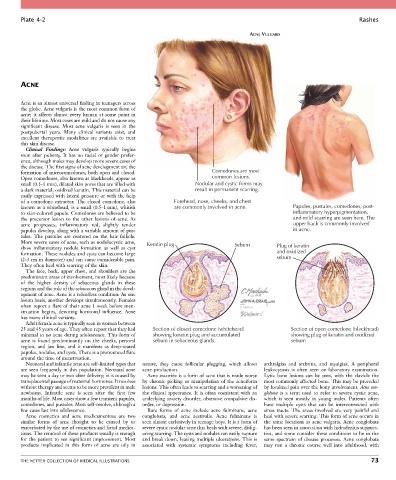
Plate 4-2                                                                                                            Rashes

                                                                                       ACNE VULGARIS


        ACNE


        Acne is an almost universal finding in teenagers across
        the globe. Acne vulgaris is the most common form of
        acne;  it  affects  almost  every  human  at  some  point  in
        their lifetime. Most cases are mild and do not cause any
        significant  disease.  Most  acne  vulgaris  is  seen  in  the
        postpubertal  years.  Many  clinical  variants  exist,  and
        excellent  therapeutic  modalities  are  available  to  treat
        this skin disease.
          Clinical  Findings:  Acne  vulgaris  typically  begins
        soon  after  puberty.  It  has  no  racial  or  gender  prefer-
        ence, although males may develop more severe cases of
        the disease. The first signs of acne development are the
        formation of microcomedones, both open and closed.                Comedones are most
        Open comedones, also known as blackheads, appear as               common lesions.
        small (0.5-1 mm), dilated skin pores that are filled with   Nodular and cystic forms may
        a dark material, oxidized keratin. This material can be     result in permanent scarring.
        easily expressed with lateral pressure or with the help
        of  a  comedone  extractor.  The  closed  comedone,  also   Forehead, nose, cheeks, and chest
        known as a whitehead, is a small (0.5-1 mm), whitish   are commonly involved in acne.         Papules, pustules, comedones, post-
        to skin-colored papule. Comedones are believed to be                                          inflammatory hyperpigmentation,
        the  precursor  lesion  to  the  other  lesions  of  acne.  As                                and mild scarring are seen here. The
        acne  progresses,  inflammatory  red,  slightly  tender                                       upper back is commonly involved
        papules develop, along with a variable amount of pus-                                         in acne.
        tules.  The  pustules  are  centered  on  the  hair  follicle.
        More severe cases of acne, such as nodulocystic acne,   Keratin plug      Sebum
        show  inflammatory  nodule  formation  as  well  as  cyst                                Plug of keratin
        formation. These nodules and cysts can become large                                      and oxidized
        (2-3 cm in diameter) and can cause considerable pain.                                    sebum
        They often heal with scarring of the skin.
          The  face,  back,  upper  chest,  and  shoulders  are  the
        predominant areas of involvement, most likely because
        of  the  higher  density  of  sebaceous  glands  in  these
        regions and the role of the sebaceous gland in the devel-
        opment of acne. Acne is a relentless condition: As one
        lesion heals, another develops simultaneously. Females
        often report a flare of their acne 1 week before men-                       with
                                                                                    E. Hatton
        struation  begins,  denoting  hormonal  influence.  Acne
        has many clinical variants.
          Adult female acne is typically seen in women between
        25 and 45 years of age. They often report that they had   Section of closed comedone (whitehead)  Section of open comedone (blackhead)
        minimal to no acne during adolescence. This form of   showing keratin plug and accumulated   showing plug of keratin and oxidized
        acne  is  found  predominantly  on  the  cheeks,  perioral   sebum in sebaceous glands       sebum
        region,  and  jaw  line,  and  it  manifests  as  deep-seated
        papules, nodules, and cysts. There is a pronounced flare
        around the time of menstruation.
          Neonatal and infantile acne are self-limited types that   nature;  they  cause  follicular  plugging,  which  allows   arthralgias  and  arthritis,  and  myalgias.  A  peripheral
        are seen frequently in this population. Neonatal acne   acne  production.           leukocytosis  is  often  seen  on  laboratory  examination.
        may be seen a day or two after delivery; it is caused by   Acne excoriée is a form of acne that is made worse   Lytic  bone  lesions  can  be  seen,  with  the  clavicle  the
        transplacental passage of maternal hormones. It resolves   by  chronic  picking  or  manipulation  of  the  acneiform   most commonly affected bone. This may be preceded
        without therapy and seems to be more prevalent in male   lesions. This often leads to scarring and a worsening of   by localized pain over the bony involvement. Acne con-
        newborns.  Infantile  acne  is  seen  after  the  first  few   the  clinical  appearance.  It  is  often  coexistent  with  an   globata  is  a  term  used  to  refer  to  severe  cystic  acne,
        months of life. Most cases show a few transient papules,   underlying anxiety disorder, obsessive compulsive dis-  which  is  seen  mostly  in  young  males.  Patients  often
        comedones, and pustules. Most self-resolve, although a   order, or depression.      have  multiple  cysts  that  can  be  interconnected  with
        few cases last into adolescence.            Rare  forms  of  acne  include  acne  fulminans,  acne     sinus  tracts.  The  areas  involved  are  very  painful  and
          Acne  cosmetica  and  acne  medicamentosa  are  two   conglobata,  and  acne  aestivalis.  Acne  fulminans  is     heal with severe scarring. This form of acne occurs in
        similar  forms  of  acne  thought  to  be  caused  by  or   seen almost exclusively in teenage boys. It is a form of   the  same  locations  as  acne  vulgaris.  Acne  conglobata
        exacerbated by the use of cosmetics and facial medica-  severe cystic nodular acne that heals with severe, disfig-  has been seen in association with hidradenitis suppura-
        tions. The removal of these products usually is enough   uring scarring. The cysts and nodules can easily rupture   tiva, and some consider these conditions to be in the
        for  the  patient  to  see  significant  improvement.  Most   and break down, leaving multiple ulcerations. This is   same  spectrum  of  disease  processes.  Acne  conglobata
        products  implicated  in  this  form  of  acne  are  oily  in   associated  with  systemic  symptoms  including  fever,   may  run  a  chronic  course  well  into  adulthood,  with


        THE NETTER COLLECTION OF MEDICAL ILLUSTRATIONS                                                                           73

