


Page 90 - The Netter Collection of Medical Illustrations - Integumentary System_ Volume 4 ( PDFDrive )
P. 90
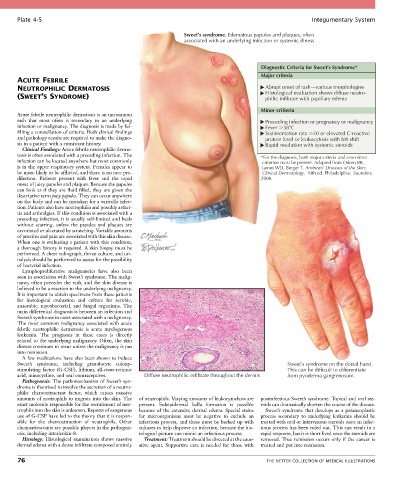
Plate 4-5                                                                                             Integumentary System

                                                                 Sweet’s syndrome. Edematous papules and plaques, often
                                                                 associated with an underlying infection or systemic illness


                                                                                           Diagnostic Criteria for Sweet’s Syndrome*
                                                                                           Major criteria
       ACUTE FEBRILE
       NEUTROPHILIC DERMATOSIS                                                                Abrupt onset of rash—various morphologies
       (SWEET’S SYNDROME)                                                                     Histological evaluation shows diffuse neutro-
                                                                                              philic infiltrate with papillary edema
                                                                                           Minor critieria
       Acute febrile neutrophilic dermatosis is an uncommon
       rash  that  most  often  is  secondary  to  an  underlying                             Preceding infection or pregnancy or malignancy
       infection or malignancy. The diagnosis is made by ful-                                 Fever  38 C
       filling a constellation of criteria. Both clinical findings                            Sedimentation rate  20 or elevated C-reactive
       and pathology results are required to make the diagno-                                 protein level or leukocytosis with left shift
       sis in a patient with a consistent history.                                            Rapid resolution with systemic steroids
         Clinical Findings: Acute febrile neutrophilic derma-
       tosis is often associated with a preceding infection. The                           *For the diagnosis, both major criteria and one minor
       infection can be located anywhere but most commonly                                  criterion must be present. Adapted from Odom RB,
       is in the upper respiratory system. Females appear to                                James WD, Berger T. Andrews’ Diseases of the Skin:
       be more likely to be afflicted, and there is no race pre-                            Clinical Dermatology. 10th ed. Philadelphia:  Saunders,
       dilection.  Patients  present  with  fever  and  the  rapid                         2006.
       onset of juicy papules and plaques. Because the papules
       can look as if they are fluid filled, they are given the
       descriptive term juicy papules. They can occur anywhere
       on the body and can be mistaken for a varicella infec-
       tion. Patients also have neutrophilia and possibly arthri-
       tis and arthralgias. If this condition is associated with a
       preceding infection, it is usually self-limited and heals
       without  scarring,  unless  the  papules  and  plaques  are
       excoriated or ulcerated by scratching. Variable amounts
       of pruritus and pain are associated with this skin disease.
       When one is evaluating a patient with this condition,
       a thorough history is required. A skin biopsy must be
       performed. A chest radiograph, throat culture, and uri-
       nalysis should be performed to assess for the possibility
       of bacterial infection.
         Lymphoproliferative  malignancies  have  also  been
       seen in association with Sweet’s syndrome. The malig-
       nancy often precedes the rash, and the skin disease is
       believed to be a reaction to the underlying malignancy.
       It is important to obtain specimens from these patients
       for  histological  evaluation  and  culture  for  aerobic,
       anaerobic,  mycobacterial,  and  fungal  organisms.  The
       main differential diagnosis is between an infection and
       Sweet’s syndrome in cases associated with a malignancy.
       The  most  common  malignancy  associated  with  acute
       febrile  neutrophilic  dermatosis  is  acute  myelogenous
       leukemia.  The  prognosis  in  these  cases  is  directly
       related to the underlying malignancy. Often, the skin
       disease continues to recur unless the malignancy is put
       into remission.
         A few medications have also been shown to induce
       Sweet’s  syndrome,  including  granulocyte  colony-                                          Sweet’s syndrome on the dorsal hand.
       stimulating factor (G-CSF), lithium, all-trans-retinoic                                      This can be difficult to differentiate
       acid, minocycline, and oral contraceptives.  Diffuse neutrophilic infiltrate throughout the dermis  from pyoderma gangrenosum.
         Pathogenesis: The pathomechanism of Sweet’s syn-
       drome is theorized to involve the secretion of a neutro-
       philic  chemoattractant  factor,  which  causes  massive
       amounts of neutrophils to migrate into the skin. The   of neutrophils. Varying amounts of leukocytoclasis are   postinfectious Sweet’s syndrome. Topical and oral ste-
       exact molecule responsible for the recruitment of neu-  present.  Subepidermal  bulla  formation  is  possible   roids can dramatically shorten the course of the disease.
       trophils into the skin is unknown. Reports of exogenous   because of the extensive dermal edema. Special stains   Sweet’s  syndrome  that  develops  as  a  paraneoplastic
       use of G-CSF have led to the theory that it is respon-  for  microorganisms  must  be  negative  to  exclude  an   process  secondary  to  underlying  leukemia  should  be
       sible  for  the  chemoattraction  of  neutrophils.  Other   infectious process, and these must be backed up with   treated with oral or intravenous steroids once an infec-
       chemoattractants are possible players in the pathogen-  cultures to help disprove an infection, because the his-  tious process has been ruled out. This can result in a
       esis, including interleukin-8.            tological picture can mimic an infectious process.  rapid response, but it is short lived once the steroids are
         Histology:  Histological  examination  shows  massive   Treatment: Treatment should be directed at the caus-  removed.  True  remission  occurs  only  if  the  cancer  is
       dermal edema with a dense infiltrate composed entirely   ative  agent.  Supportive  care  is  needed  for  those  with   treated and put into remission.

       76                                                                                    THE NETTER COLLECTION OF MEDICAL ILLUSTRATIONS

