


Page 88 - The Netter Collection of Medical Illustrations - Integumentary System_ Volume 4 ( PDFDrive )
P. 88
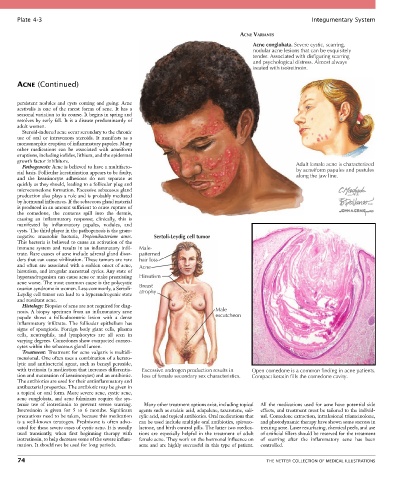
Plate 4-3                                                                                             Integumentary System

                                                                                    ACNE VARIANTS
                                                                                        Acne conglobata. Severe cystic, scarring,
                                                                                        nodular acne lesions that can be exquisitely
                                                                                        tender. Associated with disfiguring scarring
                                                                                        and psychological distress. Almost always
                                                                                        treated with isotretinoin.

       ACNE (Continued)


       persistent  nodules  and  cysts  coming  and  going.  Acne
       aestivalis  is  one  of  the  rarest  forms  of  acne.  It  has  a
       seasonal variation to its course. It begins in spring and
       resolves by early fall. It is a disease predominantly of
       adult women.
         Steroid-induced acne occur secondary to the chronic
       use  of  oral  or  intravenous  steroids.  It  manifests  as  a
       monomorphic eruption of inflammatory papules. Many
       other  medications  can  be  associated  with  acneiform
       eruptions, including iodides, lithium, and the epidermal
       growth factor inhibitors.
         Pathogenesis: Acne is believed to have a multifacto-                                          Adult female acne is characterized
       rial basis. Follicular keratinization appears to be faulty,                                     by acneiform papules and pustules
       and  the  keratinocyte  adhesions  do  not  separate  as                                        along the jaw line.
       quickly as they should, leading to a follicular plug and
       microcomedone formation. Excessive sebaceous gland
       production also plays a role and is probably mediated
       by hormonal influences. If the sebaceous gland material
       is produced in an amount sufficient to cause rupture of
       the  comedone,  the  contents  spill  into  the  dermis,
       causing  an  inflammatory  response;  clinically,  this  is
       manifested  by  inflammatory  papules,  nodules,  and
       cysts. The third player in the pathogenesis is the gram-
       negative  anaerobic  bacteria,  Propionibacterium  acnes.   Sertoli-Leydig cell tumor
       This bacteria is believed to cause an activation of the
       immune  system  and  results  in  an  inflammatory  infil-  Male-
       trate. Rare causes of acne include adrenal gland disor-  patterned
       ders that can cause virilization. These tumors are rare   hair loss
       and often are associated with a sudden onset of acne,   Acne
       hirsutism, and irregular menstrual cycles. Any state of
       hyperandrogenism can cause acne or make preexisting   Hirsutism
       acne worse. The most common cause is the polycystic
       ovarian syndrome in women. Less commonly, a Sertoli-  Breast
       Leydig cell tumor can lead to a hyperandrogenic state   atrophy
       and resultant acne.
         Histology: Biopsies of acne are not required for diag-
       nosis.  A  biopsy  specimen  from  an  inflammatory  acne           Male
       papule  shows  a  folliculocentric  lesion  with  a  dense          escutcheon
       inflammatory  infiltrate.  The  follicular  epithelium  has
       signs  of  spongiosis.  Foreign  body  giant  cells,  plasma
       cells,  neutrophils,  and  lymphocytes  are  all  seen  in
       varying degrees. Comedones show compacted corneo-
       cytes within the sebaceous gland lumen.
         Treatment:  Treatment  for  acne  vulgaris  is  multidi-
       mensional. One often uses a combination of a kerato-
       lytic and antibacterial agent, such as benzyl peroxide,
       with tretinoin (a medication that increases differentia-  Excessive androgen production results in   Open comedone is a common finding in acne patients.
       tion and maturation of keratinocytes) and an antibiotic.   loss of female secondary sex characteristics.  Compact keratin fills the comedone cavity.
       The antibiotics are used for their antiinflammatory and
       antibacterial properties. The antibiotic may be given in
       a topical or oral form. More severe acne, cystic acne,
       acne  conglobata,  and  acne  fulminans  require  the  sys-
       temic  use  of  isotretinoin  to  prevent  severe  scarring.   Many other treatment options exist, including topical   All the medications used for acne have potential side
       Isotretinoin  is  given  for  5  to  6  months.  Significant     agents such as azelaic acid, adapalene, tazarotene, sali-  effects, and treatment must be tailored to the individ-
       precautions need to be taken, because this medication   cylic acid, and topical antibiotics. Oral medications that   ual. Comedone extraction, intralesional triamcinolone,
       is  a  well-known  teratogen.  Prednisone  is  often  advo-  can be used include multiple oral antibiotics, spirono-  and photodynamic therapy have shown some success in
       cated for these severe cases of cystic acne. It is usually   lactone, and birth control pills. The latter two medica-  treating acne. Laser resurfacing, chemical peels, and use
       used  transiently,  when  first  beginning  therapy  with   tions  are  especially  helpful  in  the  treatment  of  adult   of artificial fillers should be reserved for the treatment
       isotretinoin, to help decrease some of the severe inflam-  female acne. They work on the hormonal influence on   of  scarring  after  the  inflammatory  acne  has  been
       mation. It should not be used for long periods.  acne and are highly successful in this type of patient.   controlled.

       74                                                                                    THE NETTER COLLECTION OF MEDICAL ILLUSTRATIONS

