


Page 95 - The Netter Collection of Medical Illustrations - Integumentary System_ Volume 4 ( PDFDrive )
P. 95
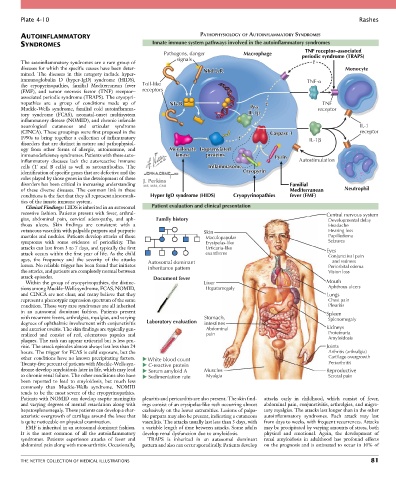
Plate 4-10                                                                                                           Rashes

        AUTOINFLAMMATORY                                              PATHOPHYSIOLOGY OF AUTOINFLAMMATORY SYNDROMES
        SYNDROMES                                     Innate immune system pathways involved in the autoinflammatory syndromes
                                                                                                          TNF receptor–associated
                                                          Pathogens, danger          Macrophage          periodic syndrome (TRAPS)
                                                              signals
        The autoinflammatory syndromes are a rare group of                                                   ?
        diseases for which the specific causes have been deter-        Nbd-LrR                                          Monocyte
        mined.  The  diseases  in  this  category  include  hyper-
        immunoglobulin  D  (hyper-IgD)  syndrome  (HIDS),                                                  TNF-
        the  cryopyrinopathies,  familial  Mediterranean  fever   Toll-like
        (FMF),  and  tumor  necrosis  factor  (TNF)  receptor–  receptors
        associated periodic syndrome (TRAPS). The cryopyri-
        nopathies  are  a  group  of  conditions  made  up  of   NF B                        ? ?                TNF
        Muckle-Wells  syndrome,  familial  cold  autoinflamma-                         Pro                     receptor
        tory  syndrome  (FCAS),  neonatal-onset  multisystem                           IL-1
        inflammatory disease (NOMID), and chronic infantile
        neurological  cutaneous  and  articular  syndrome                                                                    IL-1
        (CINCA). These groupings were first proposed in the                                   Caspase 1                      receptor
        1990s  to  bring  together  a  collection  of  inflammatory                ? ?                      IL-1
        disorders that are distinct in nature and pathophysiol-
        ogy  from  other  forms  of  allergic,  autoimmune,  and   Mevalonate  Isoprenylated
        immunodeficiency syndromes. Patients with these auto-  kinase   proteins                Pyrin
        inflammatory  diseases  lack  the  autoreactive  immune                                         Autostimulation
        cells  (T  and  B  cells)  as  well  as  autoantibodies.  The    Inflammasome
        identification of specific genes that are defective and the                  Cryopyrin
        roles played by those genes in the development of these
        disorders has been critical in increasing understanding                                      Familial
        of  these  diverse  diseases.  The  common  link  in  these                                  Mediterranean      Neutrophil
        conditions is the fact that they all represent abnormali-  Hyper IgD syndrome (HIDS)  Cryopyrinopathies  fever (FMF)
        ties of the innate immune system.
          Clinical Findings: HIDS is inherited in an autosomal   Patient evaluation and clinical presentation
        recessive fashion. Patients present with fever, arthral-                                                  Central nervous system
        gias,  abdominal  pain,  cervical  adenopathy,  and  aph-  Family history                                 Developmental delay
        thous  ulcers.  Skin  findings  are  consistent  with  a                                                  Headache
        cutaneous vasculitis with palpable purpura and purpuric        Skin                                       Hearing loss
        macules and nodules. Patients develop attacks of these          Maculopapular                             Papilledema
        symptoms  with  some  evidence  of  periodicity.  The           Erysipelas-like                           Seizures

        attacks can last from 3 to 7 days, and typically the first      Urticaria-like                            Eyes
        attack occurs within the first year of life. As the child       exanthems                                 Conjunctival pain
        ages,  the  frequency  and  the  severity  of  the  attacks   Autosomal dominant                             and redness
        lessen. No reliable trigger has been found that initiates   inheritance pattern                           Periorbital edema
        the attacks, and patients are completely normal between                                                   Vision loss
        attack episodes.                              Document fever
          Within the group of cryopyrinopathies, the distinc-          Liver                                      Mouth
        tions among Muckle-Wells syndrome, FCAS, NOMID,                 Hepatomegaly                              Aphthous ulcers
        and CINCA are not clear, and many believe that they                                                       Lungs
        represent a phenotypic expression spectrum of the same                                                    Chest pain
        condition. These very rare syndromes are all inherited                                                    Pleuritis
        in  an  autosomal  dominant  fashion.  Patients  present                                                  Spleen
        with recurrent fevers, arthralgias, myalgias, and varying       Stomach,                                  Splenomegaly
        degrees of ophthalmic involvement with conjunctivitis   Laboratory evaluation  intestines
        and anterior uveitis. The skin findings are typically gen-      Abdominal                                 Kidneys
        eralized  and  consist  of  red,  edematous  papules  and       pain                                      Proteinuria
        plaques. The rash can appear urticarial but is less pru-                                                  Amyloidosis
        ritic. The attack episodes almost always last less than 24                                                Joints
        hours. The trigger for FCAS is cold exposure, but the                                                     Arthritis (arthralgia)
        other conditions have no known precipitating factors.    White blood count                                Cartilage overgrowth
        Twenty-five percent of patients with Muckle-Wells syn-  C-reactive protein                                Periarthritis
        drome develop amyloidosis later in life, which may lead   Serum amyloid A  Muscles                        Reproductive
        to chronic renal failure. The other conditions also have   Sedimentation rate  Myalgia                    Scrotal pain
        been  reported  to  lead  to  amyloidosis,  but  much  less
        commonly  than  Muckle-Wells  syndrome.  NOMID
        tends to be the most severe of the cryopyrinopathies.
        Patients with NOMID can develop aseptic meningitis   pleuritis and pericarditis are also present. The skin find-  attacks  early  in  childhood,  which  consist  of  fever,
        and varying degrees of mental retardation along with   ings consist of an erysipelas-like rash occurring almost   abdominal pain, conjunctivitis, arthralgias, and migra-
        hepatosplenomegaly. These patients can develop a char-  exclusively on the lower extremities. Lesions of palpa-  tory myalgias. The attacks last longer than in the other
        acteristic overgrowth of cartilage around the knee that   ble purpura may also be present, indicating a cutaneous   autoinflammatory  syndromes.  Each  attack  may  last
        is quite noticeable on physical examination.  vasculitis. The attacks usually last less than 3 days, with   from days to weeks, with frequent recurrences. Attacks
          FMF is inherited in an autosomal dominant fashion.   a variable length of time between attacks. Some adults   may be precipitated by varying amounts of stress, both
        It  is  the  most  common  of  all  the  autoinflammatory   develop renal dysfunction due to amyloidosis.  physical  and  emotional.  Again,  the  development  of
        syndromes.  Patients  experience  attacks  of  fever  and   TRAPS  is  inherited  in  an  autosomal  dominant   renal  amyloidosis  in  adulthood  has  profound  effects
        abdominal pain along with monoarthritis. Occasionally,   pattern and also can occur sporadically. Patients develop   on the prognosis and is estimated to occur in 10% of


        THE NETTER COLLECTION OF MEDICAL ILLUSTRATIONS                                                                           81

