


Page 294 - Clinical Application of Mechanical Ventilation
P. 294
260    Chapter 9


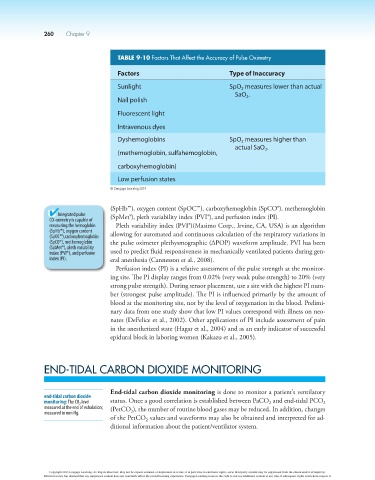
                                              TABLE 9-10 Factors That Affect the Accuracy of Pulse Oximetry

                                              Factors                              Type of Inaccuracy

                                              Sunlight                             SpO  measures lower than actual
                                                                                      2
                                                                                    SaO .
                                              Nail polish                               2
                                              Fluorescent light

                                              Intravenous dyes

                                              Dyshemoglobins                       SpO  measures higher than
                                                                                      2
                                                                                    actual SaO .
                                                                                              2
                                              (methemoglobin, sulfahemoglobin,
                                              carboxyhemoglobin)

                                              Low perfusion states
                                            © Cengage Learning 2014


                                            (SpHb™), oxygen content (SpOC™), carboxyhemoglobin (SpCO®), methemoglobin
                          Integrated pulse   (SpMet®), pleth variability index (PVI®), and perfusion index (PI).
                        CO-oximetry is capable of
                        measuring the hemoglobin   Pleth variability index (PVI®)(Masimo Corp., Irvine, CA, USA) is an algorithm
                        (SpHb™), oxygen content
                        (SpOC™),carboxyhemoglobin   allowing for automated and continuous calculation of the respiratory variations in
                        (SpCO®), methemoglobin   the pulse oximeter plethysmographic (∆POP) waveform amplitude. PVI has been
                        (SpMet®), pleth variability
                        index (PVI®), and perfusion   used to predict fluid responsiveness in mechanically ventilated patients during gen-
                        index (PI).         eral anesthesia (Cannesson et al., 2008).
                                             Perfusion index (PI) is a relative assessment of the pulse strength at the monitor-
                                            ing site. The PI display ranges from 0.02% (very weak pulse strength) to 20% (very
                                            strong pulse strength). During sensor placement, use a site with the highest PI num-
                                            ber (strongest pulse amplitude). The PI is influenced primarily by the amount of
                                            blood at the monitoring site, not by the level of oxygenation in the blood. Prelimi-
                                            nary data from one study show that low PI values correspond with illness on neo-
                                            nates (DeFelice et al., 2002). Other applications of PI include assessment of pain
                                            in the anesthetized state (Hagar et al., 2004) and as an early indicator of successful
                                            epidural block in laboring women (Kakazu et al., 2005).


                      END-TIDAL CARBON DIOXIDE MONITORING


                                            End-tidal carbon dioxide monitoring is done to monitor a patient’s ventilatory
                      end-tidal carbon dioxide
                      monitoring: The CO 2  level   status. Once a good correlation is established between PaCO  and end-tidal PCO
                                                                                               2
                                                                                                                 2
                      measured at the end of exhalation;   (PetCO ), the number of routine blood gases may be reduced. In addition, changes
                      measured in mm Hg.          2
                                            of the PetCO  values and waveforms may also be obtained and interpreted for ad-
                                                       2
                                            ditional information about the patient/ventilator system.


                        Copyright 2013 Cengage Learning. All Rights Reserved. May not be copied, scanned, or duplicated, in whole or in part. Due to electronic rights, some third party content may be suppressed from the eBook and/or eChapter(s).
                      Editorial review has deemed that any suppressed content does not materially affect the overall learning experience. Cengage Learning reserves the right to remove additional content at any time if subsequent rights restrictions require it.

