


Page 380 - Clinical Application of Mechanical Ventilation
P. 380
346    Chapter 11


                                        15


                                        P (cm H 2 O)  Response


                                               Time

                                                                                                                  © Cengage Learning 2014


                                                                2          3         4          5
                                        22
                                                                      Time (sec)
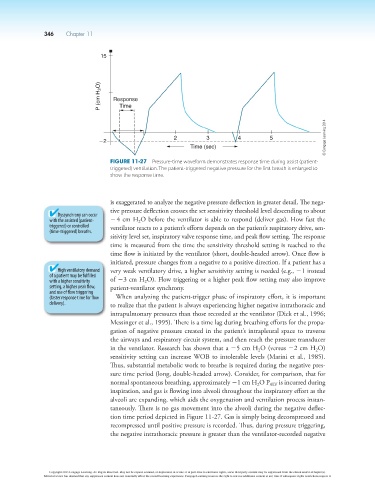
                                            Figure 11-27  Pressure-time waveform demonstrates response time during assist (patient-
                                            triggered) ventilation. The patient-triggered negative pressure for the first breath is enlarged to
                                            show the response time.


                                            is exaggerated to analyze the negative pressure deflection in greater detail. The nega-
                                            tive pressure deflection crosses the set sensitivity threshold level descending to about
                          Dyssynchrony can occur
                        with the assisted (patient-  2 4 cm H O before the ventilator is able to respond (deliver gas). How fast the
                                                     2
                        triggered) or controlled   ventilator reacts to a patient’s efforts depends on the patient’s respiratory drive, sen-
                        (time-triggered) breaths.
                                            sitivity level set, inspiratory valve response time, and peak flow setting. The response
                                            time is measured from the time the sensitivity threshold setting is reached to the
                                            time flow is initiated by the ventilator (short, double-headed arrow). Once flow is
                                            initiated, pressure changes from a negative to a positive direction. If a patient has a
                          High ventilatory demand   very weak ventilatory drive, a higher sensitivity setting is needed (e.g., 21 instead
                        of a patient may be fulfilled
                        with a higher sensitivity   of 23 cm H O). Flow triggering or a higher peak flow setting may also improve
                                                       2
                        setting, a higher peak flow,   patient-ventilator synchrony.
                        and use of flow triggering
                        (faster response time for flow   When analyzing the patient-trigger phase of inspiratory effort, it is important
                        delivery).          to realize that the patient is always experiencing higher negative intrathoracic and
                                            intrapulmonary pressures than those recorded at the ventilator (Dick et al., 1996;
                                            Messinger et al., 1995). There is a time lag during breathing efforts for the propa-
                                            gation of negative pressure created in the patient’s intrapleural space to traverse
                                            the airways and respiratory circuit system, and then reach the pressure transducer
                                            in the ventilator. Research has shown that a 25 cm H O (versus 22 cm H O)
                                                                                            2
                                                                                                               2
                                            sensitivity setting can increase WOB to intolerable levels (Marini et al., 1985).
                                            Thus, substantial metabolic work to breathe is required during the negative pres-
                                            sure time period (long, double-headed arrow). Consider, for comparison, that for
                                            normal spontaneous breathing, approximately 21 cm H O P ALV  is incurred during
                                                                                            2
                                            inspiration, and gas is flowing into alveoli throughout the inspiratory effort as the
                                            alveoli are expanding, which aids the oxygenation and ventilation process instan-
                                            taneously. There is no gas movement into the alveoli during the negative deflec-
                                            tion time period depicted in Figure 11-27. Gas is simply being decompressed and
                                            recompressed until positive pressure is recorded. Thus, during pressure triggering,
                                            the negative intrathoracic pressure is greater than the ventilator-recorded negative


                        Copyright 2013 Cengage Learning. All Rights Reserved. May not be copied, scanned, or duplicated, in whole or in part. Due to electronic rights, some third party content may be suppressed from the eBook and/or eChapter(s).
                      Editorial review has deemed that any suppressed content does not materially affect the overall learning experience. Cengage Learning reserves the right to remove additional content at any time if subsequent rights restrictions require it.

