


Page 383 - Clinical Application of Mechanical Ventilation
P. 383
Ventilator Waveform Analysis  349


                                             make it easier to breathe initially, relaxing the patient and satisfying what appeared
                                             to  be  an  inadequate  peak  flow  or V   setting.  Experience  suggests  that  all  three
                                                                             T
                                             methods should be attempted. No research shows that there is only one way to
                                             satisfy a particular dyssynchronous waveform pattern. These suggestions are based
                                             on knowledge, experience, and research. Sometimes only a change in mode from
                                             VCV to pressure-controlled ventilation will provide patient-ventilator synchrony.
                            Adjusting the peak flow,   In some patients, the breathing patterns can be so erratic that little can be done
                          sensitivity, tidal volume;
                          changing the mode of ventila-  to provide synchronous ventilation. Pain, neurologic damage, psychologic stress,
                          tion; or sedating the patient   or unknown reasons may be causing erratic patterns of breathing that cannot be
                          may restore patient-ventilator
                          synchrony.         matched by today’s ventilators. Patients may have to be sedated for periods of rest
                                             under such circumstances.

                                             Dyssynchrony during Descending Ramp
                                             Flow Ventilation


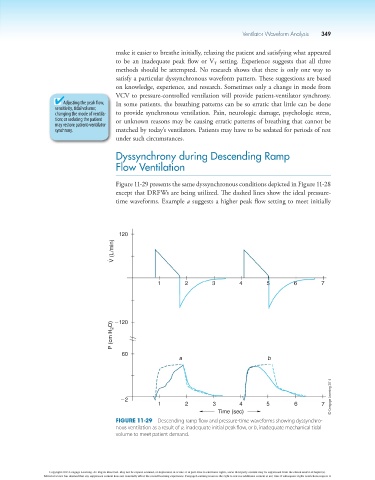
                                             Figure 11-29 presents the same dyssynchronous conditions depicted in Figure 11-28
                                             except that DRFWs are being utilized. The dashed lines show the ideal pressure-
                                             time waveforms. Example a suggests a higher peak flow setting to meet initially


                                              120
                                             V (L/min)


                                                           1        2        3        4        5        6       7


                                            P (cm H 2 O)  2120


                                               60
                                                                  a                            b


                                                                                                                    © Cengage Learning 2014


                                               22
                                                           1        2        3        4        5        6        7
                                                                               Time (sec)
                                             Figure 11-29  Descending ramp flow and pressure-time waveforms showing dyssynchro-
                                             nous ventilation as a result of a, inadequate initial peak flow, or b, inadequate mechanical tidal
                                             volume to meet patient demand.


                        Copyright 2013 Cengage Learning. All Rights Reserved. May not be copied, scanned, or duplicated, in whole or in part. Due to electronic rights, some third party content may be suppressed from the eBook and/or eChapter(s).
                      Editorial review has deemed that any suppressed content does not materially affect the overall learning experience. Cengage Learning reserves the right to remove additional content at any time if subsequent rights restrictions require it.

