


Page 382 - Clinical Application of Mechanical Ventilation
P. 382
348    Chapter 11


                                             120
                                           V (L/min)


                                                         1        2        3        4        5        6        7


                                          P (cm H 2 O)  2120


                                              80
                                                                 a                            b


                                                                                                                  © Cengage Learning 2014

                                             22
                                                         1        2        3        4        5        6        7
                                                                            Time (sec)
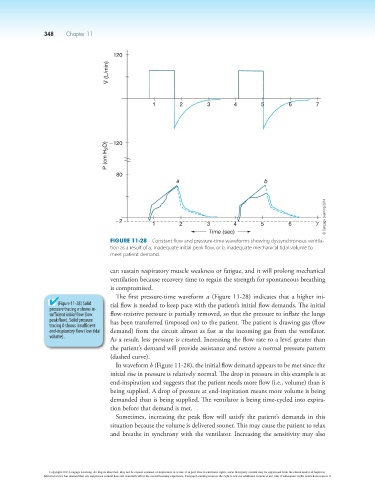
                                            Figure 11-28  Constant flow and pressure-time waveforms showing dyssynchronous ventila-
                                            tion as a result of a, inadequate initial peak flow, or b, inadequate mechanical tidal volume to
                                            meet patient demand.

                                            can sustain respiratory muscle weakness or fatigue, and it will prolong mechanical
                                            ventilation because recovery time to regain the strength for spontaneous breathing
                                            is compromised.
                                             The first pressure-time waveform a (Figure 11-28) indicates that a higher ini-
                          (Figure 11-28) Solid   tial flow is needed to keep pace with the patient’s initial flow demands. The initial
                        pressure tracing a shows in-
                        sufficient initial flow (low   flow-resistive pressure is partially removed, so that the pressure to inflate the lungs
                        peak flow). Solid pressure   has been transferred (imposed on) to the patient. The patient is drawing gas (flow
                        tracing b shows insufficient
                        end-inspiratory flow (low tidal   demand) from the circuit almost as fast as the incoming gas from the ventilator.
                        volume).            As a result, less pressure is created. Increasing the flow rate to a level greater than
                                            the patient’s demand will provide assistance and restore a normal pressure pattern
                                            (dashed curve).
                                             In waveform b (Figure 11-28), the initial flow demand appears to be met since the
                                            initial rise in pressure is relatively normal. The drop in pressure in this example is at
                                            end-inspiration and suggests that the patient needs more flow (i.e., volume) than is
                                            being supplied. A drop of pressure at end-inspiration means more volume is being
                                            demanded than is being supplied. The ventilator is being time-cycled into expira-
                                            tion before that demand is met.
                                             Sometimes, increasing the peak flow will satisfy the patient’s demands in this
                                            situation because the volume is delivered sooner. This may cause the patient to relax
                                            and breathe in synchrony with the ventilator. Increasing the sensitivity may also


                        Copyright 2013 Cengage Learning. All Rights Reserved. May not be copied, scanned, or duplicated, in whole or in part. Due to electronic rights, some third party content may be suppressed from the eBook and/or eChapter(s).
                      Editorial review has deemed that any suppressed content does not materially affect the overall learning experience. Cengage Learning reserves the right to remove additional content at any time if subsequent rights restrictions require it.

