


Page 387 - Clinical Application of Mechanical Ventilation
P. 387
Ventilator Waveform Analysis  353


                                                80
                                             V (L/min)


                                                           1        2       3        4         5       6        7


                                                                     Lost Volume


                                             P (cm H 2 O)  280


                                                60


                                                                                                                    © Cengage Learning 2014


                                                           1        2        3        4        5        6        7
                                                                             Time (sec)
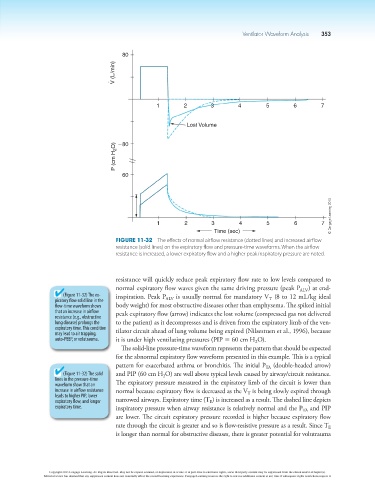
                                             Figure 11-32  The effects of normal airflow resistance (dotted lines) and increased airflow
                                             resistance (solid lines) on the expiratory flow and pressure-time waveforms. When the airflow
                                             resistance is increased, a lower expiratory flow and a higher peak inspiratory pressure are noted.


                                             resistance will quickly reduce peak expiratory flow rate to low levels compared to
                                             normal expiratory flow waves given the same driving pressure (peak P ALV ) at end-
                            (Figure 11-32) The ex-  inspiration. Peak P   is usually normal for mandatory V  (8 to 12 mL/kg ideal
                          piratory flow solid line in the     ALV                              T
                          flow-time waveform shows   body weight) for most obstructive diseases other than emphysema. The spiked initial
                          that an increase in airflow   peak expiratory flow (arrow) indicates the lost volume (compressed gas not delivered
                          resistance (e.g., obstructive
                          lung disease) prolongs the   to the patient) as it decompresses and is driven from the expiratory limb of the ven-
                          expiratory time. This condition   tilator circuit ahead of lung volume being expired (Nilsestuen et al., 1996), because
                          may lead to air trapping,
                          auto-PEEP, or volutrauma.  it is under high ventilating pressures (PIP 5 60 cm H O).
                                                                                           2
                                               The solid-line pressure-time waveform represents the pattern that should be expected
                                             for the abnormal expiratory flow waveform presented in this example. This is a typical
                                             pattern for exacerbated asthma or bronchitis. The initial P  (double-headed arrow)
                                                                                              TA
                            (Figure 11-32) The solid   and PIP (60 cm H O) are well above typical levels caused by airway/circuit resistance.
                                                             2
                          lines in the pressure-time
                          waveform show that an   The expiratory pressure measured in the expiratory limb of the circuit is lower than
                          increase in airflow resistance   normal because expiratory flow is decreased as the V  is being slowly expired through
                          leads to higher PIP, lower                                    T
                          expiratory flow, and longer   narrowed airways. Expiratory time (T ) is increased as a result. The dashed line depicts
                                                                            E
                          expiratory time.   inspiratory pressure when airway resistance is relatively normal and the P  and PIP
                                                                                                          TA
                                             are lower. The circuit expiratory pressure recorded is higher because expiratory flow
                                             rate through the circuit is greater and so is flow-resistive pressure as a result. Since T
                                                                                                                   E
                                             is longer than normal for obstructive diseases, there is greater potential for volutrauma


                        Copyright 2013 Cengage Learning. All Rights Reserved. May not be copied, scanned, or duplicated, in whole or in part. Due to electronic rights, some third party content may be suppressed from the eBook and/or eChapter(s).
                      Editorial review has deemed that any suppressed content does not materially affect the overall learning experience. Cengage Learning reserves the right to remove additional content at any time if subsequent rights restrictions require it.

