


Page 332 - ACCCN's Critical Care Nursing
P. 332
Cardiac Surgery and Transplantation  309


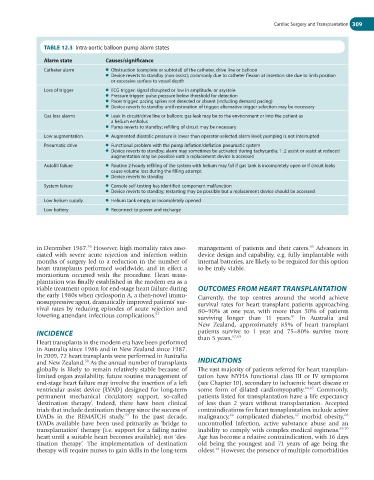
               TABLE 12.3  Intra-aortic balloon pump alarm states

               Alarm state          Causes/significance
               Catheter alarm       ●  Obstruction (complete or subtotal) of the catheter, drive line or balloon
                                    ●  Device reverts to standby (non-assist); commonly due to catheter flexion at insertion site due to limb position
                                     or excessive surface to vessel depth
               Loss of trigger      ●  ECG trigger: signal disrupted or low in amplitude, or asystole
                                    ●  Pressure trigger: pulse pressure below threshold for detection
                                    ●  Pacer trigger: pacing spikes not detected or absent (including demand pacing)
                                    ●  Device reverts to standby until restoration of trigger; alternative trigger selection may be necessary
               Gas loss alarms      ●  Leak in circuit/drive line or balloon; gas leak may be to the environment or into the patient as
                                     a helium embolus
                                    ●  Pump reverts to standby; refilling of circuit may be necessary
               Low augmentation     ●  Augmented diastolic pressure is lower than operator-selected alarm level; pumping is not interrupted
               Pneumatic drive      ●  Functional problem with the pump inflation/deflation pneumatic system
                                    ●  Device reverts to standby; alarm may sometimes be activated during tachycardia; 1 : 2 assist or assist at reduced
                                     augmentation may be possible until a replacement device is accessed
               Autofill failure     ●  Routine 2-hourly refilling of the system with helium may fail if gas tank is incompletely open or if circuit leaks
                                     cause volume loss during the filling attempt
                                    ●  Device reverts to standby
               System failure       ●  Console self-testing has identified component malfunction
                                    ●  Device reverts to standby; restarting may be possible but a replacement device should be accessed
               Low helium supply    ●  Helium tank empty or incompletely opened
               Low battery          ●  Reconnect to power and recharge


                              56
                                                                                                      60
             in December 1967.  However, high mortality rates asso-  management of patients and their carers.  Advances in
             ciated  with  severe  acute  rejection  and  infection  within   device design and capability, e.g. fully implantable with
             months of surgery led to a reduction in the number of   internal batteries, are likely to be required for this option
             heart  transplants  performed  worldwide,  and  in  effect  a   to be truly viable.
             moratorium  occurred  with  the  procedure.  Heart  trans-
             plantation was finally established in the modern era as a
             viable treatment option for end-stage heart failure during   OUTCOMES FROM HEART TRANSPLANTATION
             the early 1980s when cyclosporin A, a then-novel immu-  Currently,  the  top  centres  around  the  world  achieve
             nosuppressive agent, dramatically improved patients’ sur-  survival  rates  for  heart  transplant  patients  approaching
             vival  rates  by  reducing  episodes  of  acute  rejection  and   80–90%  at  one  year,  with  more  than  50%  of  patients
             lowering attendant infectious complications. 57      surviving  longer  than  11  years.   In  Australia  and
                                                                                                61
                                                                  New  Zealand,  approximately  85%  of  heart  transplant
             INCIDENCE                                            patients  survive  to  1  year  and  75–80%  survive  more
                                                                             62,63
             Heart transplants in the modern era have been performed   than 5 years.
             in Australia since 1986 and in New Zealand since 1987.
             In 2009, 72 heart transplants were performed in Australia
                             58
             and New Zealand.  As the annual number of transplants   INDICATIONS
             globally  is  likely  to  remain  relatively  stable  because  of   The vast majority of patients referred for heart transplan-
             limited organ availability, future routine management of   tation  have  NYHA  functional  class  III  or  IV  symptoms
             end-stage heart failure may involve the insertion of a left   (see Chapter 10), secondary to ischaemic heart disease or
             ventricular assist  device (LVAD)  designed for long-term   some  form  of  dilated  cardiomyopathy. 64,65   Commonly,
             permanent  mechanical  circulatory  support,  so-called   patients listed for transplantation have a life expectancy
             ‘destination  therapy’.  Indeed,  there  have  been  clinical   of  less  than  2  years  without  transplantation.  Accepted
             trials that include destination therapy since the success of   contraindications for heart transplantation include active
                                                                            66
                                                                                                  67
                                                                                                                  68
                                          59
             LVADs  in  the  REMATCH  study.   In  the  past  decade,   malignancy,   complicated  diabetes,   morbid  obesity,
             LVADs available have been used primarily as ‘bridge to   uncontrolled  infection,  active  substance  abuse  and  an
             transplantation’ therapy (i.e. support for a failing native   inability to comply with complex medical regimens. 69,70
             heart until a suitable heart becomes available), not ‘des-  Age has become a relative contraindication, with 16 days
             tination  therapy’.  The  implementation  of  destination   old  being  the  youngest  and  71  years  of  age  being  the
                                                                        64
             therapy will require nurses to gain skills in the long-term   oldest.  However, the presence of multiple comorbidities

