


Page 1049 - Hematology_ Basic Principles and Practice ( PDFDrive )
P. 1049
932    Part VII  Hematologic Malignancies


                       A A                                    C                  D


                       BB                                     E

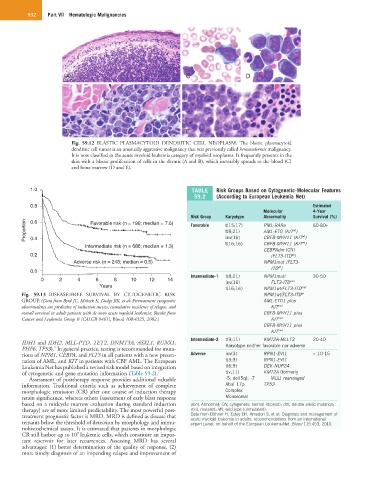
                        Fig.  59.12  BLASTIC  PLASMACYTOID  DENDRITIC  CELL  NEOPLASM.  The  blastic  plasmacytoid
                        dendritic cell tumor is an unusually aggressive malignancy that was previously called hematodermic malignancy.
                        It is now classified in the acute myeloid leukemia category of myeloid neoplasms. It frequently presents in the
                        skin with a blastic proliferation of cells in the dermis (A and B), which inevitably spreads to the blood (C)
                        and bone marrow (D and E).


           1.0                                                  TABLE   Risk Groups Based on Cytogenetic-Molecular Features
                                                                59.2    (According to European Leukemia Net)
           0.8                                                                                         Estimated
                                                                                       Molecular       4-Year
                                                               Risk Group  Karyotype   Abnormality     Survival (%)
         Proportion  0.4                                       Favorable   t(15;17)    PML-RARa  wt  wt  60-80+
           0.6
                               Favorable risk (n = 190; median = 7.6)
                                                                                       AML-ETO (KIT )
                                                                           t(8;21)
                                                                                       CBFB-MYH11 (KIT )
                                                                           inv(16)
                                                                                                    wt
                             Intermediate risk (n = 686; median = 1.3)     t(16;16)    CBFB-MYH11 (KIT )
                                                                                       CEBPAdm (CN)
           0.2                                                                            (FLT3-ITD )
                                                                                                wt
                         Adverse risk (n = 248; median = 0.5)                          NPM1mut (FLT3-
                                                                                          ITD )
                                                                                            wt
           0.0
                                                               Intermediate-1  t(8;21)  NPM1mut/       30-50
              0     2     4     6     8     10    12    14                 inv(16)        FLT3-ITD mut
                                  Years                                                             mut
                                                                           t(16;16)    NPM1wt/FLT3-ITD
        Fig.  59.13  DISEASE-FREE  SURVIVAL  BY  CYTOGENETIC  RISK                     NPM1wt/FLT3-ITD wt
        GROUP. (Data from Byrd JC, Mrózek K, Dodge RK, et al: Pretreatment cytogenetic   AML-ETO1 plus
        abnormalities are predictive of induction success, cumulative incidence of relapse, and   KIT mut
        overall survival in adult patients with de novo acute myeloid leukemia: Results from   CBFB-MYH11 plus
        Cancer and Leukemia Group B [CALGB 8461], Blood 100:4325, 2002.)                  KIT mut
                                                                                       CBFB-MYH11 plus
                                                                                          KIT mut
                                                               Intermediate-2  t(9;11)  KMT2A-MLLT3    20-40
        IDH1 and IDH2, MLL-PTD, TET2, DNMT3A, ASXL1, RUNX1,                Karyotype neither favorable nor adverse
                   6
        PHF6, TP53).  In general practice, testing is recommended for muta-
        tions of NPM1, CEBPA, and FLT3 in all patients with a new presen-  Adverse  inv(3)  RPN1-EVI1  < 10-15
        tation of AML, and KIT in patients with CBF AML. The European      t(3;3)      RPN1-EVI1
        Leukemia Net has published a revised risk model based on integration   t(6;9)  DEK-NUP24
        of cytogenetic and gene mutation information (Table 59.2). 7       t(v;11)     KMT2A (formerly
           Assessment of posttherapy response provides additional valuable   -5; del(5q); -7  MLL) rearranged
        information.  Traditional  criteria  such  as  achievement  of  complete   Abnl 17p  TP53
        morphologic remission (CR) after one course of induction therapy   Complex
        retain significance, whereas others (assessment of early blast response   Monosomal
        based on a midcycle marrow evaluation during standard induction   abnl, Abnormal; CN, cytogenetic normal (diploid); dm, double allelic mutation;
        therapy) are of more limited predictability. The most powerful post-  mut, mutated; Wt, wild type (unmutated).
        treatment prognostic factor is MRD. MRD is defined as disease that   Data from Döhner H, Estey EH, Amadori S, et al: Diagnosis and management of
                                                               acute myeloid leukemia in adults: recommendations from an international
        remains below the threshold of detection by morphology and immu-  expert panel, on behalf of the European LeukemiaNet. Blood 115:453, 2010.
        nohistochemical assays. It is estimated that patients in morphologic
                          9
        CR still harbor up to 10  leukemic cells, which constitute an impor-
        tant  reservoir  for  later  recurrences.  Assessing  MRD  has  several
        advantages: (1) better determination of the quality of response, (2)
        more timely diagnosis of an impending relapse and improvement of

