


Page 903 - Hematology_ Basic Principles and Practice ( PDFDrive )
P. 903
786    Part VII  Hematologic Malignancies


                                                                               t(2;9;22)(p21;q34;q11.2)
                                                                A


                                                                                               22


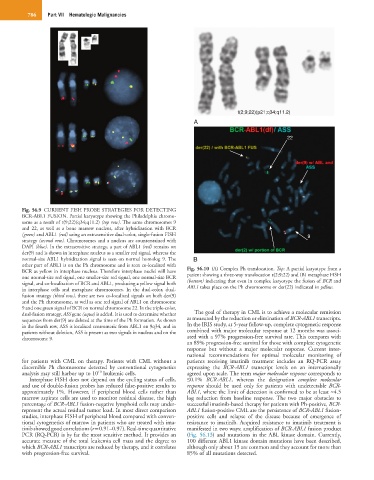
        Fig. 56.9  CURRENT FISH PROBE STRATEGIES FOR DETECTING
        BCR-ABL1 FUSION. Partial karyotype showing the Philadelphia chromo-
        some as a result of t(9;22)(q34;q11.2) (top row). The same chromosomes 9
        and  22,  as  well  as  a  bone  marrow  nucleus,  after  hybridization  with  BCR
        (green) and ABL1 (red) using an extrasensitive dual-color, single-fusion FISH                 9
        strategy (second row). Chromosomes and a nucleus are counterstained with
        DAPI (blue). In the extrasensitive strategy, a part of ABL1 (red) remains on
        der(9) and is shown in interphase nucleus as a smaller red signal, whereas the
        normal-size ABL1 hybridization signal is seen on normal homolog 9. The   B
        other part of ABL1 is on the Ph chromosome and is seen co-localized with
        BCR as yellow in interphase nucleus. Therefore interphase nuclei will have   Fig. 56.10  (A) Complex Ph translocation. Top: A partial karyotype from a
        one normal-size red signal, one smaller-size red signal, one normal-size BCR   patient showing a three-way translocation t(2;9;22) and (B) metaphase FISH
        signal, and co-localization of BCR and ABL1, producing a yellow signal both   (bottom) indicating that even in complex karyotype the fusion of BCR and
        in  interphase  cells  and  metaphase  chromosomes.  In  the  dual-color,  dual-  ABL1 takes place on the Ph chromosome or der(22) indicated in yellow.
        fusion strategy (third row), there are two co-localized signals on both der(9)
        and the Ph chromosome, as well as one red signal of ABL1 on chromosome
        9 and one green signal of BCR on normal chromosome 22. In the triple-color,
        dual-fusion strategy, ASS gene (aqua) is added. It is used to determine whether   The goal of therapy in CML is to achieve a molecular remission
        sequences from der(9) are deleted at the time of the Ph formation. As shown   as measured by the reduction or elimination of BCR-ABL1 transcripts.
        in the fourth row, ASS is localized centromeric from ABL1 on 9q34, and in   In the IRIS study, at 5-year follow-up, complete cytogenetic response
        patients without deletion, ASS is present as two signals in nucleus and on the   combined with major molecular response at 12 months was associ-
        chromosome 9.                                         ated with a 97% progression-free survival rate. This compares with
                                                              an 89% progression-free survival for those with complete cytogenetic
                                                              response  but  without  a  major  molecular  response.  Current  inter-
                                                              national  recommendations  for  optimal  molecular  monitoring  of
        for  patients  with  CML  on  therapy.  Patients  with  CML  without  a   patients  receiving  imatinib  treatment  includes  an  RQ-PCR  assay
        discernible  Ph  chromosome  detected  by  conventional  cytogenetics   expressing  the  BCR-ABL1  transcript  levels  on  an  internationally
                                 10
        analysis may still harbor up to 10  leukemic cells.   agreed upon scale. The term major molecular response corresponds to
           Interphase FISH does not depend on the cycling status of cells,   ≤0.1%  BCR-ABL1,  whereas  the  designation  complete  molecular
        and use of double-fusion probes has reduced false-positive results to   response  should  be  used  only  for  patients  with  undetectable  BCR-
        approximately  1%.  However,  if  peripheral  blood  cells  rather  than   ABL1, where the limit of detection is confirmed to be at least ≈4.5
        marrow aspirate cells are used to monitor residual disease, the high   log  reduction  from  baseline  response. The  two  major  obstacles  to
        percentage of BCR-ABL1 fusion-negative lymphoid cells may under-  successful imatinib-based therapy for patients with Ph-positive, BCR-
        represent the actual residual tumor load. In most direct comparison   ABL1 fusion-positive CML are the persistence of BCR-ABL1 fusion-
        studies, interphase FISH of peripheral blood compared with conven-  positive  cells  and  relapse  of  the  disease  because  of  emergence  of
        tional cytogenetics of marrow in patients who are treated with ima-  resistance to imatinib. Acquired resistance to imatinib treatment is
        tinib showed good correlations (r = 0.91–0.97). Real-time quantitative   manifested in two ways: amplification of BCR-ABL1 fusion product
        PCR (RQ-PCR) is by far the most sensitive method. It provides an   (Fig. 56.13) and mutations in the ABL kinase domain. Currently,
        accurate measure of the total leukemia cell mass and the degree to   100 different ABL1 kinase domain mutations have been described,
        which BCR-ABL1 transcripts are reduced by therapy, and it correlates   although only about 15 are common and they account for more than
        with progression-free survival.                       85% of all mutations detected.

