


Page 1953 - Williams Hematology ( PDFDrive )
P. 1953
1928           Part XII:  Hemostasis and Thrombosis                                                                                        Chapter 113:  Molecular Biology and Biochemistry of the Coagulation Factors           1929


                     1          2 3    4  56  78 9101112131415        multimers are more active than smaller multimers, which is explained
                Gene                                          80 kb   by the fact that the former contain multiple domains that support the
                                                                      interactions between platelets, endothelial cells, and subendothelial
                                                                      collagen.
                                                                          VWF binds to matrix collagens via its A1 and A3 domains. The A1
                mRNA                      2.3 kb                      domain also mediates binding to platelet GPIb, which is required for
                                                                      the fast capture of platelets.  Platelet adhesion to VWF is further sup-
                                                                                          197
                                                                      ported by VWF immobilization on a surface (collagen, other platelets)
                                                                      and by high shear stress.
                                                                          VWF complexes with factor VIII through the first 272 residues in
                 Exon  12 3 45 67   89   10  11  12  13  14  15       the N-terminal region of the mature VWF protein subunit,  thereby
                                                                                                                  198
                Protein  ProGLA TE1E2E3E4 Glucocorticoid hormone-binding domain
                                                                      protecting factor VIII from proteolytic degradation, premature ligand
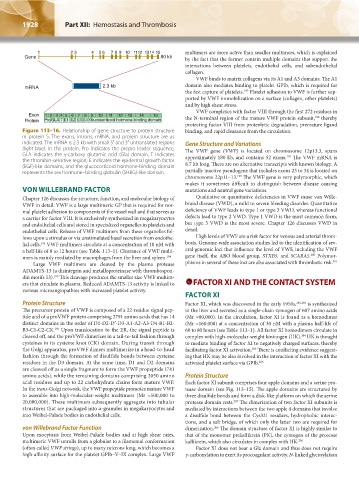
               Figure 113–16.  Relationship of gene structure to protein structure   binding, and rapid clearance from the circulation.
               in protein S. The exons, introns, mRNA, and protein structure are as
               indicated. The mRNA is 2.3 kb with small 5′ and 3′ untranslated regions   Gene Structure and Variations
               (light blue). In the protein, Pro indicates the prepro leader sequence,   The VWF gene  (VWF) is located on chromosome 12p13.3, spans
               GLA indicates the γ-carboxy glutamic acid (Gla) domain, T indicates   approximately 180 kb, and contains 52 exons.  The VWF mRNA is
                                                                                                        199
               the thrombin-sensitive region; E indicates the epidermal growth factor   8.7 kb long. There are no alternative transcripts with known biology. A
               (EGF)-like domains, and the glucocorticoid hormone-binding domain
               represents the sex hormone–binding globulin (SHBG)-like domain.  partially inactive pseudogene that includes exons 23 to 34 is located on
                                                                                       199
                                                                      chromosome 22p11–13.  The VWF gene is very polymorphic, which
                                                                      makes it sometimes difficult to distinguish between disease causing
               VON WILLEBRAND FACTOR                                  mutations and neutral gene variations.
               Chapter 126 discusses the structure, function, and molecular biology of   Qualitative or quantitative deficiencies in VWF cause von Wille-
               VWF in detail. VWF is a large multimeric GP that is required for nor-  brand disease (VWD), a mild to severe bleeding disorder. Quantitative
               mal platelet adhesion to components of the vessel wall and that serves as   deficiency of VWF leads to type 1 or type 3 VWD, whereas functional
               a carrier for factor VIII. It is exclusively synthesized in megakaryocytes   defects lead to type 2 VWD. Type 1 VWD is the most common form,
               and endothelial cells and stored in specialized organelles in platelets and   but type 3 VWD is the most severe. Chapter 126 discusses VWD in
               endothelial cells. Release of VWF multimers from these organelles fol-  detail.
               lows upon a stimulus or via unstimulated basal secretion from endothe-  High levels of VWF are a risk factor for venous and arterial throm-
               lial cells.  VWF multimers circulate at a concentration of 10 nM with   bosis. Genome-wide association studies led to the identification of sev-
                      193
               a half-life of 8 to 12 hours (see Table  113–1). Clearance of VWF multi-  eral genomic loci that influence the level of VWF, including the VWF
                                                                                                                200
               mers is mainly mediated by macrophages from the liver and spleen. 194  gene itself, the ABO blood group,  STXB5, and  SCARA5.  Polymor-
                   Large VWF multimers are cleaved by the plasma protease   phisms in several of these loci are also associated with thrombotic risk. 201
               ADAMTS-13 (a disintegrin and metalloproteinase with thrombospon-
               din motifs 13).  This cleavage produces the smaller size VWF multim-
                          195
               ers that circulate in plasma. Reduced ADAMTS-13 activity is linked to   FACTOR XI AND THE CONTACT SYSTEM
               various microangiopathies with increased platelet activity.
                                                                      FACTOR XI
               Protein Structure                                      Factor XI, which was discovered in the early 1950s, 202,203  is synthesized
               The precursor protein of VWF is composed of a 22-residue signal pep-  in the liver and secreted as a single-chain zymogen of 607 amino acids
               tide and of a proVWF protein comprising 2791 amino acids that has 14   (Mr ≈80,000). In the circulation, factor XI is found as a homodimer
               distinct domains in the order of D1-D2-D′-D3-A1-A2-A3-D4-B1-B2-  (Mr ≈160,000) at a concentration of 30 nM with a plasma half-life of
               B3-C1-C2-CK.  Upon translocation to the ER, the signal peptide is   60 to 80 hours (see Table  113–1). All factor XI homodimers circulate in
                          196
               cleaved off, and the proVWF dimerizes in a tail-to-tail fashion through   complex with high-molecular-weight kininogen (HK).  HK is thought
                                                                                                             204
               cysteines in its cysteine knot (CK) domain. During transit through   to mediate binding of factor XI to negatively charged surfaces, thereby
               the Golgi apparatus, proVWF dimers multimerize in a head-to-head   facilitating factor XI activation.  There is conflicting evidence suggest-
                                                                                            205
               fashion through the formation of disulfide bonds between cysteine   ing that HK may be also involved in the interaction of factor XI with the
               residues in the D3 domain. At the same time, D1 and D2 domains   activated platelet surface via GPIb. 206
               are cleaved off as a single fragment to form the VWF propeptide (741
               amino acids), while the remaining domains comprising 2050 amino   Protein Structure
               acid residues and up to 22 carbohydrate chains form mature VWF.   Each factor XI subunit comprises four apple domains and a serine pro-
               In the trans-Golgi network, the VWF propeptide promotes mature VWF   tease domain (see Fig. 113–15). The apple domains are structured by
               to assemble into high-molecular-weight multimers (Mr ≈500,000 to   three disulfide bonds and form a disk-like platform on which the serine
               20,000,000). These multimers subsequently aggregate into tubular   protease domain rests.  The dimerization of two factor XI subunits is
                                                                                      207
               structures that are packaged into α-granules in megakaryocytes and   mediated by interactions between the two apple 4 domains that involve
               into Weibel-Palade bodies in endothelial cells.        a disulfide bond between the Cys321 residues, hydrophobic interac-
                                                                      tions, and a salt bridge, of which only the latter two are required for
               von Willebrand Factor Function                         dimerization.  The domain structure of factor XI is highly similar to
                                                                                206
               Upon exocytosis from Weibel-Palade bodies and at high shear rates,   that of the monomer prekallikrein (PK), the zymogen of the protease
               multimeric VWF unrolls from a globular to a filamental conformation   kallikrein, which also circulates in complex with HK. 206
               (often called VWF strings), up to many microns long, which becomes a   Factor XI does not bear a Gla domain and thus does not require
               high-affinity surface for the platelet GPIb–V–IX complex. Large VWF   γ-carboxylation to exert its procoagulant activity. N-linked glycosylation


          Kaushansky_chapter 113_p1915-1948.indd   1928                                                                 9/21/15   2:39 PM

