


Page 2144 - Williams Hematology ( PDFDrive )
P. 2144
2118  Part XII:  Hemostasis and Thrombosis                    Chapter 123:  Hemophilia A and Hemophilia B            2119


                                                                        Pseudotumors (Blood Cysts)
                                                                        Pseudotumors are blood cysts that occur in soft tissues or bone. They
                                                                        are rare but dangerous complications of hemophilia (Fig. 123–10).
                                                                                                                          34
                                                                        They are classified into three types. One type is a simple cyst that is con-
                                                                        fined by tendinous attachments within the fascial envelope of a muscle.
                                                                        The second type initially develops as a simple cyst in soft tissues such as
                                                                        a tendon, but it interferes with the vascular supply to the adjacent bone
                                                                        and periosteum, resulting in cyst formation and resorption of bone. The
                                                                        third type is thought to result from subperiosteal bleeding that sepa-
                                                                        rates the periosteum from the bony cortex. Most pseudotumors are not
                                                                        associated with pain unless rapid growth or nerve compression occurs.
                                                                        As the volume of the cyst increases, the cyst compresses and destroys
                                                                        the adjacent muscle, nerve, and/or bone or expands around structures
                       A                       B                        like ureters causing renal failure. Pseudotumors usually contain either
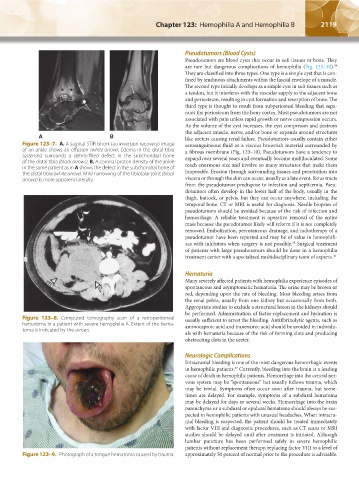
                  Figure 123–7.  A. A sagittal STIR (short tau inversion recovery) image   serosanguineous fluid or a viscous brownish material surrounded by
                  of an ankle shows an effusion (white arrow). Edema in the distal tibia   a fibrous membrane (Fig. 123–10). Pseudotumors have a tendency to
                  (asterisks) surrounds a debris-filled defect in the subchondral bone     expand over several years and eventually become multiloculated. Some
                  of the distal tibia (black arrows). B. A coronal proton density of the ankle   reach enormous size and involve so many structures that make them
                  in the same patient as in A shows the defect in the subchondral bone of   inoperable. Erosion through surrounding tissues and penetration into
                  the distal tibia (white arrow). Mild narrowing of the tibiotalar joint (black
                  arrows) is more apparent laterally.                   viscera or through the skin can occur, usually as a late event. Sinus tracts
                                                                        from the pseudotumor predispose to infection and septicemia. Pseu-
                                                                        dotumors often develop in the lower half of the body, usually in the
                                                                        thigh, buttock, or pelvis, but they can occur anywhere, including the
                                                                        temporal bone. CT or MRI is useful for diagnosis. Needle biopsies of
                                                                        pseudotumors should be avoided because of the risk of infection and
                                                                        hemorrhage. A reliable treatment is operative removal of the entire
                                                                        mass because the pseudotumor likely will reform if it is not completely
                                                                        removed. Embolization, percutaneous drainage, and radiotherapy of a
                                                                        pseudotumor have been reported and may be of value in hemophili-
                                                                        acs with inhibitors when surgery is not possible.  Surgical treatment
                                                                                                            35
                                                                        of patients with large pseudotumors should be done in a hemophilia
                                                                        treatment center with a specialized multidisciplinary team of experts. 36


                                                                        Hematuria
                                                                        Many severely affected patients with hemophilia experience episodes of
                                                                        spontaneous and asymptomatic hematuria. The urine may be brown or
                                                                        red, depending upon the rate of bleeding. Most bleeding arises from
                                                                        the renal pelvis, usually from one kidney but occasionally from both.
                                                                        Appropriate studies to exclude a structural lesion in the kidneys should
                                                                        be performed. Administration of factor replacement and hydration is
                  Figure  123–8.  Computed tomography scan of a retroperitoneal   usually sufficient to arrest the bleeding. Antifibrinolytic agents, such as
                  hematoma in a patient with severe hemophilia A. Extent of the hema-  aminocaproic acid and tranexamic acid should be avoided in individu-
                  toma is indicated by the arrows.
                                                                        als with hematuria because of the risk of forming clots and producing
                                                                        obstructing clots in the ureter.

                                                                        Neurologic Complications
                                                                        Intracranial bleeding is one of the most dangerous hemorrhagic events
                                                                        in hemophilic patients.  Currently, bleeding into the brain is a leading
                                                                                         37
                                                                        cause of death in hemophilic patients. Hemorrhage into the central ner-
                                                                        vous system may be “spontaneous” but usually follows trauma, which
                                                                        may be trivial. Symptoms often occur soon after trauma, but some-
                                                                        times are delayed. For example, symptoms of a subdural hematoma
                                                                        may be delayed for days or several weeks. Hemorrhage into the brain
                                                                        parenchyma or a subdural or epidural hematoma should always be sus-
                                                                        pected in hemophilic patients with unusual headaches. When intracra-
                                                                        nial bleeding is suspected, the patient should be treated immediately
                                                                        with factor VIII and diagnostic procedures, such as CT scans or MRI
                                                                        studies should be delayed until after treatment is initiated. Although
                                                                        lumbar puncture has been performed safely in severe hemophilic
                                                                        patients without replacement therapy, replacing factor VIII to a level of
                  Figure 123–9.  Photograph of a tongue hematoma caused by trauma.  approximately 50 percent of normal prior to the procedure is advisable.


          Kaushansky_chapter 123_p2113-2132.indd   2119                                                                 9/21/15   4:36 PM

