


Page 1387 - Hall et al (2015) Principles of Critical Care-McGraw-Hill
P. 1387
960     PART 8: Renal and Metabolic Disorders


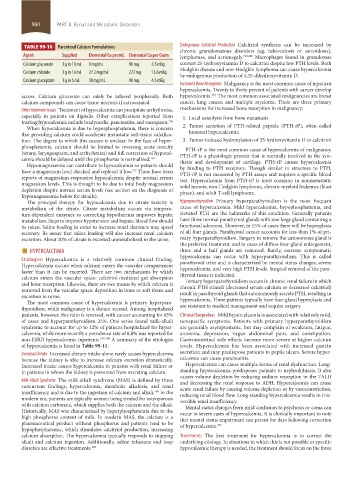
                   TABLE 99-10    Parenteral Calcium Formulations      Endogenous Calcitriol Production  Calcitriol synthesis  can  be  increased  by
                                                                       chronic granulomatous disorders (eg, tuberculosis or sarcoidosis),
                  Agent        Supplied  Elemental Ca per mL Elemental Ca per Gram  lymphomas, and acromegaly. 199,200  Macrophages found in granulomas
                  Calcium gluconate  1 g in 10 mL  9 mg/mL  90 mg  4.5 mEq  convert 25-hydroxyvitamin D to calcitriol despite low PTH levels. Both
                                                                       Hodgkin disease and non-Hodgkin lymphoma can cause hypercalcemia
                  Calcium chloride  1 g in 10 mL  27.2 mg/mL  272 mg  13.6 mEq
                                                                       by endogenous production of 1,25-dihydroxyvitamin D.
                  Calcium gluceptate  1 g in 5 mL  18 mg/mL  90 mg  4.5 mEq
                                                                       Increased Bone Resorption  Malignancy is the most common cause of inpatient
                                                                       hypercalcemia. Twenty to thirty percent of patients with cancer develop
                 access. Calcium gluconate can safely be infused peripherally. Both    hypercalcemia.  The most common associated malignancies are breast
                                                                                  201
                 calcium compounds can cause tissue necrosis if extravasated.  cancer, lung cancer, and multiple myeloma. There are three primary
                 Other Treatment Issues  Treatment of hypocalcemia can precipitate arrhythmias,   mechanisms for increased bone resorption in malignancy:
                 especially in  patients  on  digitalis.  Other  complications  reported  from     1.  Local osteolysis from bone metastasis
                 treating hypocalcemia include bradycardia, pancreatitis, and vasospasm. 196
                   When hypocalcemia is due to hyperphosphatemia, there is concern     2.  Tumor secretion of PTH-related peptide (PTH-rP), often called
                 that providing calcium could accelerate metastatic soft-tissue calcifica-  humoral hypercalcemia
                 tion. The degree to which this occurs is unclear. In the face of hyper-    3.  Tumor-induced hydroxylation of 25-hydroxyvitamin D to calcitriol
                 phosphatemia, calcium should be limited to reversing acute toxicity   PTH-rP is the most common cause of hypercalcemia of malignancy.
                 (tetany, laryngospasm, and arrhythmias) and full correction of hypocal-  PTH-rP is a physiologic protein that is normally involved in the syn-
                 cemia should be delayed until the phosphorus is normalized. 169  thesis and development of cartilage. PTH-rP causes hypercalcemia
                   Hypomagnesemia can contribute to hypocalcemia so patients should
                 have a magnesium level checked and repleted if low.  There have been   by binding to PTH receptors. Though similar in structure to PTH,
                                                       177
                                                                       PTH-rP is not measured by PTH assays and requires a specific blood
                 reports of magnesium-responsive hypocalcemia despite normal serum   test. Hypercalcemia from PTH-rP is most common in nonmetastatic
                 magnesium levels. This is thought to be due to total body magnesium   solid tumors, non-Hodgkin lymphoma, chronic myeloid leukemia (blast
                 depletion despite normal serum levels (see section on the diagnosis of   phase), and adult T-cell lymphoma.
                 hypomagnesemia below for details).
                   The principal therapy for hypocalcemia due to citrate toxicity is   Hyperparathyroidism  Primary hyperparathyroidism is the most frequent
                 metabolism of the citrate. Citrate metabolism occurs via tempera-  cause of hypercalcemia. Mild hypercalcemia, hypophosphatemia, and
                 ture-dependent enzymes so correcting hypothermia improves hepatic    elevated PTH are the hallmarks of this condition. Generally patients
                 metabolism. Steps to improve hypotension and hepatic blood flow should   have three normal parathyroid glands with one large gland containing a
                 be taken. Saline loading in order to increase renal clearance may speed   functional adenoma. However, in 15% of cases there will be hyperplasia
                 recovery. Be aware that saline loading will also increase renal calcium   of all four glands. Parathyroid cancer accounts for less than 1% of pri-
                 excretion. About 20% of citrate is excreted unmetabolized in the urine.  mary hyperparathyroidism. Surgery to remove the autonomous gland is
                     ■  HYPERCALCEMIA                                  the preferred treatment, and in cases of diffuse four-gland enlargement,
                                                                       three  and  a  half  glands  are  removed.  Rarely,  extreme  symptomatic
                 Etiologies:  Hypercalcemia is a relatively common clinical finding.   hypercalcemia can occur with hyperparathyroidism. This is called
                                                                       parathyroid crisis and is characterized by mental status changes, severe
                 Hypercalcemia occurs when calcium enters the vascular compartment
                 faster than it can be excreted. There are two mechanisms by which   hypercalcemia, and very high PTH levels. Surgical removal of the para-
                                                                       thyroid tissue is indicated.
                 calcium enters the vascular space: calcitriol-mediated gut absorption
                                                                         Tertiary hyperparathyroidism occurs in chronic renal failure in which
                 and bone resorption. Likewise, there are two means by which calcium is   chronic PTH stimuli (decreased serum calcium or decreased calcitriol)
                 removed from the vascular space: deposition in bone or soft tissue and
                 excretion in urine.                                   result in parathyroid glands that autonomously secrete PTH, resulting in
                                                                       hypercalcemia. These patients typically have four-gland hyperplasia and
                   The most common cause of hypercalcemia is primary hyperpara-
                 thyroidism, while malignancy is a distant second. Among hospitalized   are resistant to medical management and require surgery.
                 patients, however, this ratio is reversed, with cancer accounting for 65%   Clinical Sequelae:  Mild hypercalcemia is associated with relatively mild,
                 of cases and hyperparathyroidism 25%. One series found milk-alkali   nonspecific symptoms. Patients with primary hyperparathyroidism
                 syndrome to account for up to 12% of patients hospitalized for hyper-  are generally asymptomatic, but may complain of weakness, fatigue,
                 calcemia, while more recently a prevalence rate of 8.8% was reported for   anorexia, depression, vague abdominal pain, and constipation.
                 non-ESRD hypercalcemic inpatients. 197,198  A summary of the etiologies   Gastrointestinal side effects become more severe at higher calcium
                 of hypercalcemia is listed in Table 99-11.            levels. Hypercalcemia has been associated with increased gastrin
                 Increased Intake  Increased dietary intake alone rarely causes hypercalcemia   secretion and may predispose patients to peptic ulcers. Severe hyper-
                 because the kidney is able to increase calcium excretion dramatically.   calcemia can cause pancreatitis.
                 Increased intake causes hypercalcemia in patients with renal failure or   Hypercalcemia can cause multiple forms of renal dysfunction. Long-
                 in patients in whom the kidney is prevented from excreting calcium.  standing hypercalcemia predisposes patients to nephrolithiasis. It also
                 Milk-Alkali Syndrome  The milk-alkali syndrome (MAS) is defined by three   causes volume depletion by reducing sodium resorption in the TALH
                                                                       and decreasing the renal response to ADH. Hypercalcemia can cause
                 concurrent findings, hypercalcemia, metabolic alkalosis, and renal   acute renal failure by causing volume depletion or by vasoconstriction,
                 insufficiency, and is due to the ingestion of calcium and alkali.  In the   reducing renal blood flow. Long-standing hypercalcemia results in irre-
                                                              198
                 modern era, patients are typically women being treated for osteoporosis   versible renal insufficiency.
                 with calcium carbonate, which supplies both the calcium and the alkali.   Mental status changes from mild confusion to psychosis or coma can
                 Historically, MAS was characterized by hyperphosphatemia due to the   occur in severe cases of hypercalcemia. It is clinically important to note
                 high phosphorus content of milk. In modern MAS, the calcium is a   that mental status impairment can persist for days following correction
                 pharmaceutical product without phosphorus and patients tend to be   of hypercalcemia. 202
                 hypophosphatemic, which stimulates calcitriol production, increasing
                 calcium absorption. The hypercalcemia typically responds to stopping   Treatment:  The  best  treatment  for  hypercalcemia  is  to  correct  the
                 alkali and calcium ingestion. Additionally, saline infusions and loop   underlying etiology. In situations in which this is not possible or specific
                 diuretics are effective treatments. 198               hypocalcemic therapy is needed, the treatment should focus on the three


            section08.indd   960                                                                                       1/14/2015   8:28:19 AM

