


Page 1389 - Hall et al (2015) Principles of Critical Care-McGraw-Hill
P. 1389
962     PART 8: Renal and Metabolic Disorders


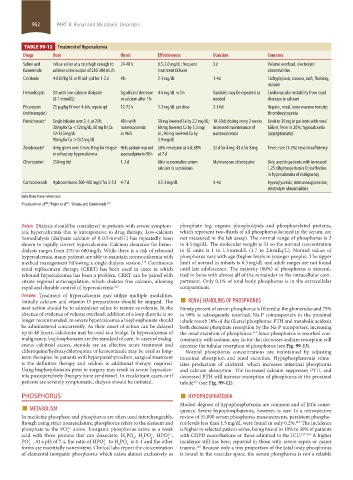
                   TABLE 99-12    Treatment of Hypercalcemia
                  Drugs     Dose                   Onset        Effectiveness     Duration           Concerns
                  Saline and   Infuse saline at a rate high enough to   24-48 h  0.5-2.0 mg/dL; frequent      3 d  Volume overload, electrolyte
                    furosemide  achieve urine output of 250-300 mL/h  treatment failures               abnormalities
                  Calcitonin  4-8 IU/kg SC or IV bid-qid for 1-2 d  4 h  2-3 mg/dL  1-4 d            Tachyphylaxis, nausea, rash, flushing,
                                                                                                     malaise
                  Hemodialysis  3 h with low-calcium dialysate    Significant decrease  4-6 mg/dL in 3 h  Variable; may be repeated as   Cardiovascular instability from rapid
                            (0-1 mmol/L)           in calcium after 1 h           needed             decrease in calcium
                  Plicamycin   25 µg/kg IV over 4-6 h, repeat qd  12-72 h  1-2 mg/dL per dose  2-14 d  Hepatic, renal, bone marrow toxicity;
                  ( mithramycin)                                                                       thrombocytopenia
                  Pamidronate a  Single infusion over 2, 4, or 24 h;   48 h with   30 mg lowered Ca by 2.2 mg/dL;   10-30 d; dosing every 2 weeks  Limit to 30 mg in patients with renal
                            30 mg for Ca <12 mg/dL; 60 mg for Ca     normocalcemia   60 mg lowered Ca by 3.3 mg/  increased maintenance of   failure; fever in 20%; hypocalcemia
                            12-13.5 mg/dL          at 96 h      dL; 90 mg lowered Ca by   normocalcemia  (asymptomatic)
                            90 mg for Ca >13.5 mg/dL            3.9 mg/dL
                  Zoledronate b  4 mg given over 5 min; 8 mg for relapse  96 h; calcium was not  50% remission at 4 d; 88%   32 d for 4 mg; 43 d for 8 mg  Fever; rare (1-2%) renal insufficiency
                            or refractory hypercalcemia  assessed prior to 96 h at 7 d
                  Chloroquine c  250 mg bid        1-3 d        Able to normalize serum   Maintenance chloroquine  Only used in patients with increased
                                                                  calcium in sarcoidosis             1,25  dihydroxyvitamin D; ineffective
                                                                                                     in  hypercalcemia of malignancy
                  Corticosteroids  Hydrocortisone 200-400 mg/d for 3-5 d 4-7 d  0.5-3 mg/dL  3-4 d   Hyperglycemia, immunosuppression,
                                                                                                       electrolyte abnormalities
                 Data from these references:
                         209 b
                                211 c
                 a Nussbaum et al ;  Major et al ;  Adams and Kantorovich. 339

                 Dialysis  Dialysis should be considered in patients with severe symptom-  phosphate (eg, organic phospholipids and phosphorylated proteins,
                 atic hypercalcemia that is unresponsive to drug therapy. Low-calcium   which represent two-thirds of all phosphorus located in the serum, are
                 hemodialysis (dialysate calcium of 0-0.5 mmol/L) has repeatedly been   not measured in the lab assay). The normal range of phosphorus is 3
                 shown to rapidly correct hypercalcemia. Calcium clearance for hemo-  to 4.5 mg/dL. The molecular weight is 31 so the normal concentration
                 dialysis ranges from 270 to 680 mg/h. While there is a risk of rebound   in SI units is 1 to 1.5 mmol/L (1.7 to 2.6 mEq/L). Normal values of
                 hypercalcemia, many patients are able to maintain normocalcemia with   phosphorus vary with age (higher levels in younger people). The upper
                 medical management following a single dialysis session.  Continuous   limit of normal in infants is 6.5 mg/dL and adult ranges are not found
                                                          212
                 renal replacement therapy (CRRT) has been used in cases in which   until late adolescence. The majority (80%) of phosphorus is mineral-
                 rebound hypercalcemia has been a problem. CRRT can be paired with   ized in bone with almost all of the remainder in the intracellular com-
                 citrate regional anticoagulation, which chelates free calcium, allowing   partment. Only 0.1% of total body phosphorus is in the extracellular
                 rapid and durable control of hypercalcemia. 213         compartment.
                 Initially calcium and vitamin D preparations should be stopped. The   ■  RENAL HANDLING OF PHOSPHORUS
                 Overview  Treatment of hypercalcemia may utilize multiple modalities.
                 next action should be to administer saline to restore euvolemia. In the   Ninety percent of serum phosphorus is filtered at the glomerulus and 75%
                 absence of evidence of volume overload, addition of a loop diuretic is no   to 99% is subsequently resorbed. Na-P cotransporters in the proximal
                 longer recommended. In severe hypercalcemia a bisphosphonate should   tubule resorb 70% of the filtered phosphorus. PTH and metabolic acidosis
                 be administered concurrently. As their onset of action can be delayed   both decrease phosphate resorption by the Na-P transporters, increasing
                 up to 48 hours, calcitonin may be used as a bridge. In hypercalcemia of   the renal excretion of phosphorus.  Since phosphorus is resorbed con-
                                                                                                214
                 malignancy, bisphosphonates are the standard of care. In cases of endog-  comitantly with sodium, any factor that decreases sodium resorption will
                 enous calcitriol excess, steroids are an effective acute treatment and   decrease the tubular resorption of phosphorus (see Fig. 99-13).
                 chloroquine/hydroxychloroquine or ketoconazole may be used as long-  Normal phosphorus concentrations are maintained by adjusting
                 term therapies. In patients with hyperparathyroidism, surgical treatment   intestinal absorption and renal excretion. Hypophosphatemia stimu-
                 is the definitive therapy and seldom is additional therapy required.   lates  production  of  calcitriol,  which  increases  intestinal  phosphorus
                 Using bisphosphonates prior to surgery may result in severe hypocalce-  and calcium absorption. The increased calcium suppresses PTH, and
                 mia postoperatively (hungry bone syndrome). In recalcitrant cases, or if   decreased PTH will increase resorption of phosphorus in the proximal
                 patients are severely symptomatic, dialysis should be initiated.  tubule  (see Fig. 99-12).
                                                                            215
                 PHOSPHORUS                                                ■  HYPOPHOSPHATEMIA
                     ■  METABOLISM                                     Modest degrees of hypophosphatemia are common and of little conse-
                                                                       quence. Severe hypophosphatemia, however, is rare. In a retrospective
                 In medicine phosphate and phosphorus are often used interchangeably,   review of 55,000 serum phosphorus measurements, persistent phospho-
                 though using strict nomenclature, phosphorus refers to the element and   rus levels less than 1.5 mg/dL were found in only 0.2%.  The incidence
                                                                                                               216
                 phosphate to the PO  anion. Inorganic phosphorus exists as a weak   is higher in selected patient series, being found in 10% to 30% of patients
                                 2−
                                 4
                 acid with three protons that can dissociate: H PO , H PO , HPO ,   with COPD exacerbations or those admitted to the ICU. 217-219  A higher
                                                             −
                                                                   2−
                                                          2
                                                                   4
                                                    3
                                                             4
                                                       4
                 PO . At a pH of 7.4, the ratio of HPO  to H PO  is 4 : 1 and the other   incidence still has been reported in those with severe sepsis or major
                    3−
                                             2−
                                                     −
                    4
                                                  2
                                                     4
                                             4
                 forms are essentially nonexistent. Clinical labs report the concentration   trauma.  Because only a tiny proportion of the total body phosphorus
                                                                             220
                 of elemental inorganic phosphorus which exists almost exclusively as   is found in the vascular space, the serum phosphorus is not a reliable
            section08.indd   962                                                                                       1/14/2015   8:28:20 AM

