


Page 1388 - Hall et al (2015) Principles of Critical Care-McGraw-Hill
P. 1388
CHAPTER 99: Electrolyte Disorders in Critical Care   961


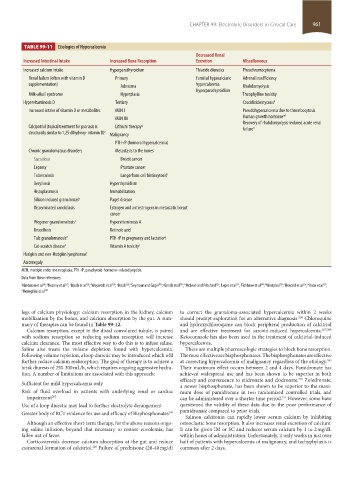
                      TABLE 99-11    Etiologies of Hypercalcemia
                                                                               Decreased Renal
                    Increased Intestinal Intake   Increased Bone Resorption    Excretion       Miscellaneous
                    Increased calcium intake      Hyperparathyroidism          Thiazide diuretics  Pheochromocytoma
                       Renal failure (often with vitamin D      Primary        Familial hypocalciuric   Adrenal insufficiency
                      supplementation)               Adenoma                     hypercalcemia  Rhabdomyolysis
                                                                               Hyperparathyroidism
                      Milk-alkali syndrome           Hyperplasia                               Theophylline toxicity
                    Hypervitaminosis D              Tertiary                                   Coccidioidomycosis k
                      Increased intake of vitamin D or metabolites    MEN I                    Pseudohypercalcemia due to thrombocytosis
                                                    MEN IIA                                    Human growth hormone ml
                                                                                               Recovery of rhabdomyolysis-induced acute renal
                       Calcipotriol (topical treatment for psoriasis is      Lithium therapy g  failure n
                      structurally similar to 1,25-dihydroxy- vitamin D) a  Malignancy
                                                    PTH-rP (humoral hypercalcemia)
                      Chronic granulomatous disorders    Metastasis to the bones
                       Sarcoidosis                   Breast cancer
                       Leprosy                       Prostate cancer
                       Tuberculosis                   Langerhans cell histiocytosis h
                       Berylliosis                Hyperthyroidism
                       Histoplasmosis             Immobilization
                        Silicon induced granulomas b  Paget disease
                       Disseminated candidiasis   Estrogen and antiestrogens in metastatic breast
                                                  cancer
                       Wegener granulomatosis c   Hypervitaminosis A
                       Brucellosis                Retinoic acid
                       Talc granulomatosis d      PTH-rP in pregnancy and lactation i
                       Cat-scratch disease e      Vitamin A toxicity j
                    Hodgkin and non-Hodgkin lymphomas f
                    Acromegaly
                    MEN, multiple endocrine neoplasia; PTH-rP, parathyroid-hormone–related peptide.
                    Data from these references:
                           326 b
                                                  329 e
                                         328 d
                                  327 c
                                                       330 f
                                                                                                            335 l
                                                                                                     334 k
                                                                                                                          337
                                                                                                                   336 m
                                                                                             333 j
                                                                          331 h
                                                                  205 g
                                                                                      332 i
                    a Hardman et al ;  Kozeny et al ;  Bosch et al ;  Woywodt et al ;  Bosch ; Seymour and Gagel ;  Bendz et al ;  McLean and Pritchard ; Lepre et al ; Fishbane et al ;  Westphal ; Howard et al ;  Knox et al ;
                    n Meneghini et al 338
                    legs of calcium physiology: calcium resorption in the kidney, calcium   to correct the granuloma-associated hypercalcemia within 2 weeks
                    mobilization by the bones, and calcium absorption by the gut. A sum-  should prompt exploration for an alternative diagnosis.  Chloroquine
                                                                                                                  206
                    mary of therapies can be found in Table 99-12.        and hydroxychloroquine can block peripheral production of calcitriol
                     Calcium resorption, except in the distal convoluted tubule, is paired   and  are effective  treatment for  sarcoid-induced  hypercalcemia. 207,208
                    with  sodium  resorption  so  reducing  sodium  resorption will  increase   Ketoconazole has also been used in the treatment of calcitriol-induced
                    calcium clearance. The most effective way to do this is to infuse saline.   hypercalcemia.
                    Saline also treats the volume depletion found with hypercalcemia.   There are multiple pharmacologic strategies to block bone resorption.
                    Following volume repletion, a loop diuretic may be introduced which will   The most effective are bisphosphonates. The bisphosphonates are effective
                    further reduce calcium reabsorption. The goal of therapy is to achieve a   at correcting hypercalcemia of malignancy regardless of the etiology.
                                                                                                                            209
                    brisk diuresis of 250-300 mL/h, which requires ongoing aggressive hydra-  Their maximum effect occurs between 2 and 4 days. Pamidronate has
                    tion. A number of limitations are associated with this approach:  achieved widespread use and has been shown to be superior in both
                                                                          efficacy and convenience to etidronate and clodronate.  Zoledronate,
                                                                                                                  210
                    Sufficient for mild hypercalcemia only                a newer bisphosphonate, has been shown to be superior to the maxi-
                    Risk of fluid overload in patients with underlying renal or cardiac   mum  dose  of pamidronate in two randomized controlled trials, and
                     impairment 203                                       can be administered over a shorter time period.  However, some have
                                                                                                            211
                    Use of a loop diuretic may lead to further electrolyte derangement  questioned the validity of these data due to the poor performance of
                    Greater body of RCT evidence for use and efficacy of Bisphosphonates 204  pamidronate compared to prior trials.
                                                                           Salmon calcitonin can rapidly lower serum calcium by inhibiting
                     Although an effective short-term therapy, for the above reasons ongo-  osteoclastic bone resorption. It also increases renal excretion of calcium.
                    ing saline infusion, beyond that necessary to restore euvolemia, has   It can be given IM or SC and reduces serum calcium by 1 to 2 mg/dL
                    fallen out of favor.                                  within hours of administration. Unfortunately, it only works in just over
                     Corticosteroids decrease calcium absorption at the gut and reduce   half of patients with hypercalcemia of malignancy, and tachyphylaxis is
                    extrarenal formation of calcitriol.  Failure of prednisone (20-40 mg/d)   common after 2 days.
                                            205
            section08.indd   961                                                                                       1/14/2015   8:28:20 AM

