


Page 1812 - Hall et al (2015) Principles of Critical Care-McGraw-Hill
P. 1812
CHAPTER 129: Dermatologic Conditions  1281


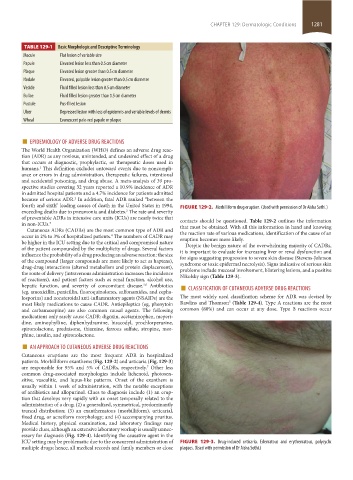
                      TABLE 129-1    Basic Morphologic and Descriptive Terminology
                    Macule       Flat lesion of variable size
                    Papule       Elevated lesion less than 0.5 cm diameter
                    Plaque       Elevated lesion greater than 0.5 cm diameter
                    Nodule       Elevated, palpable lesion greater than 0.5 cm diameter
                    Vesicle      Fluid filled lesion less than 0.5 cm diameter
                    Bullae       Fluid filled lesion greater than 0.5 cm diameter
                    Pustule      Pus-filled lesion
                    Ulcer        Depressed lesion with loss of epidermis and variable levels of dermis
                    Wheal        Evanescent pale-red papule or plaque

                        ■  EPIDEMIOLOGY OF ADVERSE DRUG REACTIONS


                    The World Health Organization (WHO) defines an adverse drug reac-
                    tion (ADR) as any noxious, unintended, and undesired effect of a drug
                    that occurs at diagnostic, prophylactic, or therapeutic doses used in
                    humans.  This definition excludes untoward events due to noncompli-
                          1
                    ance or errors in drug administration, therapeutic failures, intentional
                    and accidental poisoning, and drug abuse. A meta-analysis of 39 pro-
                    spective studies covering 32 years reported a 10.9% incidence of ADR
                    in admitted hospital patients and a 4.7% incidence for patients admitted
                    because of serious ADR.  In addition, fatal ADR ranked “between the
                                      2
                    fourth and sixth” leading causes of death in the United States in 1994,   FIGURE 129-2.  Morbilliform drug eruption. (Used with permission of Dr Aisha Sethi.)
                    exceeding deaths due to pneumonia and diabetes.  The rate and severity
                                                       2
                    of preventable ADRs in intensive care units (ICUs) are nearly twice that   contacts should be questioned.  Table 129-2 outlines the information
                    in non-ICUs. 3                                        that must be obtained. With all this information in hand and knowing
                     Cutaneous ADRs (CADRs) are the most common type of ADR and   the reaction rate of various medications, identification of the cause of an
                    occur in 2% to 3% of hospitalized patients.  The numbers of CADR may   eruption becomes more likely.
                                                  4
                    be higher in the ICU setting due to the critical and compromised nature   Despite the benign nature of the overwhelming majority of CADRs,
                    of the patient compounded by the multiplicity of drugs. Several factors   it is important to evaluate for increasing liver or renal dysfunction and
                    influence the probability of a drug producing an adverse reaction: the size   for signs suggesting progression to severe skin disease (Stevens-Johnson
                    of the compound (larger compounds are more likely to act as haptens),   syndrome or toxic epidermal necrolysis). Signs indicative of serious skin
                    drug-drug interactions (altered metabolism and protein displacement),   problems include mucosal involvement, blistering lesions, and a positive
                    the route of delivery (intravenous administration increases the incidence    Nikolsky sign (Table 129-3).
                    of reactions), and patient factors such as renal function, alcohol use,
                    hepatic  function,  and  severity  of  concomitant  disease.   Antibiotics      ■  CLASSIFICATION OF CUTANEOUS ADVERSE DRUG REACTIONS
                                                             5,6
                    (eg, amoxicillin, penicillin, fluoroquinolones, sulfonamides, and cepha-
                    losporins) and nonsteroidal anti-inflammatory agents (NSAIDs) are the   The most widely used classification scheme for ADR was devised by
                                                                                          5
                    most likely medications to cause CADR. Antiepileptics (eg, phenytoin   Rawlins and Thomson  (Table 129-4). Type A reactions are the most
                    and carbamazepine) are also common causal agents. The following   common (80%) and can occur at any dose. Type B reactions occur
                    medications only rarely cause CADR: digoxin, acetaminophen, meperi-
                    dine, aminophylline, diphenhydramine, bisacodyl, prochlorperazine,
                    spironolactone, prednisone, thiamine, ferrous sulfate, atropine, mor-
                    phine, insulin, and spironolactone.
                        ■  AN APPROACH TO CUTANEOUS ADVERSE DRUG REACTIONS

                    Cutaneous eruptions are the most frequent ADR in hospitalized
                    patients. Morbilliform exanthems (Fig. 129-2) and urticaria (Fig. 129-3)
                    are responsible for 95% and 5% of CADRs, respectively.  Other less
                                                              7
                    common drug-associated morphologies include lichenoid, photosen-
                    sitive, vasculitic, and lupus-like patterns. Onset of the exanthem is
                    usually within 1 week of administration, with the notable exceptions
                    of antibiotics and allopurinol. Clues to diagnosis include (1) an erup-
                    tion that develops very rapidly with an onset temporally related to the
                    administration of a drug; (2) a generalized, symmetrical, predominantly
                    truncal distribution; (3) an exanthematous (morbilliform), urticarial,
                    fixed drug, or acneiform morphology; and (4) accompanying pruritus.
                    Medical history, physical examination, and laboratory findings may
                    provide clues, although an extensive laboratory workup is usually unnec-
                    essary for diagnosis (Fig. 129-4). Identifying the causative agent in the
                    ICU setting may be problematic due to the concurrent administration of   FIGURE 129-3.  Drug-induced urticaria. Edematous and erythematous, polycyclic
                    multiple drugs; hence, all medical records and family members or close   plaques. (Used with permission of Dr Aisha Sethi.)


            section11.indd   1281                                                                                      1/19/2015   10:52:39 AM

