


Page 163 - Textbook of Pathology, 6th Edition
P. 163
147


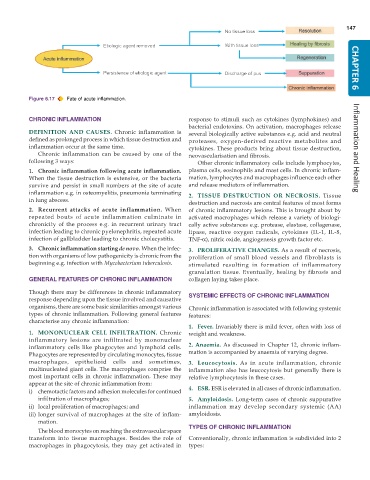
           Figure 6.17  Fate of acute inflammation.                                                                   CHAPTER 6


           CHRONIC INFLAMMATION                                response to stimuli such as cytokines (lymphokines) and
                                                               bacterial endotoxins. On activation, macrophages release
           DEFINITION AND CAUSES.  Chronic inflammation is     several biologically active substances e.g. acid and neutral
           defined as prolonged process in which tissue destruction and  proteases, oxygen-derived reactive metabolites and
           inflammation occur at the same time.                cytokines. These products bring about tissue destruction,  Inflammation and Healing
              Chronic inflammation can be caused by one of the  neovascularisation and fibrosis.
           following 3 ways:                                      Other chronic inflammatory cells include lymphocytes,
           1. Chronic inflammation following acute inflammation.  plasma cells, eosinophils and mast cells. In chronic inflam-
           When the tissue destruction is extensive, or the bacteria  mation, lymphocytes and macrophages influence each other
           survive and persist in small numbers at the site of acute  and release mediators of inflammation.
           inflammation e.g. in osteomyelitis, pneumonia terminating  2. TISSUE DESTRUCTION OR NECROSIS.  Tissue
           in lung abscess.
                                                               destruction and necrosis are central features of most forms
           2. Recurrent attacks of acute inflammation. When    of chronic inflammatory lesions. This is brought about by
           repeated bouts of acute inflammation culminate in   activated macrophages which release a variety of biologi-
           chronicity of the process e.g. in recurrent urinary tract  cally active substances e.g. protease, elastase, collagenase,
           infection leading to chronic pyelonephritis, repeated acute  lipase, reactive oxygen radicals, cytokines (IL-1, IL-8,
           infection of gallbladder leading to chronic cholecystitis.  TNF-α), nitric oxide, angiogenesis growth factor etc.
           3. Chronic inflammation starting de novo. When the infec-  3. PROLIFERATIVE CHANGES. As a result of necrosis,
           tion with organisms of low pathogenicity is chronic from the  proliferation of small blood vessels and fibroblasts is
           beginning e.g. infection with Mycobacterium tuberculosis.  stimulated resulting in formation of inflammatory
                                                               granulation tissue. Eventually, healing by fibrosis and
           GENERAL FEATURES OF CHRONIC INFLAMMATION            collagen laying takes place.

           Though there may be differences in chronic inflammatory  SYSTEMIC EFFECTS OF CHRONIC INFLAMMATION
           response depending upon the tissue involved and causative
           organisms, there are some basic similarities amongst various  Chronic inflammation is associated with following systemic
           types of chronic inflammation. Following general features  features:
           characterise any chronic inflammation:
                                                               1. Fever. Invariably there is mild fever, often with loss of
           1. MONONUCLEAR CELL INFILTRATION.  Chronic          weight and weakness.
           inflammatory lesions are infiltrated by mononuclear
           inflammatory cells like phagocytes and lymphoid cells.  2. Anaemia. As discussed in Chapter 12, chronic inflam-
           Phagocytes are represented by circulating monocytes, tissue  mation is accompanied by anaemia of varying degree.
           macrophages, epithelioid cells and sometimes,       3. Leucocytosis.  As in acute inflammation, chronic
           multinucleated giant cells. The macrophages comprise the  inflammation also has leucocytosis but generally there is
           most important cells in chronic inflammation. These may  relative lymphocytosis in these cases.
           appear at the site of chronic inflammation from:
           i) chemotactic factors and adhesion molecules for continued  4. ESR. ESR is elevated in all cases of chronic inflammation.
              infiltration of macrophages;                     5. Amyloidosis.  Long-term cases of chronic suppurative
           ii) local proliferation of macrophages; and         inflammation may develop secondary systemic (AA)
           iii) longer survival of macrophages at the site of inflam-  amyloidosis.
              mation.
                                                               TYPES OF CHRONIC INFLAMMATION
              The blood monocytes on reaching the extravascular space
           transform into tissue macrophages. Besides the role of  Conventionally, chronic inflammation is subdivided into 2
           macrophages in phagocytosis, they may get activated in  types:

