


Page 453 - Textbook of Pathology, 6th Edition
P. 453
437
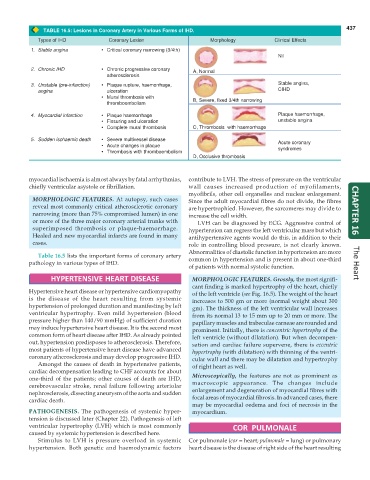
TABLE 16.5: Lesions in Coronary Artery in Various Forms of IHD.
Types of IHD Coronary Lesion Morphology Clinical Effects
1. Stable angina • Critical coronary narrowing (3/4th)
Nil
2. Chronic IHD • Chronic progressive coronary A, Normal
atherosclerosis
3. Unstable (pre-infarction) • Plaque rupture, haemorrhage, Stable angina,
angina ulceration CIHD
• Mural thrombosis with
thromboembolism B, Severe, fixed 3/4th narrowing
4. Myocardial infarction • Plaque haemorrhage Plaque haemorrhage,
• Fissuring and ulceration unstable angina
• Complete mural thrombosis C, Thrombosis with haemorrhage
5. Sudden ischaemic death • Severe multivessel disease Acute coronary
• Acute changes in plaque
• Thrombosis with thromboembolism syndromes
D, Occlusive thrombosis
myocardial ischaemia is almost always by fatal arrhythmias, contribute to LVH. The stress of pressure on the ventricular
chiefly ventricular asystole or fibrillation. wall causes increased production of myofilaments,
myofibrils, other cell organelles and nuclear enlargement.
MORPHOLOGIC FEATURES. At autopsy, such cases Since the adult myocardial fibres do not divide, the fibres
reveal most commonly critical atherosclerotic coronary are hypertrophied. However, the sarcomeres may divide to
narrowing (more than 75% compromised lumen) in one increase the cell width. CHAPTER 16
or more of the three major coronary arterial trunks with LVH can be diagnosed by ECG. Aggressive control of
superimposed thrombosis or plaque-haemorrhage. hypertension can regress the left ventricular mass but which
Healed and new myocardial infarcts are found in many antihypertensive agents would do this, in addition to their
cases. role in controlling blood pressure, is not clearly known.
Abnormalities of diastolic function in hypertension are more
Table 16.5 lists the important forms of coronary artery
pathology in various types of IHD. common in hypertension and is present in about one-third The Heart
of patients with normal systolic function.
HYPERTENSIVE HEART DISEASE MORPHOLOGIC FEATURES. Grossly, the most signifi-
cant finding is marked hypertrophy of the heart, chiefly
Hypertensive heart disease or hypertensive cardiomyopathy of the left ventricle (see Fig. 16.5). The weight of the heart
is the disease of the heart resulting from systemic increases to 500 gm or more (normal weight about 300
hypertension of prolonged duration and manifesting by left gm). The thickness of the left ventricular wall increases
ventricular hypertrophy. Even mild hypertension (blood from its normal 13 to 15 mm up to 20 mm or more. The
pressure higher than 140/90 mmHg) of sufficient duration papillary muscles and trabeculae carneae are rounded and
may induce hypertensive heart disease. It is the second most prominent. Initially, there is concentric hypertrophy of the
common form of heart disease after IHD. As already pointed left ventricle (without dilatation). But when decompen-
out, hypertension predisposes to atherosclerosis. Therefore, sation and cardiac failure supervene, there is eccentric
most patients of hypertensive heart disease have advanced hypertrophy (with dilatation) with thinning of the ventri-
coronary atherosclerosis and may develop progressive IHD. cular wall and there may be dilatation and hypertrophy
Amongst the causes of death in hypertensive patients, of right heart as well.
cardiac decompensation leading to CHF accounts for about
one-third of the patients; other causes of death are IHD, Microscopically, the features are not as prominent as
cerebrovascular stroke, renal failure following arteriolar macroscopic appearance. The changes include
nephrosclerosis, dissecting aneurysm of the aorta and sudden enlargement and degeneration of myocardial fibres with
cardiac death. focal areas of myocardial fibrosis. In advanced cases, there
may be myocardial oedema and foci of necrosis in the
PATHOGENESIS. The pathogenesis of systemic hyper- myocardium.
tension is discussed later (Chapter 22). Pathogenesis of left
ventricular hypertrophy (LVH) which is most commonly COR PULMONALE
caused by systemic hypertension is described here.
Stimulus to LVH is pressure overload in systemic Cor pulmonale (cor = heart; pulmonale = lung) or pulmonary
hypertension. Both genetic and haemodynamic factors heart disease is the disease of right side of the heart resulting

