


Page 691 - Textbook of Pathology, 6th Edition
P. 691
675


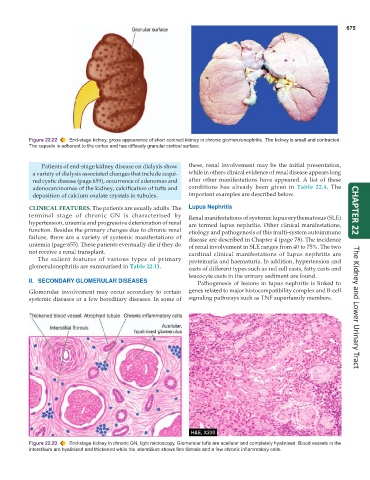
           Figure 22.22  End-stage kidney, gross appearance of short contract kidney in chronic glomerulonephritis. The kidney is small and contracted.
           The capsule is adherent to the cortex and has diffusely granular cortical surface.


               Patients of end-stage kidney disease on dialysis show  these, renal involvement may be the initial presentation,
            a variety of dialysis associated changes that include acqui-  while in others clinical evidence of renal disease appears long
            red cystic disease (page 659), occurrence of adenomas and  after other manifestations have appeared. A list of these
            adenocarcinomas of the kidney, calcification of tufts and  conditions has already been given in  Table 22.4.  The
            deposition of calcium oxalate crystals in tubules.  important examples are described below.
           CLINICAL FEATURES. The patients are usually adults. The  Lupus Nephritis                                   CHAPTER 22
           terminal stage of chronic GN is characterised by    Renal manifestations of systemic lupus erythematosus (SLE)
           hypertension, uraemia and progressive deterioration of renal  are termed lupus nephritis. Other clinical manifestations,
           function. Besides the primary changes due to chronic renal  etiology and pathogenesis of this multi-system autoimmune
           failure, there are a variety of systemic manifestations of  disease are described in Chapter 4 (page 78). The incidence
           uraemia (page 655). These patients eventually die if they do  of renal involvement in SLE ranges from 40 to 75%. The two
           not receive a renal transplant.                     cardinal clinical manifestations of lupus nephritis are
              The salient features of various types of primary  proteinuria and haematuria. In addition, hypertension and
           glomerulonephritis are summarised in Table 22.11.   casts of different types such as red cell casts, fatty casts and
                                                               leucocyte casts in the urinary sediment are found.
           II. SECONDARY GLOMERULAR DISEASES                      Pathogenesis of lesions in lupus nephritis is linked to

           Glomerular involvement may occur secondary to certain  genes related to major histocompatibility complex and B-cell
           systemic diseases or a few hereditary diseases. In some of  signaling pathways such as TNF superfamily members.  The Kidney and Lower Urinary Tract


           Figure 22.23  End-stage kidney in chronic GN, light microscopy. Glomerular tufts are acellular and completely hyalinised. Blood vessels in the
           interstitium are hyalinised and thickened while the interstitium shows fine fibrosis and a few chronic inflammatory cells.

