


Page 694 - Textbook of Pathology, 6th Edition
P. 694
678                                                        high blood sugar level, the epithelial cells of the proximal
                                                                 convoluted tubules develop extensive glycogen deposits
                                                                 appearing as vacuoles. These are called Armanni-Ebstein
                                                                 lesions. The tubules return to normal on control of
                                                                 hyperglycaemic state.


                                                               Hereditary Nephritis
                                                               A group of hereditary diseases principally involving the
                                                               glomeruli are termed hereditary nephritis. These include the
                                                               following:
                                                               1. Alport’s syndrome
                                                               2. Fabry’s disease
                                                               3. Nail-patella syndrome

                                                               1. Alport’s syndrome. Out of various hereditary nephritis,
                                                               Alport’s syndrome is relatively more common and has been
                                                               extensively studied. This is an X-linked dominant disorder
                                                               having mutation in α−5 chain of type IV collagen located on
                                                               X-chromosome. It affects males more severely than females.
                                                               The syndrome consists of sensori-neural deafness and
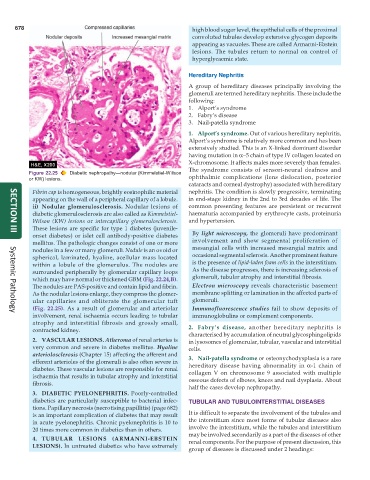
           Figure 22.25  Diabetic nephropathy—nodular (Kimmelstiel-W ilson
           or KW) lesions.                                     ophthalmic complications (lens dislocation, posterior
                                                               cataracts and corneal dystrophy) associated with hereditary
            Fibrin cap is homogeneous, brightly eosinophilic material  nephritis. The condition is slowly progressive, terminating
            appearing on the wall of a peripheral capillary of a lobule.  in end-stage kidney in the 2nd to 3rd decades of life. The
            ii) Nodular glomerulosclerosis. Nodular lesions of  common presenting features are persistent or recurrent
            diabetic glomerulosclerosis are also called as Kimmelstiel-  haematuria accompanied by erythrocyte casts, proteinuria
            Wilson (KW) lesions or  intercapillary glomerulosclerosis.  and hypertension.
            These lesions are specific for type 1 diabetes (juvenile-
            onset diabetes) or islet cell antibody-positive diabetes  By  light microscopy, the glomeruli have predominant
     SECTION III
            mellitus. The pathologic changes consist of one or more  involvement and show segmental proliferation of
            nodules in a few or many glomeruli. Nodule is an ovoid or  mesangial cells with increased mesangial matrix and
            spherical, laminated, hyaline, acellular mass located  occasional segmental sclerosis. Another prominent feature
            within a lobule of the glomerulus. The nodules are   is the presence of lipid-laden foam cells in the interstitium.
            surrounded peripherally by glomerular capillary loops  As the disease progresses, there is increasing sclerosis of
            which may have normal or thickened GBM (Fig. 22.24,B).  glomeruli, tubular atrophy and interstitial fibrosis.
            The nodules are PAS-positive and contain lipid and fibrin.  Electron microscopy reveals characteristic basement
            As the nodular lesions enlarge, they compress the glomer-  membrane splitting or lamination in the affected parts of
            ular capillaries and obliterate the glomerular tuft  glomeruli.
            (Fig. 22.25). As a result of glomerular and arteriolar  Immunofluorescence studies  fail to show deposits of
            involvement, renal ischaemia occurs leading to tubular  immunoglobulins or complement components.
     Systemic Pathology
            atrophy and interstitial fibrosis and grossly small,
            contracted kidney.                                 2. Fabry’s disease,  another hereditary nephritis is
                                                               characterised by accumulation of neutral glycosphingolipids
            2. VASCULAR LESIONS. Atheroma of renal arteries is  in lysosomes of glomerular, tubular, vascular and interstitial
            very common and severe in diabetes mellitus. Hyaline  cells.
            arteriolosclerosis (Chapter 15) affecting the afferent and  3. Nail-patella syndrome or osteonychodysplasia is a rare
            efferent arterioles of the glomeruli is also often severe in  hereditary disease having abnormality in α-1 chain of
            diabetes. These vascular lesions are responsible for renal  collagen V on chromosome 9 associated with multiple
            ischaemia that results in tubular atrophy and interstitial  osseous defects of elbows, knees and nail dysplasia. About
            fibrosis.
                                                               half the cases develop nephropathy.
            3. DIABETIC PYELONEPHRITIS. Poorly-controlled
            diabetics are particularly susceptible to bacterial infec-  TUBULAR AND TUBULOINTERSTITIAL DISEASES
            tions. Papillary necrosis (necrotising papillitis) (page 682)
            is an important complication of diabetes that may result  It is difficult to separate the involvement of the tubules and
            in acute pyelonephritis. Chronic pyelonephritis is 10 to  the interstitium since most forms of tubular diseases also
            20 times more common in diabetics than in others.  involve the interstitium, while the tubules and interstitium
                                                               may be involved secondarily as a part of the diseases of other
            4. TUBULAR LESIONS (ARMANNI-EBSTEIN                renal components. For the purpose of present discussion, this
            LESIONS). In untreated diabetics who have extremely
                                                               group of diseases is discussed under 2 headings:

