


Page 746 - Textbook of Pathology, 6th Edition
P. 746
730 pathologic entities are discussed below, but first, the cyclic
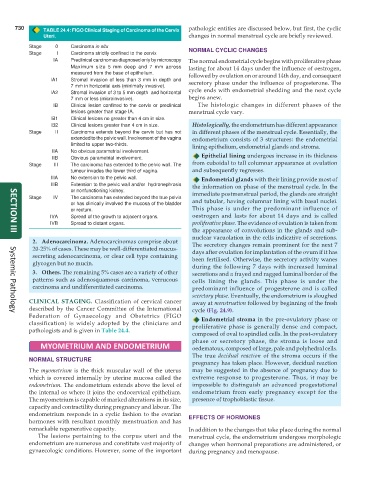
TABLE 24.4: FIGO Clinical Staging of Carcinoma of the Cervix
Uteri. changes in normal menstrual cycle are briefly reviewed.
Stage 0 Carcinoma in situ NORMAL CYCLIC CHANGES
Stage I Carcinoma strictly confined to the cervix
IA Preclinical carcinomas diagnosed only by microscopy The normal endometrial cycle begins with proliferative phase
Maximum size 5 mm deep and 7 mm across lasting for about 14 days under the influence of oestrogen,
measured from the base of epithelium. followed by ovulation on or around 14th day, and consequent
IA1 Stromal invasion of less than 3 mm in depth and secretory phase under the influence of progesterone. The
7 mm in horizontal axis (minimally invasive).
IA2 Stromal invasion of 3 to 5 mm depth and horizontal cycle ends with endometrial shedding and the next cycle
7 mm or less (microinvasive). begins anew.
IB Clinical lesion confined to the cervix or preclinical The histologic changes in different phases of the
lesions greater than stage IA. menstrual cycle vary.
IB1 Clinical lesions no greater than 4 cm in size.
IB2 Clinical lesions greater than 4 cm in size. Histologically, the endometrium has different appearance
Stage II Carcinoma extends beyond the cervix but has not in different phases of the menstrual cycle. Essentially, the
extended to the pelvic wall. Involvement of the vagina endometrium consists of 3 structures: the endometrial
limited to upper two-thirds. lining epithelium, endometrial glands and stroma.
IIA No obvious parametrial involvement.
IIB Obvious parametrial involvement. Epithelial lining undergoes increase in its thickness
Stage III The carcinoma has extended to the pelvic wall. The from cuboidal to tall columnar appearance at ovulation
tumour invades the lower third of vagina. and subsequently regresses.
IIIA No extension to the pelvic wall. Endometrial glands with their lining provide most of
IIIB Extension to the pelvic wall and/or hydronephrosis the information on phase of the menstrual cycle. In the
or nonfunctioning kidney. immediate postmenstrual period, the glands are straight
Stage IV The carcinoma has extended beyond the true pelvis and tubular, having columnar lining with basal nuclei.
or has clinically involved the mucosa of the bladder
or rectum. This phase is under the predominant influence of
IVA Spread of the growth to adjacent organs. oestrogen and lasts for about 14 days and is called
IVB Spread to distant organs. proliferative phase. The evidence of ovulation is taken from
the appearance of convolutions in the glands and sub-
SECTION III
nuclear vacuolation in the cells indicative of secretions.
2. Adenocarcinoma. Adenocarcinomas comprise about The secretory changes remain prominent for the next 7
20-25% of cases. These may be well-differentiated mucus- days after ovulation for implantation of the ovum if it has
secreting adenocarcinoma, or clear cell type containing been fertilised. Otherwise, the secretory activity wanes
glycogen but no mucin. during the following 7 days with increased luminal
3. Others. The remaining 5% cases are a variety of other secretions and a frayed and ragged luminal border of the
patterns such as adenosquamous carcinoma, verrucous cells lining the glands. This phase is under the
carcinoma and undifferentiated carcinoma. predominant influence of progesterone and is called
secretory phase. Eventually, the endometrium is sloughed
CLINICAL STAGING. Classification of cervical cancer away at menstruation followed by beginning of the fresh
described by the Cancer Committee of the International cycle (Fig. 24.9).
Federation of Gynaecology and Obstetrics (FIGO Endometrial stroma in the pre-ovulatory phase or
Systemic Pathology
classification) is widely adopted by the clinicians and proliferative phase is generally dense and compact,
pathologists and is given in Table 24.4.
composed of oval to spindled cells. In the post-ovulatory
phase or secretory phase, the stroma is loose and
MYOMETRIUM AND ENDOMETRIUM oedematous, composed of large, pale and polyhedral cells.
The true decidual reaction of the stroma occurs if the
NORMAL STRUCTURE
pregnancy has taken place. However, decidual reaction
The myometrium is the thick muscular wall of the uterus may be suggested in the absence of pregnancy due to
which is covered internally by uterine mucosa called the extreme response to progesterone. Thus, it may be
endometrium. The endometrium extends above the level of impossible to distinguish an advanced progestational
the internal os where it joins the endocervical epithelium. endometrium from early pregnancy except for the
The myometrium is capable of marked alterations in its size, presence of trophoblastic tissue.
capacity and contractility during pregnancy and labour. The
endometrium responds in a cyclic fashion to the ovarian EFFECTS OF HORMONES
hormones with resultant monthly menstruation and has
remarkable regenerative capacity. In addition to the changes that take place during the normal
The lesions pertaining to the corpus uteri and the menstrual cycle, the endometrium undergoes morphologic
endometrium are numerous and constitute vast majority of changes when hormonal preparations are administered, or
gynaecologic conditions. However, some of the important during pregnancy and menopause.

