


Page 825 - Textbook of Pathology, 6th Edition
P. 825
809


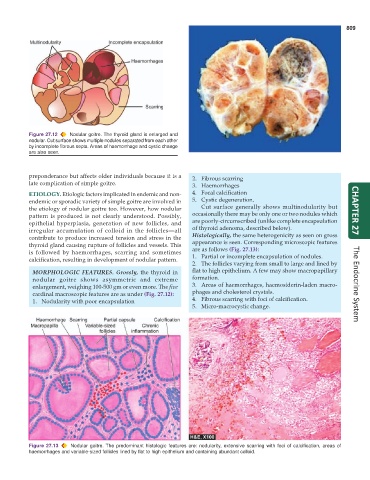
           Figure 27.12  Nodular goitre. The thyroid gland is enlarged and
           nodular. Cut surface shows multiple nodules separated from each other
           by incomplete fibrous septa. Areas of haemorrhage and cystic change
           are also seen.


           preponderance but affects older individuals because it is a  2. Fibrous scarring
           late complication of simple goitre.                   3. Haemorrhages
           ETIOLOGY. Etiologic factors implicated in endemic and non-  4. Focal calcification
           endemic or sporadic variety of simple goitre are involved in  5. Cystic degeneration.
           the etiology of nodular goitre too. However, how nodular  Cut surface generally shows multinodularity but  CHAPTER 27
           pattern is produced is not clearly understood. Possibly,  occasionally there may be only one or two nodules which
           epithelial hyperplasia, generation of new follicles, and  are poorly-circumscribed (unlike complete encapsulation
           irregular accumulation of colloid in the follicles—all  of thyroid adenoma, described below).
           contribute to produce increased tension and stress in the  Histologically, the same heterogenicity as seen on gross
           thyroid gland causing rupture of follicles and vessels. This  appearance is seen. Corresponding microscopic features
           is followed by haemorrhages, scarring and sometimes   are as follows (Fig. 27.13):
                                                                 1. Partial or incomplete encapsulation of nodules.
           calcification, resulting in development of nodular pattern.
                                                                 2. The follicles varying from small to large and lined by
            MORPHOLOGIC FEATURES. Grossly, the thyroid in        flat to high epithelium. A few may show macropapillary
            nodular goitre shows asymmetric and extreme          formation.
            enlargement, weighing 100-500 gm or even more. The five  3. Areas of haemorrhages, haemosiderin-laden macro-  The Endocrine System
            cardinal macroscopic features are as under (Fig. 27.12):  phages and cholesterol crystals.
            1. Nodularity with poor encapsulation                4. Fibrous scarring with foci of calcification.
                                                                 5. Micro-macrocystic change.


           Figure 27.13  Nodular goitre. The predominant histologic features are: nodularity, extensive scarring with foci of calcification, areas of
           haemorrhages and variable-sized follicles lined by flat to high epithelium and containing abundant colloid.

