


Page 871 - Textbook of Pathology, 6th Edition
P. 871
a few centimeters in diameter. Tophi may be located in                                                  855
            the periarticular tissues as well as subcutaneously such
            as on the hands and feet. Tophi are surrounded by
            inflammatory reaction consisting of macrophages,
            lymphocytes, fibroblasts and foreign body giant cells
            (Fig. 28.26).
            4. Renal lesions. Chronic gouty arthritis frequently
            involves the kidneys. Three types of renal lesions are
            described in the kidneys: acute urate nephropathy, chronic
            urate nephropathy and uric acid nephrolithiasis.
            i) Acute urate nephropathy is attributed to the intratubular
            deposition of monosodium urate crystals resulting in acute
            obstructive uropathy.
            ii) Chronic urate nephropathy refers to the deposition of
            urate crystals in the renal interstitial tissue.
            iii) Uric acid nephrolithiasis is related to hyperuricaemia
            resulting in hyperuricaciduria (page 692).
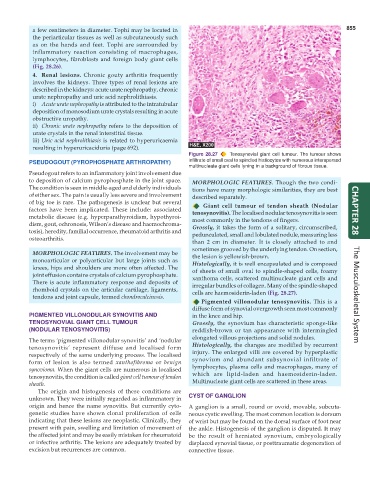
                                                               Figure 28.27  Tenosynovial giant cell tumour. The tumour shows
           PSEUDOGOUT (PYROPHOSPHATE ARTHROPATHY)              infiltrate of small oval to spindled histiocytes with numerous interspersed
                                                               multinucleate giant cells lyning in a background of fibrous tissue.
           Pseudogout refers to an inflammatory joint involvement due
           to deposition of calcium pyrophosphate in the joint space.  MORPHOLOGIC FEATURES. Though the two condi-
           The condition is seen in middle-aged and elderly individuals  tions have many morphologic similarities, they are best
           of either sex. The pain is usually less severe and involvement  described separately.
           of big toe is rare. The pathogenesis is unclear but several   Giant cell tumour of tendon sheath (Nodular
           factors have been implicated. These include: associated  tenosynovitis). The localised nodular tenosynovitis is seen  CHAPTER 28
           metabolic disease (e.g. hyperparathyroidism, hypothyroi-  most commonly in the tendons of fingers.
           dism, gout, ochronosis, Wilson’s disease and haemochroma-  Grossly, it takes the form of a solitary, circumscribed,
           tosis), heredity, familial occurrence, rheumatoid arthritis and  pedunculated, small and lobulated nodule, measuring less
           osteoarthritis.
                                                                 than 2 cm in diameter. It is closely attached to and
                                                                 sometimes grooved by the underlying tendon. On section,
            MORPHOLOGIC FEATURES. The involvement may be         the lesion is yellowish-brown.
            monoarticular or polyarticular but large joints such as  Histologically, it is well encapsulated and is composed
            knees, hips and shoulders are more often affected. The  of sheets of small oval to spindle-shaped cells, foamy
            joint effusion contains crystals of calcium pyrophosphate.  xanthoma cells, scattered multinucleate giant cells and
            There is acute inflammatory response and deposits of  irregular bundles of collagen. Many of the spindle-shaped
            rhomboid crystals on the articular cartilage, ligaments,  cells are haemosiderin-laden (Fig. 28.27).
            tendons and joint capsule, termed chondrocalcinosis.                                                      The Musculoskeletal System
                                                                    Pigmented villonodular tenosynovitis. This is a
                                                                 diffuse form of synovial overgrowth seen most commonly
           PIGMENTED VILLONODULAR SYNOVITIS AND                  in the knee and hip.
           TENOSYNOVIAL GIANT CELL TUMOUR                        Grossly, the synovium has characteristic sponge-like
           (NODULAR TENOSYNOVITIS)                               reddish-brown or tan appearance with intermingled
                                                                 elongated villous projections and solid nodules.
           The terms ‘pigmented villonodular synovitis’ and ‘nodular
           tenosynovitis’ represent diffuse and localised form   Histologically, the changes are modified by recurrent
           respectively of the same underlying process. The localised  injury. The enlarged villi are covered by hyperplastic
                                                                 synovium and abundant subsynovial infiltrate of
           form of lesion is also termed  xanthofibroma or  benign  lymphocytes, plasma cells and macrophages, many of
           synovioma. When the giant cells are numerous in localised  which are lipid-laden and haemosiderin-laden.
           tenosynovitis, the condition is called giant cell tumour of tendon  Multinucleate giant cells are scattered in these areas.
           sheath.
              The origin and histogenesis of these conditions are
           unknown. They were initially regarded as inflammatory in  CYST OF GANGLION
           origin and hence the name synovitis. But currently cyto-  A ganglion is a small, round or ovoid, movable, subcuta-
           genetic studies have shown clonal proliferation of cells  neous cystic swelling. The most common location is dorsum
           indicating that these lesions are neoplastic. Clinically, they  of wrist but may be found on the dorsal surface of foot near
           present with pain, swelling and limitation of movement of  the ankle. Histogenesis of the ganglion is disputed. It may
           the affected joint and may be easily mistaken for rheumatoid  be the result of herniated synovium, embryologically
           or infective arthritis. The lesions are adequately treated by  displaced synovial tissue, or posttraumatic degeneration of
           excision but recurrences are common.                connective tissue.

