


Page 263 - 9780077418427.pdf
P. 263
/Users/user-f465/Desktop
          tiL12214_ch09_229-250.indd Page 240  9/3/10  10:07 PM user-f465
          tiL12214_ch09_229-250.indd Page 240  9/3/10  10:07 PM user-f465                                               /Users/user-f465/Desktop


                                                                           9.5  COMPOSITION OF COMPOUNDS

                                                                          As you can imagine, there are literally millions of different
                                                                          chemical compounds from all the possible combinations of over
                                                                          90 natural elements held together by ionic or covalent bonds.
                                                                          Each of these compounds has its own name, so there are mil-
                                                                          lions of names and formulas for all the compounds. In the early
                                                                          days, compounds were given common names according to how
                                                                          they were used, where they came from, or some other means
                                                                          of identifying them. Thus, sodium carbonate was called soda,
                                                                          and closely associated compounds were called baking soda (so-
                                                                          dium bicarbonate), washing soda (sodium carbonate), caustic
                                                                          soda (sodium hydroxide), and the bubbly drink made by react-
                                                                          ing soda with acid was called soda water, later called soda pop
                                                                          (Figure 9.12). Potassium carbonate was extracted from charcoal
                                                                          by soaking in water and came to be called potash. Such com-
                                                                          mon names are colorful, and some are descriptive, but it was
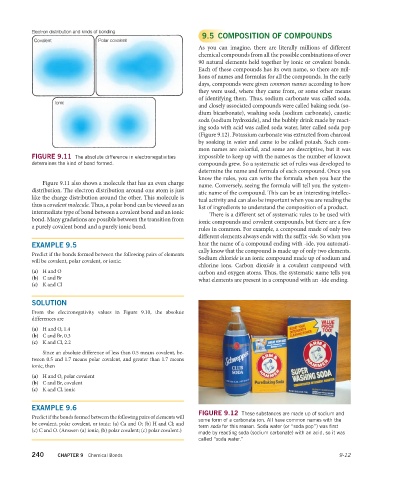
                   FIGURE 9.11  The absolute difference in electronegativities   impossible to keep up with the names as the number of known
                   determines the kind of bond formed.                    compounds grew. So a systematic set of rules was developed to
                                                                          determine the name and formula of each compound. Once you
                                                                          know the rules, you can write the formula when you hear the
                      Figure 9.11 also shows a molecule that has an even charge
                                                                          name. Conversely, seeing the formula will tell you the system-
                   distribution. The electron distribution around one atom is just
                                                                          atic name of the compound. This can be an interesting intellec-
                   like the charge distribution around the other. This molecule is
                                                                          tual activity and can also be important when you are reading the
                   thus a covalent molecule. Thus, a polar bond can be viewed as an
                                                                          list of ingredients to understand the composition of a product.
                   intermediate type of bond between a covalent bond and an ionic
                                                                             There is a different set of systematic rules to be used with
                   bond. Many gradations are possible between the transition from
                                                                          ionic compounds and covalent compounds, but there are a few
                   a purely covalent bond and a purely ionic bond.
                                                                          rules in common. For example, a compound made of only two
                                                                          different elements always ends with the suffix -ide. So when you
                   EXAMPLE 9.5                                            hear the name of a compound ending with -ide, you automati-
                                                                          cally know that the compound is made up of only two  elements.
                   Predict if the bonds formed between the following pairs of elements
                   will be covalent, polar covalent, or ionic:            Sodium chloride is an ionic compound made up of sodium and
                                                                          chlorine ions. Carbon dioxide is a covalent compound with
                   (a)  H and O                                           carbon and oxygen atoms. Thus, the systematic name tells you
                   (b)  C and Br                                          what elements are present in a compound with an -ide ending.
                   (c)  K and Cl

                   SOLUTION
                   From the electronegativity values in Figure 9.10, the absolute
                    differences are
                   (a)  H and O, 1.4
                   (b)  C and Br, 0.3
                   (c)  K and Cl, 2.2
                      Since an absolute difference of less than 0.5 means covalent, be-
                   tween 0.5 and 1.7 means polar covalent, and greater than 1.7 means
                   ionic, then
                   (a)  H and O, polar covalent
                   (b)  C and Br, covalent
                   (c)  K and Cl, ionic

                   EXAMPLE 9.6
                                                                          FIGURE 9.12  These substances are made up of sodium and
                   Predict if the bonds formed between the following pairs of elements will   some form of a carbonate ion. All have common names with the
                   be covalent, polar covalent, or ionic: (a)  Ca and O; (b) H and Cl; and   term soda for this reason. Soda water (or “soda pop”) was first
                   (c) C and O. (Answer: (a) ionic; (b) polar covalent; (c) polar covalent.)
                                                                          made by reacting soda (sodium carbonate) with an acid, so it was
                                                                          called “soda water.”

                   240     CHAPTER 9 Chemical Bonds                                                                     9-12

