


Page 413 - 9780077418427.pdf
P. 413
/Users/user-f465/Desktop
          tiL12214_ch15_377-404.indd Page 390  9/3/10  6:17 PM user-f465
          tiL12214_ch15_377-404.indd Page 390  9/3/10  6:17 PM user-f465                                                /Users/user-f465/Desktop


                                                                           TABLE 15.4

                                                                           Spacecraft missions to study comets and asteroids
                                                                           Date     Name      Owner    Remark
                                                                           Sep 11,   ISSE 3    U.S.    Studies of electric and
                                                                              1985      (or ICE)          magnetic fields around
                                                                                                          Giacobini-Zinner comet
                                                                                                          from 7,860 km (4,880 mi)
                                                                           Mar 6,   Vega 1    U.S.S.R.   Photos and studies of
                                                                              1986                        nucleus of Halley’s comet
                                                                                                          from 8,892 km (5,525 mi)
                                                                           Mar 8,   Suisei    Japan    Studied hydrogen halo
                                                                              1986                        of Halley’s comet from
                                                                                                          151,000 km (93,800 mi)
                                                                           Mar 9,   Vega 2    U.S.S.R.   Photos and studies of
                                                                              1986                        nucleus of Halley’s comet
                                                                                                          from 8,034 km (4,992 mi)
                                                                           Mar 11,   Sakigake   Japan   Studied solar wind in
                                                                              1986                        front of Halley’s comet
                                                                                                          7.1 million km
                                                                                                          (4.4 million mi)
                                                                           Mar 28,   Giotto   ESA      Photos and studies of
                                                                              1986                        Halley’s comet from
                                                                                                          541 km (336 mi)
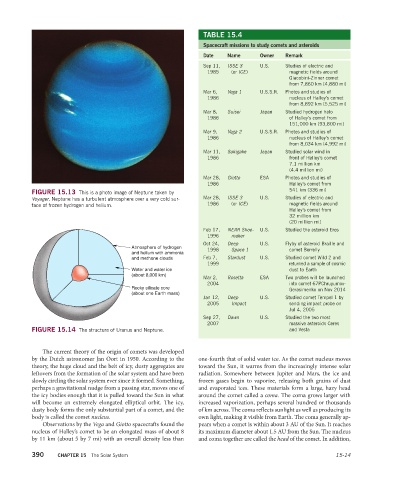
                   FIGURE 15.13  This is a photo image of Neptune taken by
                   Voyager. Neptune has a turbulent atmosphere over a very cold sur-  Mar 28,   ISSE 3    U.S.   Studies of electric and
                   face of frozen hydrogen and helium.                        1986      (or ICE)          magnetic fields around
                                                                                                          Halley’s comet from
                                                                                                          32 million km
                                                                                                          (20 million mi)
                                                                           Feb 17,   NEAR Shoe-   U.S.   Studied the asteroid Eros
                                                                              1996     maker
                                                                           Oct 24,   Deep     U.S.     Flyby of asteroid Braille and
                                                    Atmosphere of hydrogen     1998      Space 1          comet Borrelly
                                                    and helium with ammonia
                                                    and methane clouds     Feb 7,   Stardust   U.S.    Studied comet Wild 2 and
                                                                              1999                        returned a sample of cosmic
                                                    Water and water ice                                  dust to Earth
                                                    (about 8,000 km)
                                                                           Mar 2,   Rosetta   ESA      Two probes will be launched
                                                                              2004                        into comet 67PChruyumov-
                                                    Rocky silicate core                                   Gerasimenko on Nov 2014
                                                    (about one Earth mass)
                                                                           Jan 12,   Deep     U.S.     Studied comet Tempel 1 by
                                                                              2005      Impact            sending impact probe on
                                                                                                          Jul 4, 2005
                                                                           Sep 27,   Dawn     U.S.     Studied the two most
                                                                              2007                        massive asteroids Ceres
                   FIGURE 15.14  The structure of Uranus and Neptune.                                     and Vesta


                      The current theory of the origin of comets was developed
                   by the Dutch astronomer Jan Oort in 1950. According to the   one-fourth that of solid water ice. As the comet  nucleus moves
                   theory, the huge cloud and the belt of icy, dusty aggregates are     toward the Sun, it warms from the increasingly intense solar
                   leftovers from the formation of the solar system and have been   radiation. Somewhere between Jupiter and Mars, the ice and
                   slowly circling the solar system ever since it formed. Something,   frozen gases begin to vaporize, releasing both grains of dust
                   perhaps a gravitational nudge from a passing star, moves one of   and evaporated ices. These materials form a large, hazy head
                   the icy bodies enough that it is pulled toward the Sun in what   around the comet called a coma. The coma grows larger with
                   will become an extremely elongated elliptical orbit. The icy,   increased vaporization, perhaps several hundred or thousands
                   dusty body forms the only substantial part of a comet, and the   of km across. The coma reflects sunlight as well as producing its
                   body is called the comet nucleus.                      own light, making it visible from Earth. The coma generally ap-
                      Observations by the Vega and Giotto spacecrafts found the   pears when a comet is within about 3 AU of the Sun. It reaches
                   nucleus of Halley’s comet to be an elongated mass of about 8   its maximum diameter about 1.5 AU from the Sun. The nucleus
                   by 11 km (about 5 by 7 mi) with an overall density less than   and coma together are called the head of the comet. In addition,

                   390     CHAPTER 15  The Solar System                                                                15-14

