


Page 414 - 9780077418427.pdf
P. 414
/Users/user-f465/Desktop
          tiL12214_ch15_377-404.indd Page 391  9/3/10  6:17 PM user-f465
          tiL12214_ch15_377-404.indd Page 391  9/3/10  6:17 PM user-f465                                                /Users/user-f465/Desktop


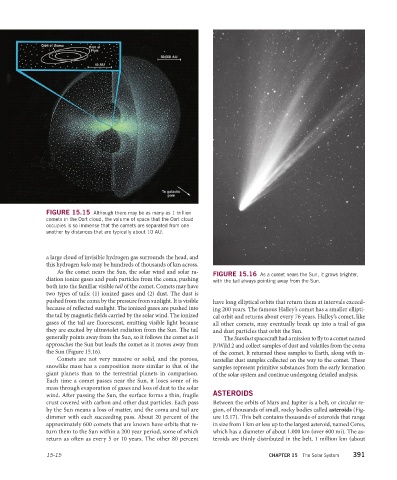
                       FIGURE 15.15  Although there may be as many as 1 trillion
                       comets in the Oort cloud, the volume of space that the Oort cloud
                       occupies is so immense that the comets are separated from one
                       another by distances that are typically about 10 AU.


                       a large cloud of invisible hydrogen gas  surrounds the head, and
                       this hydrogen halo may be hundreds of thousands of km across.
                           As the comet nears the Sun, the solar wind and solar ra-
                                                                               FIGURE 15.16  As a comet nears the Sun, it grows brighter,
                       diation ionize gases and push particles from the coma, pushing   with the tail always pointing away from the Sun.
                       both into the familiar visible tail of the comet. Comets may have
                       two types of tails: (1) ionized gases and (2) dust. The dust is
                       pushed from the coma by the pressure from sunlight. It is visible   have long elliptical orbits that return them at intervals exceed-
                       because of reflected sunlight. The ionized gases are pushed into   ing 200 years. The famous Halley’s comet has a smaller ellipti-
                       the tail by magnetic fields carried by the solar wind. The ionized   cal orbit and returns about every 76 years. Halley’s comet, like
                       gases of the tail are fluorescent, emitting visible light  because   all other comets, may eventually break up into a trail of gas
                       they are excited by ultraviolet radiation from the Sun. The tail   and dust particles that orbit the Sun.
                       generally points away from the Sun, so it follows the comet as it   The Stardust spacecraft had a mission to fly to a comet named
                       approaches the Sun but leads the comet as it moves away from   P/Wild 2 and collect samples of dust and volatiles from the coma
                       the Sun (Figure 15.16).                                 of the comet. It returned these samples to Earth, along with in-
                           Comets are not very massive or solid, and the porous,   terstellar dust samples collected on the way to the comet. These
                       snowlike mass has a composition more similar to that of the   samples represent primitive substances from the early formation
                       giant planets than to the terrestrial planets in comparison.   of the solar system and continue undergoing detailed analysis.
                       Each time a comet passes near the Sun, it loses some of its
                       mass through evaporation of gases and loss of dust to the solar
                       wind. After passing the Sun, the surface forms a thin, fragile   ASTEROIDS
                       crust covered with carbon and other dust particles. Each pass   Between the orbits of Mars and Jupiter is a belt, or circular re-
                       by the Sun means a loss of matter, and the coma and tail are   gion, of thousands of small, rocky bodies called asteroids (Fig-
                       dimmer with each succeeding pass. About 20 percent of the   ure 15.17). This belt contains thousands of asteroids that range
                       approximately 600 comets that are known have orbits that re-  in size from 1 km or less up to the largest asteroid, named Ceres,
                       turn them to the Sun within a 200 year period, some of which   which has a diameter of about 1,000 km (over 600 mi). The as-
                       return as often as every 5 or 10 years. The other 80 percent   teroids are thinly distributed in the belt, 1 million km (about

                       15-15                                                                     CHAPTER 15  The Solar System   391

