


Page 432 - 9780077418427.pdf
P. 432
/Users/user-f465/Desktop
          tiL12214_ch16_405-432.indd Page 409  9/3/10  6:19 PM user-f465
          tiL12214_ch16_405-432.indd Page 409  9/3/10  6:19 PM user-f465                                                /Users/user-f465/Desktop


                                                  Spring                                                         North
                                                  equinox                                                        Star

                                                                                                        Autumnal
                                                                                 23.5°                  equinox
                                                                                              Celestial
                           Summer                                 Winter        Winter        equator
                           solstice                              solstice       solstice
                                                                                                                          Summer
                                                  Autumnal                                Ecliptic                        solstice
                                                  equinox
                                                                                                   Spring
                                                                                                   equinox
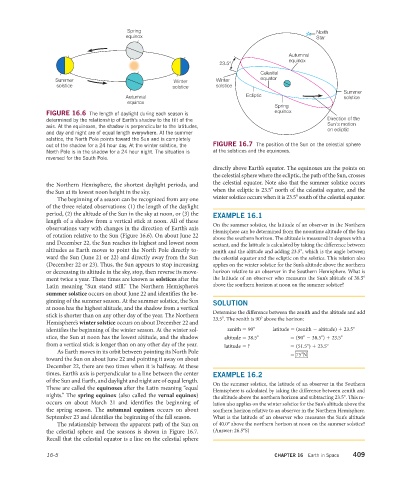
                       FIGURE 16.6  The length of daylight during each season is
                       determined by the relationship of Earth’s shadow to the tilt of the                           Direction of the
                       axis. At the equinoxes, the shadow is perpendicular to the latitudes,                         Sun's motion
                                                                                                                     on ecliptic
                       and day and night are of equal length everywhere. At the summer
                       solstice, the North Pole points toward the Sun and is completely
                       out of the shadow for a 24 hour day. At the winter solstice, the   FIGURE 16.7  The position of the Sun on the celestial sphere
                       North Pole is in the shadow for a 24 hour night. The situation is   at the solstices and the equinoxes.
                       reversed for the South Pole.
                                                                               directly above Earth’s equator. The equinoxes are the points on
                                                                               the celestial sphere where the ecliptic, the path of the Sun, crosses
                       the Northern Hemisphere, the shortest daylight periods, and   the celestial equator. Note also that the summer solstice occurs
                       the Sun at its lowest noon height in the sky.           when the ecliptic is 23.5° north of the celestial equator, and the
                           The beginning of a season can be recognized from any one   winter solstice occurs when it is 23.5° south of the  celestial equator.
                       of the three related observations: (1) the length of the daylight
                       period, (2) the altitude of the Sun in the sky at noon, or (3) the     EXAMPLE 16.1
                       length of a shadow from a vertical stick at noon. All of these
                                                                               On the summer solstice, the latitude of an observer in the Northern
                       observations vary with changes in the direction of Earth’s axis
                                                                               Hemisphere can be determined from the noontime altitude of the Sun
                       of rotation relative to the Sun (Figure 16.6). On about June 22
                                                                               above the southern horizon. The altitude is measured in degrees with a
                       and December 22, the Sun reaches its highest and lowest noon   sextant, and the latitude is calculated by taking the difference between
                       altitudes as Earth moves to point the North Pole directly to-  zenith and the altitude and adding 23.5°, which is the angle between
                       ward the Sun (June 21 or 22) and directly away from the Sun   the celestial equator and the ecliptic on the solstice. This relation also
                       ( December 22 or 23). Thus, the Sun appears to stop increasing   applies on the winter solstice for the Sun’s altitude above the northern
                       or decreasing its altitude in the sky, stop, then reverse its move-  horizon relative to an observer in the Southern Hemisphere. What is
                       ment twice a year. These times are known as solstices after the   the latitude of an observer who measures the Sun’s altitude of 38.5°
                       Latin meaning “Sun stand still.” The Northern Hemisphere’s   above the southern horizon at noon on the summer solstice?
                       summer solstice occurs on about June 22 and identifies the be-
                       ginning of the summer season. At the summer solstice, the Sun   SOLUTION
                       at noon has the highest altitude, and the shadow from a vertical
                                                                               Determine the difference between the zenith and the altitude and add
                       stick is shorter than on any other day of the year. The Northern
                                                                               23.5°. The zenith is 90° above the horizon:
                       Hemisphere’s winter solstice occurs on about December 22 and
                       identifies the beginning of the winter season. At the winter sol-   zenith = 90°   latitude = (zenith − altitude) + 23.5°
                       stice, the Sun at noon has the lowest altitude, and the shadow    altitude = 38.5°  = (90° − 38.5°) + 23.5°
                       from a vertical stick is longer than on any other day of the year.   latitude = ?   = (51.5°) + 23.5°
                           As Earth moves in its orbit between pointing its North Pole                  = 75°N
                       toward the Sun on about June 22 and pointing it away on about
                       December 22, there are two times when it is halfway . At these
                       times, Earth’s axis is perpendicular to a line between the center   EXAMPLE 16.2
                       of the Sun and Earth, and daylight and night are of equal length.
                                                                               On the summer solstice, the latitude of an observer in the Southern
                       These are called the equinoxes after the Latin meaning “equal
                                                                               Hemisphere is calculated by taking the difference between zenith and
                       nights.” The spring equinox (also called the vernal  equinox)   the altitude above the northern horizon and subtracting 23.5°. This re-
                       occurs on about March 21 and identifies the beginning of   lation also applies on the winter solstice for the Sun’s altitude above the
                       the spring season. The  autumnal equinox occurs on about   southern horizon relative to an observer in the Northern Hemisphere.
                       September 23 and identifies the beginning of the fall season.  What is the latitude of an observer who measures the Sun’s altitude
                           The relationship between the apparent path of the Sun on   of 40.0° above the northern horizon at noon on the summer solstice?
                       the celestial sphere and the seasons is shown in Figure 16.7.   (Answer: 26.5°S)
                       Recall that the celestial equator is a line on the celestial sphere

                       16-5                                                                        CHAPTER 16  Earth in Space   409

