


Page 435 - 9780077418427.pdf
P. 435
/Users/user-f465/Desktop
          tiL12214_ch16_405-432.indd Page 412  9/3/10  6:19 PM user-f465
          tiL12214_ch16_405-432.indd Page 412  9/3/10  6:19 PM user-f465                                                /Users/user-f465/Desktop


                                                                                                        °
                                                Distance from top                                     90  N
                                                of page                                    60  N
                                                                                             °
                                                                                        °
                                                                                      40  N

                                               X
                                                                                  20  N
                                                                                    °


                                           Distance from left
                                           side of page

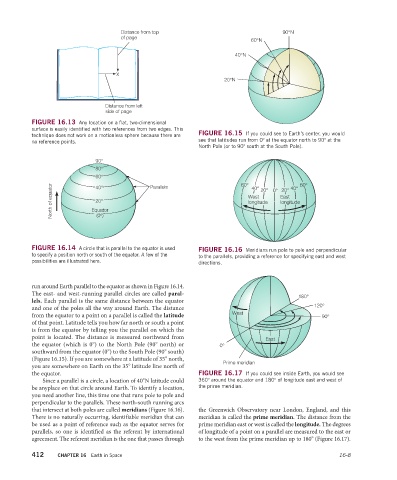
                   FIGURE 16.13  Any location on a flat, two-dimensional
                   surface is easily identified with two references from two edges. This
                   technique does not work on a motionless sphere because there are     FIGURE 16.15  If you could see to Earth’s center, you would
                   no reference points.                                   see that latitudes run from 0° at the equator north to 90° at the
                                                                          North Pole (or to 90° south at the South Pole).
                                        90°
                                        80°
                                        60°               Parallels                     60°  40°        40°  60°
                         North of equator  Equator                                        West  20° 0° 20°
                                        40°
                                                                                                     East
                                        20°
                                                                                                     longitude
                                                                                          longitude
                                        (0°)


                   FIGURE 16.14  A circle that is parallel to the equator is used   FIGURE 16.16  Meridians run pole to pole and perpendicular
                   to specify a position north or south of the equator. A few of the   to the parallels, providing a reference for specifying east and west
                   possibilities are illustrated here.                    directions.


                   run around Earth parallel to the equator as shown in  Figure 16.14.
                   The east- and west-running parallel circles are called paral-                           180°
                   lels. Each parallel is the same distance between the equator                                 120°
                   and one of the poles all the way around Earth. The distance
                   from the equator to a point on a parallel is called the latitude   West                         90°
                   of that point. Latitude tells you how far north or south a point
                   is from the equator by telling you the parallel on which the
                   point is located. The distance is measured northward from                    East
                   the equator (which is 0°) to the North Pole (90° north) or    0°
                   southward from the equator (0°) to the South Pole (90° south)
                   (Figure 16.15). If you are somewhere at a latitude of 35° north,   Prime meridian
                   you are somewhere on Earth on the 35° latitude line north of
                   the equator.                                           FIGURE 16.17  If you could see inside Earth, you would see
                      Since a parallel is a circle, a location of 40°N latitude could   360° around the equator and 180° of longitude east and west of
                   be anyplace on that circle around Earth. To identify a location,   the prime meridian.
                   you need another line, this time one that runs pole to pole and
                   perpendicular to the parallels. These north-south running arcs
                   that intersect at both poles are called meridians (Figure 16.16).   the Greenwich Observatory near London, England, and this
                   There is no naturally occurring, identifiable meridian that can   meridian is called the prime meridian. The distance from the
                   be used as a point of reference such as the equator serves for   prime meridian east or west is called the longitude. The degrees
                   parallels, so one is identified as the referent by international   of longitude of a point on a parallel are measured to the east or
                   agreement. The referent meridian is the one that passes through   to the west from the prime meridian up to 180° (Figure 16.17).

                   412     CHAPTER 16  Earth in Space                                                                   16-8

