


Page 514 - 9780077418427.pdf
P. 514
/Users/user-f465/Desktop
          tiL12214_ch19_477-500.indd Page 491  9/3/10  6:22 PM user-f465
          tiL12214_ch19_477-500.indd Page 491  9/3/10  6:22 PM user-f465                                                /Users/user-f465/Desktop


                                                                                    Layers of basalt  New lava

                                                                               Sea level                                   Sea level


                                                                                                 Feeders
                                                                               A


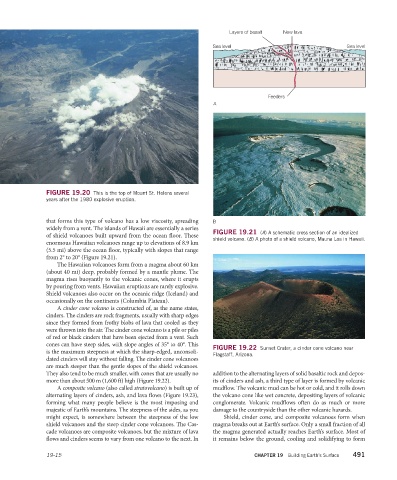
                        FIGURE 19.20  This is the top of Mount St. Helens several
                       years after the 1980 explosive eruption.


                       that forms this type of volcano has a low viscosity, spreading   B
                       widely from a vent. The islands of Hawaii are essentially a series
                                                                               FIGURE 19.21  (A) A schematic cross section of an idealized
                       of shield volcanoes built upward from the ocean floor. These
                                                                               shield volcano. (B) A photo of a shield volcano, Mauna Loa in Hawaii.
                       enormous Hawaiian volcanoes range up to elevations of 8.9 km
                       (5.5 mi) above the ocean floor, typically with slopes that range
                       from 2° to 20° (Figure 19.21).
                           The Hawaiian volcanoes form from a magma about 60 km
                       (about 40 mi) deep, probably formed by a mantle plume. The
                       magma rises buoyantly to the volcanic cones, where it erupts
                       by pouring from vents. Hawaiian eruptions are rarely explosive.
                       Shield volcanoes also occur on the oceanic ridge (Iceland) and
                       occasionally on the continents (Columbia Plateau).
                           A cinder cone volcano is constructed of, as the name states,
                       cinders. The cinders are rock fragments, usually with sharp edges
                       since they formed from frothy blobs of lava that cooled as they
                       were thrown into the air. The cinder cone volcano is a pile or piles
                       of red or black cinders that have been ejected from a vent. Such
                       cones can have steep sides, with slope angles of 35° to 40°. This
                                                                               FIGURE 19.22  Sunset Crater, a cinder cone volcano near
                       is the maximum steepness at which the sharp-edged, unconsoli-
                                                                               Flagstaff, Arizona.
                       dated cinders will stay without falling. The cinder cone volcanoes
                       are much steeper than the gentle slopes of the shield volcanoes.
                       They also tend to be much smaller, with cones that are usually no   addition to the alternating layers of solid basaltic rock and depos-
                       more than about 500 m (1,600 ft) high (Figure 19.22).   its of cinders and ash, a third type of layer is formed by volcanic
                           A composite volcano (also called stratovolcano) is built up of   mudflow. The volcanic mud can be hot or cold, and it rolls down
                       alternating layers of cinders, ash, and lava flows (Figure 19.23),   the volcano cone like wet concrete, depositing layers of volcanic
                       forming what many people believe is the most imposing and   conglomerate. Volcanic mudflows often do as much or more
                       majestic of Earth’s mountains. The steepness of the sides, as you   damage to the countryside than the other volcanic hazards.
                       might expect, is somewhere between the steepness of the low   Shield, cinder cone, and composite volcanoes form when
                       shield volcanoes and the steep cinder cone volcanoes. The Cas-  magma breaks out at Earth’s surface. Only a small fraction of all
                       cade volcanoes are composite volcanoes, but the mixture of lava   the magma generated actually reaches Earth’s surface. Most of
                       flows and cinders seems to vary from one volcano to the next. In   it remains below the ground, cooling and solidifying to form

                        19-15                                                               CHAPTER 19  Building Earth’s Surface   491

