


Page 19 - The Book of Caterpillars: A Life-Size Guide to Six Hundred Species From Around the World
P. 19
FROM EGGS TO PUPATION


            suspended animation, or diapause. In late summer or fall, some caterpillars

            prepare for overwintering by seeking refuges, such as curled leaves, seed
            pods, under rocks, or other sheltered locations, where they will be buffered
            against the elements. Here, a lowered metabolic rate and radical
            biochemical changes, including synthesis of a kind of “antifreeze,” protect

            them against extreme cold. Species living in hot, dry Mediterranean or
            desert climates, where temperatures frequently reach 100–115ºF (38–45ºC)
            and plant life is often sparse, face a similar challenge, entering summer
            dormancy, or estivation, and delaying pupation and adult emergence until
            fall, when conditions are better for survival and reproduction.

               Caterpillars may reenter diapause multiple times if environmental
                                                                                                  17
            stimuli signal the onset of unfavorable conditions. Post-diapause,                    17
            checkerspot (Euphydryas) butterfly caterpillars recommence feeding in
            late winter or early spring on fresh host plant growth, but if a lack of

            moisture affects that growth, the larvae become dormant, potentially living
            for two to three years with only short periods of development annually.
            Caterpillars living at high elevations, such as those of the Arctic Fritillary
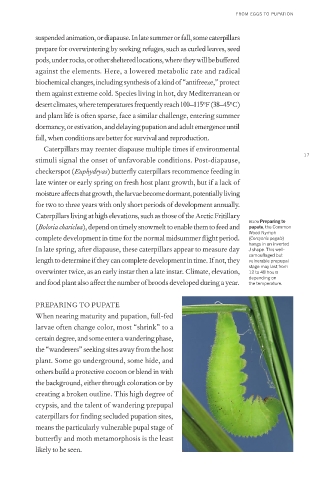
                                                                                BELOW Preparing to
            (Boloria chariclea), depend on timely snowmelt to enable them to feed and   pupate, the Common
                                                                                Wood Nymph
            complete development in time for the normal midsummer flight period.   (Cercyonis pegala)
                                                                                hangs in an inverted
            In late spring, after diapause, these caterpillars appear to measure day   J shape. This well-
                                                                                camouflaged but
            length to determine if they can complete development in time. If not, they   vulnerable prepupal
                                                                                stage may last from
            overwinter twice, as an early instar then a late instar. Climate, elevation,   12 to 48 hours
            and food plant also affect the number of broods developed during a year.  depending on
                                                                                the temperature.


            PREPARING TO PUPATE
            When nearing maturity and pupation, full-fed
            larvae often change color, most “shrink” to a
            certain degree, and some enter a wandering phase,
            the “wanderers” seeking sites away from the host

            plant. Some go underground, some hide, and
            others build a protective cocoon or blend in with
            the background, either through coloration or by
            creating a broken outline. This high degree of

            crypsis, and the talent of wandering prepupal
            caterpillars for finding secluded pupation sites,
            means the particularly vulnerable pupal stage of
            butterfly and moth metamorphosis is the least
            likely to be seen.

