


Page 357 - The Book of Caterpillars: A Life-Size Guide to Six Hundred Species From Around the World
P. 357
MOTH CATERPILLARS

                      FAMILY  Brahmaeidae
                  DISTRIBUTION  Nepal, Bhutan, southwest China, northern India, northern
                           Myanmar, Thailand, and Japan
                     HABITAT  Temperate and tropical forests
                  HOST PLANTS  Ash (Fraxinus spp.) and privet (Ligustrum spp.)
                      NOTE  Large and distinctive caterpillar that rears up when threatened
             CONSERVATION STATUS  Not evaluated


                                                                                   ADULT WINGSPAN
                                                                                  3½–6⅜ in (90–160 mm)
                                                                                  CATERPILLAR LENGTH
                                                                                    3½ in (90 mm)
            BRAHMAEA WALLICHII
            OWL MOTH                                                                             355

            GRAY, 1831


            The caterpillars of the Owl Moth hatch from large, creamy-
            white eggs between 10 and 14 days after they are laid on the
            underside of leaves of the host plant. The young larvae have

            four long, black  laments on the thorax and three on the tail of
            the abdomen. These all disappear after the third molt. When
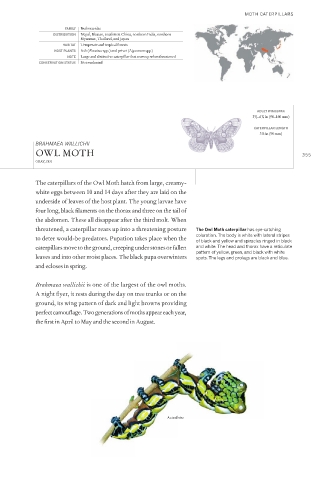
            threatened, a caterpillar rears up into a threatening posture   The Owl Moth caterpillar has eye-catching
            to deter would-be predators. Pupation takes place when the   coloration. The body is white with lateral stripes
                                                                of black and yellow and spiracles ringed in black
            caterpillars move to the ground, creeping under stones or fallen   and white. The head and thorax have a reticulate
            leaves and into other moist places. The black pupa overwinters   pattern of yellow, green, and black with white
                                                                spots. The legs and prolegs are black and blue.
            and ecloses in spring.


            Brahmaea wallichii is one of the largest of the owl moths.

            A night  yer, it rests during the day on tree trunks or on the
            ground, its wing pattern of dark and light browns providing
            perfect camou age. Two generations of moths appear each year,


            the  rst in April to May and the second in August.


                                                      Actual size

